
Emotional Impulsivity and Consequences
Emotional Impulsivity and Consequences
Life is full of emotional challenges, and how we respond to them shapes our experiences. When faced with powerful emotions like fear, anger, sadness, or temptation, our F.A.S.T. EMOTIONS, we often act impulsively—reacting quickly without fully considering the consequences. While these emotional responses are natural, they can lead to poor decisions and create unnecessary suffering for ourselves and others.
Impulsivity vs. Intention and Implementation
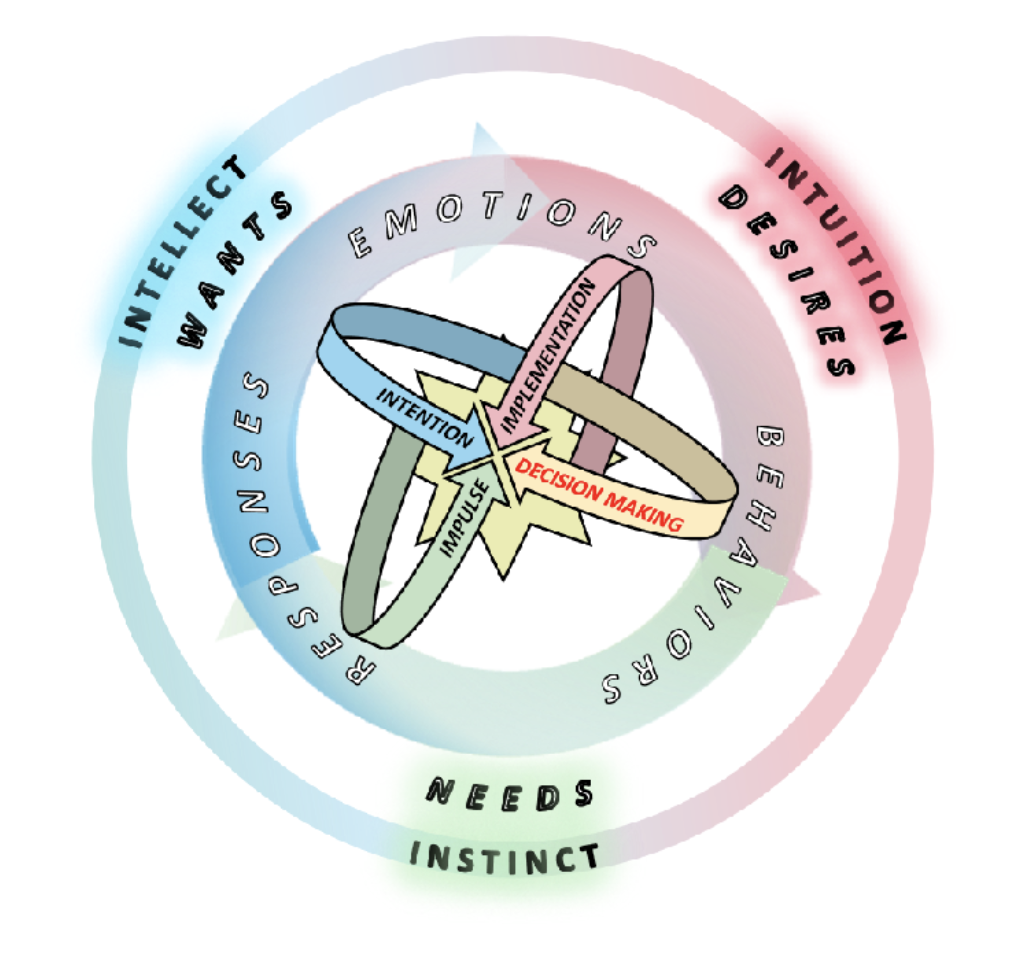
When making decisions, we migrate through three processes of Decision Making: from impulsivity to intention, followed by thoughtful implementation. This process ensures that our emotions, behaviors, and responses are guided by deliberate choices grounded in the collective wisdom that has be instilled into our consciousness rather than rather than reactive feelings, fostering outcomes aligned with our long-term goals and the greater good (Figure 1-Decision-Making, Sources of Knowledge, Intuitive Identity, and Satisfactions).
Impulsivity: Reactive and Emotion-Driven
Impulsivity arises from primitive instincts like fear, anger, or perceived immediate needs. It is often reactionary, prioritizing short-term satisfaction over thoughtful consideration. This approach neglects the potential long-term consequences of our choices and frequently leads to regret or unnecessary suffering.
Example: After receiving a critical comment at work, you impulsively reply with a sarcastic remark in front of colleagues. While this might temporarily satisfy your frustration, it damages your professional relationships and reputation.
Outcome: Impulsivity often creates more problems than it solves, leading to strained relationships, misunderstandings, and emotional burdens.
Intention: Deliberate and Values-Based
Intention shifts the focus from immediate emotional reactions to thoughtful consideration of wanted and desired outcomes. It involves using intellectual insight and intuitive understanding to identify what is best not only for oneself but also for others.
Example: Instead of snapping back at the colleague, you take a moment to reflect on the situation. You consider their perspective and think about how you want to address the issue constructively.
Outcome: Intention allows you to align your response with your values, fostering better communication and mutual respect.
Implementation: Turning Intention into Action
Implementation is the bridge between intention and action. It involves executing your thoughtful plan with care, one decision at a time, ensuring that your emotions, behaviors, and responses reflect both intellectual and intuitive guidance. Implementation uses our acquired knowledge to prioritize outcomes that contribute to the greater good, avoiding harm to yourself or others.
Example: After reflecting on the situation, you approach the colleague privately and say, “I felt hurt by your comment earlier. Can we discuss how to avoid this in the future?” This demonstrates emotional maturity and a willingness to resolve conflicts constructively.
Outcome: Implementation ensures your actions are solution-oriented, preserving relationships and minimizing negative consequences.
The Decision-Making Process
To move away from impulsivity and toward intentional and impactful actions, follow these three stages:
Impulse: Recognize the instinctive reaction driven by raw emotion.
Question: “Am I reacting to a fleeting emotion, or is this aligned with my deeper values?”
Intention: Pause to set a thoughtful and purposeful course of action.
Question: “What outcome do I want, and how can I achieve it while considering others’ perspectives?”
Implementation: Act in alignment with your values, applying intellectual insight and intuitive understanding to obtain what it is you desire.
Question: “How can I execute my decision to improve the situation for everyone involved?”

Key Takeaways
Impulsivity originates from instinctual drives that kept us alive. As such, they focus on immediate emotional satisfaction (easily confused with needs), often resulting in regret or conflict.
Intention leverages intellectual and intuitiveSources of Knowledge to align emotions, behaviors, and responses with deeper values and meaningful goals.
Implementation turns intention into action, fostering emotional well-being, stronger relationships, and lasting satisfaction.
By following this progression, Decision-Making moves away from reactive, emotion-driven impulses to intentional and value-aligned actions, ultimately creating contentment, happiness, and joyfulness by satisfying our needs, wants, and desires.
Practical Tools for the Shift
Pause and Breathe: Create space between the emotional impulse and your reaction.
Question: “How do I want to feel about this decision later?”
Clarify Intentions: Identify the outcome you truly desire, considering its impact on yourself and others.
Question: “What is the best possible outcome for everyone involved?”
Plan Your Implementation: Determine the actions needed to turn your intention into reality, one decision at a time.
Question: “How can I express my intention in a way that aligns with my values?”
Reflective Prompts
Recall a time when you acted impulsively. What was the result? How might an intentional response have changed the outcome?
Think of a recent situation where you paused before acting. How did this impact your decision and its consequences?
How can adopting this three-stage process—impulse, intention, implementation—help improve your relationships or decision-making?
By moving from impulsivity to intention and then implementation, we take control of our emotionalresponses, fostering thoughtful decisions that align with our values and create positive outcomes for ourselves and others.
The Role of Self-Awareness
Self-awareness is the key to breaking free from impulsivity. By becoming aware of our actions, feelings, and thoughts, we can better understand how our emotions, behaviors, and responses, not only impact us, but help us to how to respond in a way that aligns with our values. Self-awareness allows us to replace impulsive reactions with intentional, constructive actions.
How Emotional Impulsivity Leads to Negative Outcomes
When we act impulsively, primitive emotions often take over, leading to decisions that can cause regret, strain relationships, and create emotional suffering for ourselves and others. By pausing and reflecting, we can transform these moments into opportunities for mindful and intentional choices. Let’s explore how impulsivity tied to specific emotions can lead to negative outcomes and how to navigate them more effectively:
1. Fear
Fear often drives avoidance, causing missed opportunities and a sense of inadequacy.
Example: You avoid presenting your idea in a group meeting out of fear of rejection. Later, you feel regret as someone else voices a similar idea and receives recognition.
Consequence: Fear can lead to missed chances, lower self-confidence, and feelings of being undervalued.
Key Action: Shift your focus from fear to faith in your abilities. Consider how taking action could help you grow.
Reflective Prompt: When has fear held you back? How could faith in your abilities help you take action?
2. Anger
Impulsive reactions fueled by anger can escalate conflicts and damage trust in relationships.
Example: You lash out at a coworker during a disagreement, saying something hurtful. The coworker feels disrespected, and collaboration becomes tense and uncomfortable.
Consequence: Impulsive anger can strain relationships, reduce trust, and escalate conflicts.
Key Action: Pause before reacting. Use empathy to understand the other person’s perspective and respond constructively.
Reflective Prompt
Think of a time when anger influenced your reaction. How could pausing and using empathy have changed the outcome?
3. Sadness
When sadness leads to withdrawal or avoidance, it can isolate you further and exacerbate emotional pain.
Example: You skip a social gathering because you’re feeling down, only to realize later that the isolation deepened your sadness and prevented you from finding comfort or joy.
Consequence: Sadness-driven withdrawal can make it harder to find support or experience connection, reinforcing the negative emotion.
Key Action: Seek connection and support. Reaching out to trusted friends or loved ones can help alleviate sadness.
Reflective Prompt: How can reaching out for support during moments of sadness change your experience?
4. Temptation
Temptation involves acting impulsively on desires, which often leads to guilt or conflict when the decision doesn’t align with your values.
Example: You splurge on an expensive item you can’t afford to cope with stress, only to feel regret when you realize the purchase worsened your financial situation.
Consequence: Acting on temptation without reflection can create guilt, stress, or tension in relationships.
Key Action: Pause and reflect. Ask yourself if the action aligns with your values and long-term goals.
Reflective Prompt: Think of a recent situation where you gave in to temptation. How could pausing to reflect on long-term outcomes have guided better choices?
How Intuition Helps Us Make Better Decisions
Unlike impulsivity, intuition equips us with tools like empathy, faith, sacrifice, and communication to make thoughtful and intentional choices. These tools guide us to act in ways that align with our values and contribute to our emotional well-being.
Empathy
Example: Understanding a friend’s stress allows you to respond with support instead of frustration.
Action Step: Before reacting, ask yourself, "How might the other person be feeling in this situation?"
Faith
Example: Believing in your resilience as well as your belief in others helps you face uncertainty without fear.
Action Step: When you feel anxious, remind yourself of past challenges you’ve overcome successfully.
Sacrifice
Sacrifice is the willingness to prioritize the needs or well-being of others, even when it requires setting aside immediate personal desires. It reflects anintuitiveunderstanding of the greater good.
Example: A parent postpones their personal plans to help their child prepare for a test, recognizing the long-term value of their support.
Action Step: When faced with a choice, ask yourself, "How can my actions benefit not just myself but those around me?"
Communication
Example: Calmly discussing a conflict with a partner strengthens the relationship instead of creating distance.
Action Step: Practice using "I" statements to express your feelings without blaming others (e.g., "I feel hurt when...").
Developing Self-Awareness to Avoid Impulsivity
Self-awareness involves recognizing your emotions, identifying their triggers, and understanding how they influence your thoughts and actions. By practicing mindfulness and reflection, you can reduce impulsivity and make choices that align with your values.
Practical Tips to Cultivate Self-Awareness:
1. Pause Before Reacting
Example: Take three deep breaths when you feel a strong emotion, giving yourself time to respond thoughtfully.
Reflective Prompt: How might pausing before reacting have changed a recent situation for you?
2. Journal Your Emotions
Example: Write down what you felt during a conflict and explore why you reacted the way you did.
Reflective Prompt: What patterns do you notice in how you handle strong emotions?
3. Practice Mindfulness
Example: Spend five minutes each day focusing on your breath or observing your thoughts without judgment.
Reflective Prompt: How does mindfulness help you stay present and avoid emotional overreactions?
Empowering Takeaway
The choice between impulsivity and intuition is yours. Acting impulsively may bring short-term relief but often leads to regret and emotional suffering. By cultivating self-awareness and relying on intuitive tools like empathy, faith, and communication, you can make decisions that align with your values and promote emotional well-being.
Call to Action
Next time you feel overwhelmed by a strong emotion, pause and reflect:
What am I feeling?
What do I want to achieve with my response?
How can I act in a way that aligns with my values and reduces emotional suffering?
By consistently choosing intuition over impulse, you create a path toward contentment, happiness, and joyfulness, fostering healthier relationships and a more peaceful state of mind.