
The Different Drivers of Decision
To compare unconscious, subconscious, and conscious drivers of human emotions, behaviors, and responses, it's helpful to think of them as existing on a spectrum of awareness and how much they influence control over the choices we make. Here's a breakdown of each and how they differ:
1. Unconscious Drivers
Definition: Unconscious drivers operate beneath the level of awareness, deeply embedded in the brain's most primitive areas, including the brain stem and midbrain. These drivers are automatic and instinctual, rooted in survival mechanisms that evolved over millions of years. They are responsible for basic emotional responses and behaviors that happen without conscious thought or reflection.
Examples:
Fight-or-Flight Response: When faced with immediate danger (like a loud noise or a predator), your body automatically prepares to either fight, freeze, or flee. This reaction happens without any conscious decision-making; it's an instinctual survival mechanism.
Basic Needs: Hunger, thirst, and other physiological drives are often controlled unconsciously. For example, the body regulates temperature, heart rate, and breathing automatically without the need for conscious intervention.
Characteristics:
Involuntary: These responses are automatic and happen without thinking. They are hardwired into the nervous system.
Immediate: The brain reacts quickly to stimuli, often faster than conscious thought can intervene.
Primitive: Unconscious drivers are often linked to basic survival instincts. They are the predominant manifestation of decision making that is seen in reptiles and primitive mammals.
2. Subconscious Drivers
Definition: Subconscious drivers exist just below the level of conscious awareness. They are not entirely automatic like unconscious processes, but they are not in full awareness either. The subconscious mind stores past experiences as both intellectual and intuitive knowledge. When accessed, this stored knowledge is used to shape an individual’s emotions, behaviors, and responses, without us actively thinking about them (Figure 2-Intuitive Identity).
Examples:
Learned Fears or Preferences: A person may have a subconscious fear of spiders due to a past experience with a spider, even if they don't actively think about it. The fear may manifest as avoidance or discomfort whenever they see a spider.
Habits and Conditioning: Repetitive behaviors like brushing your teeth or driving to work can be driven by the subconscious. These actions are learned and become habitual, often carried out without focused attention.
Characteristics:
Influential but Hidden: The subconscious mind shapes our emotions, behaviors, and responses based on accumulated experiences and conditioning, but these influences aren't always immediately recognized by the conscious mind.
Accessible with Effort: Unlike unconscious drivers, which are deeply automatic, subconscious drivers can sometimes be accessed or altered through introspection, therapy, or focused effort. For instance, mindfulness and self-awareness exercises can bring subconsciousthoughts and habits into conscious awareness.
Long-Term Storage: The subconscious is responsible for storing long-term memories, beliefs, and automatic behaviors learned over time.
3. Conscious Drivers
Definition: Conscious drivers are those that are fully within our awareness. They involve deliberate, reflective thinking and decision-making processes. Conscious drivers enable us to act with intention, overriding automatic responses when necessary, and to weigh options before choosing a course of action.
Examples:
Deliberate Decision-Making: Choosing what to eat for dinner or how to respond to an emotionally charged situation requires conscious thought. You may evaluate the pros and cons, consider your preferences, and make a reasoned decision.
Moral and Ethical Choices: When faced with a moral dilemma, such as whether to intervene in a conflict, the conscious mind evaluates the situation based on principles, personal values, and the potential consequences of actions.
Characteristics:
Intentional and Reflective: Conscious drivers involve deliberate thought processes and are often reflective in nature. They allow for consideration of different options and control over actions.
Slower but More Flexible: Conscious decisions take more time and energy than unconscious reactions but offer the flexibility to adapt to complex situations that require higher-order thinking.
Awareness and Choice: Conscious drivers allow for self-awareness and the ability to choose how to act, feel, or think, rather than being bound by automatic or conditioned behaviors.
Comparison and Interaction
Unconscious vs. Subconscious vs. Conscious:
Unconscious Drivers are immediate, automatic, and often unmodifiable. They operate below awareness and are difficult to control because they are deeply rooted in survival mechanisms.
Subconscious Drivers are based on past experiences, memories, and adaptive patterns that influence emotions, behaviors, and responses. These drivers can be altered through introspection, repetition, or therapeutic intervention.
Conscious Drivers involve active decision-making, awareness, and deliberate thought. They give humans the ability to reflect, plan, and choose based on consideration of various factors, including personal values, societal norms, and future consequences.
Hierarchy of Control:
Unconscious drivers are the most primal and automatic, often occurring without our control or awareness.
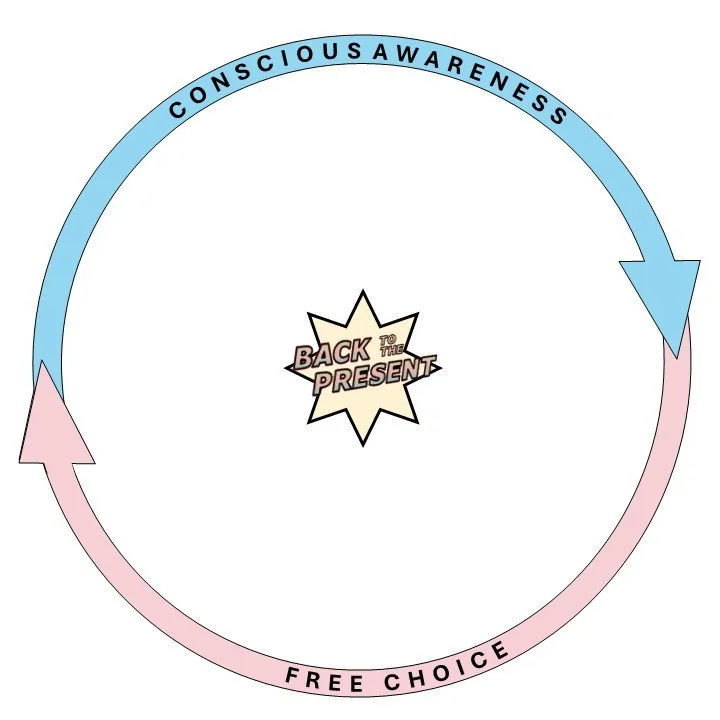
Subconscious drivers bridge the gap between the automatic and the deliberate. They can influence our decisions and reactions, but with effort, they can be brought into consciousawareness and adjusted through free choice (Figure 1-Unique Abilities).
Conscious drivers are the most advanced level of control, involving reflective and intentional thought and decision-making.
Interaction and Influence:
Often, these systems interact. For example, an unconscious fear might trigger an initial reaction (e.g., jumping back from a snake), but then consciousawareness can step in to assess the situation and determine whether the snake is dangerous or harmless. Similarly, a subconscious habit may drive someone to react a certain way in a social situation, but through conscious effort, they can change that habit over time.