
Understanding Our Identity through the CRITICAL UNDERSTANDINGS
The CRITICAL UNDERSTANDINGS articulate the relationships between our attributes and our greater purpose. They serve as a framework to integrate both Intellectual and Intuitive Attributes into our consciousness, helping us become more mindful and present in our lives. The first three—Our Gifts, Unique Abilities, and Limited Resources—are provisions that enable our awareness and empower us with the capacity to implement change. The last three—Manifestations, Agreements, and Obligations—represent what we must contribute in our own unique way.
The mindfulness model presented by backtothepresent.org, built on 6 CRITICAL UNDERSTANDINGS outlined below (Figure 3-The CRITICAL UNDERSTANDINGS that Allow us to Get backtothepresent):
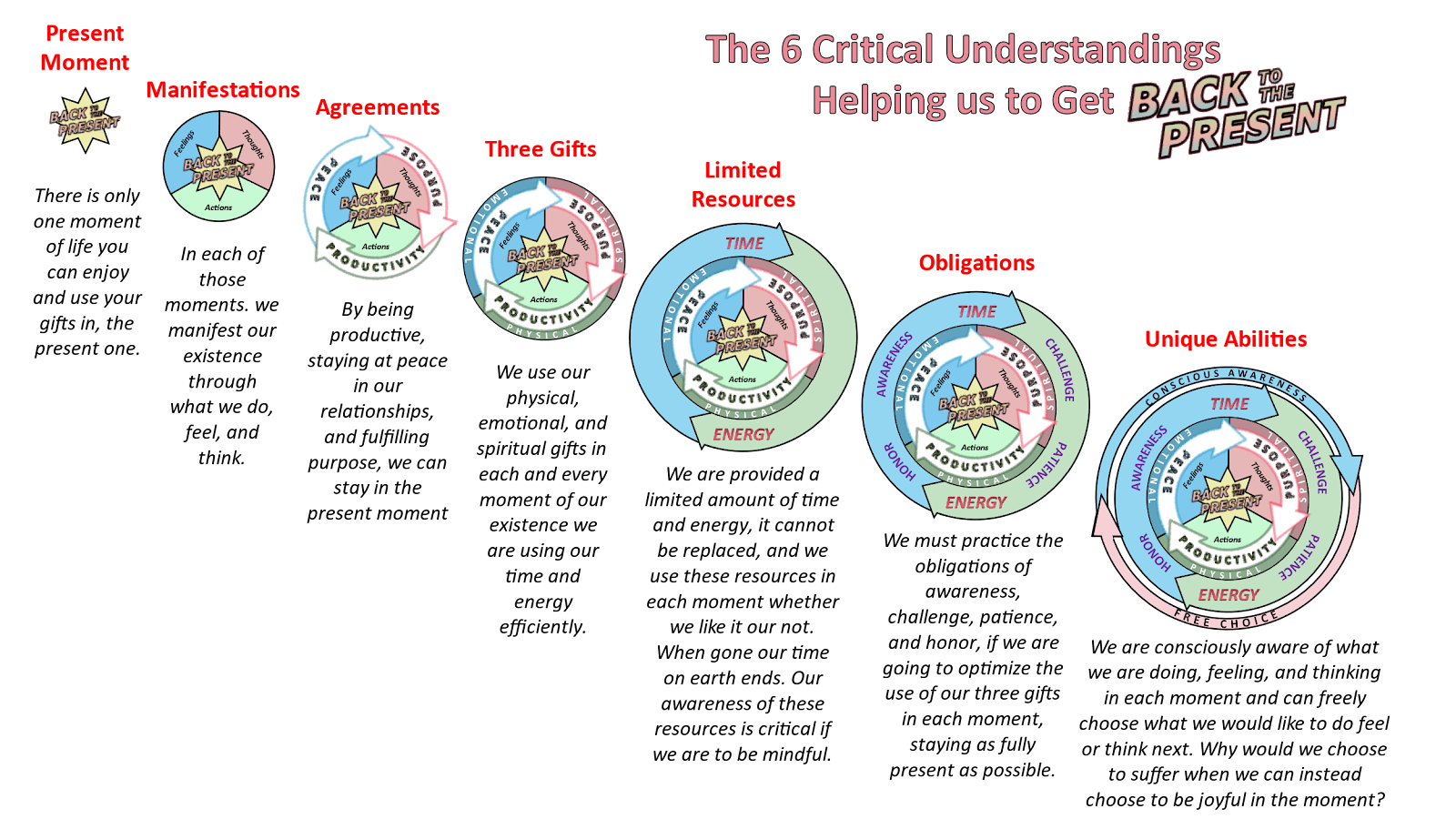
We can use these CRITICAL UNDERSTANDINGS to help us understand articulate the relationships between these intellectual and intuitive attributes and our greater purpose. The first three, our Gifts, Unique Abilities, and Limited Resources are provisions for our awareness to do what it is we wish, the last three, Manifestation, Agreements, and Obligations are what we must contribute in our own special way. When done correctly, you can become more mindful and present. Here’s a short description of how each Critical Understanding utilizes the Intellectual and Intuitive Attributes of knowledge:
Our Three Gifts: Physical, Emotional, and Spiritual
Intellectual Attributes: Drive the creation of tools and environments that ensure our physical well-being, such as health technologies and therapeutic innovations.
Intuitive Attributes: Foster emotional support, spiritual growth, and meaningful relationships that enhance our sense of identity and connection.
Limited Resources: Time and Energy
Intellectual Attributes: Help optimize the use of time through productivity tools, schedules, and innovations that save energy.
Intuitive Attributes: Guide us to prioritize meaningful connections and purposeful activities, ensuring our resources are used wisely.
Manifestations: Actions, Feelings, and Thoughts
Intellectual Attributes: Shape thoughtful decisions and create systems for progress, such as education and governance.
Intuitive Attributes: Influence compassionate actions and empathetic communication, enhancing emotional depth in interactions.
Unique Abilities: Conscious Awareness and Free Choice
Intellectual Attributes: Provide the reasoning and foresight needed to evaluate choices and plan for the future.
Intuitive Attributes: Encourage mindfulness and emotional awareness to make choices aligned with personal values and collective good.
Agreements: Productivity, Peace, and Purpose
Intellectual Attributes: Enable the design of efficient systems and structures that contribute to societal peace and productivity.
Intuitive Attributes: Instill a sense of purpose and foster harmony through nurturing and cooperative behaviors.
Obligations: Awareness, Challenge, Patience, and Honor
Intellectual Attributes: Help us solve complex challenges with innovative thinking and disciplined effort.
Intuitive Attributes: Cultivate patience, honor, and a deeper awareness of others’ experiences and perspectives.
When we fully embrace these understandings, we unlock the potential to align with our greater intention. Below is a description of how each CRITICAL UNDERSTANDING utilizes Intellectual and Intuitive Attributes to foster balance and fulfillment in our lives and the lives of those we love:
The remainder of these CRITICAL UNDERSTANDINGS, which I call ourCreative Abilities, are tied to our internal being versus those that were provided to us in our creation:
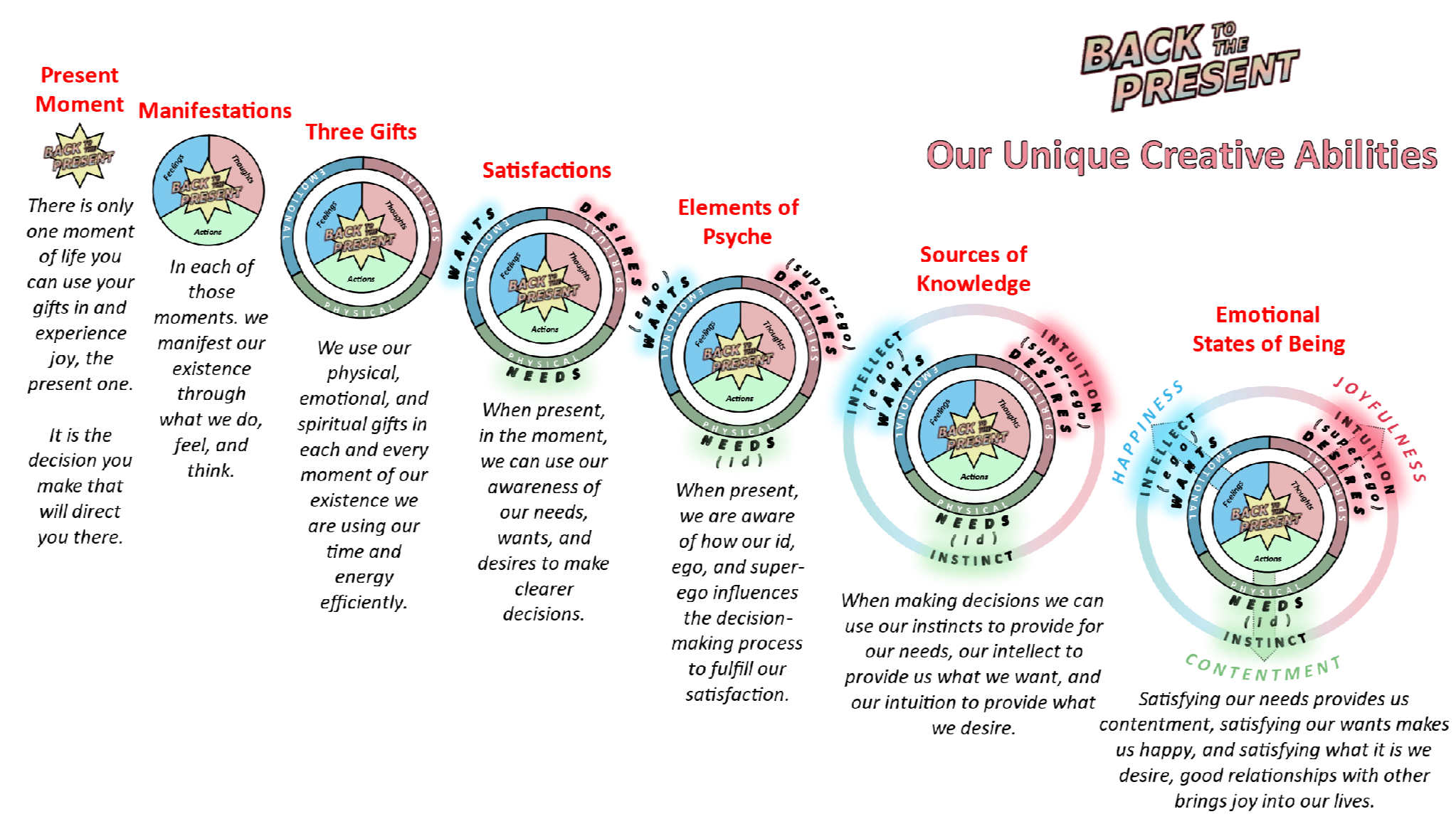
Figure 3-The CRITICAL UNDERSTANDINGS that Allow us to Get backtothepresent
Satisfactions: Needs, Wants, and Desires
Intellectual Attributes: Help satisfy physical needs and material desires through innovation and progress.
Intuitive Attributes: Balance desires with emotional fulfillment, ensuring contentment and deeper happiness.
Elements of Our Psyche: Id, Ego, and Superego
Intellectual Attributes: Regulate the ego’s desires with reason and strategy.
Intuitive Attributes: Align the super-ego with ethical and compassionate behaviors, addressing emotional and spiritual needs.
Sources of Knowledge: Instinct, Intellect, and Intuition
Intellectual Attributes: Provide logical frameworks and tools for problem-solving. Providing humanity with greater comfort, convenience, entertainment, and amusement.
Intuitive Attributes: Guide decisions with empathy, faith, sacrifice and communication giving us insight into a deeper understanding of collective needs.
States of Emotional Being: Contentment, Happiness, and Joyfulness
Intellectual Attributes: Drive achievements that provide temporary happiness or tangible benefits.
Intuitive Attributes: Sustain joy through meaningful connections, gratitude, and emotional stability.
Intuitive Identity: Emotions, Behaviors, and Responses
Intellectual Attributes: Shape our understanding of behaviors and responses through science and logic.
Intuitive Attributes: Root these behaviors in empathy, compassion, and emotional intelligence.
Levels of Consciousness: Unconscious, Conscious, and Subconscious
Intellectual Attributes: Enhance self-awareness through education, self-reflection, and critical thinking.
Intuitive Attributes: Deepen emotional insight and spiritual connection to integrate subconscious patterns into conscious living.
Each of these pillars connects to your Toolbox for a Joyful Life, providing actionable tools like communication, faith, sacrifice, and empathy that we can choose to implement into our lives. These tools guide humanity in applying our intuitive abilities to create a more harmonious and fulfilling world.
Reflection on Partnership and Purpose
When we evaluate potential partners, we naturally weigh these intellectual and intuitive attributes, drawn to their unique aptitudes. Whether admiring the skill of a musician, the wisdom of a scientist, or the empathy of a caregiver, we seek compatibility in the ideals of Intellectual and Intuitive abilities. This selection reflects not only personal preference but also humanity’s deeper drive to cultivate relationships that enrich our lives and align with our purpose.
By embracing the CRITICAL UNDERSTANDINGS and the Toolbox for a Joyful Life, we can balance our instinctual needs with intellectual wants and intuitive desires, fostering deeper connections and making the world a better place for all.
Exploring the Attributes of Identity: Intellectual and Intuitive Abilities in Our Partnerships and Humanity’s Progress
The human spirit is universally endowed with eight core attributes—four Intellectual Attributes and four Intuitive Attributes (Figure 1-Attributes of Our Identity). These qualities are the foundation upon which we evaluate one another, consciously or subconsciously, particularly when choosing a partner to share our life with. Our admiration for others is often rooted in their aptitudes within these attributes, which are shaped by both genetics and our mastery throughout the experiences of our lives.
Figure 1-Attributes of Our Identity
The Nature of Our Instinctual Attributes:
Contentment taps into our primal needs. It’s the comfort that arises when our physical necessities—food, shelter, and safety—are met. Rooted in the id, which governs our basic instincts, contentment is the quiet assurance that comes when life’s essentials are secure. Unlike the thrill-seeking nature of happiness, contentment provides a steady, calming presence that anchors us. It reminds us of what is enough, offering a sense of stability and gratitude for what we already have.
Example: Enjoying a quiet evening with friends, laughing and sharing stories, can evoke this profound sense of contentment.
Reflective Question: What is one thing you can do today to cultivate contentment in your life?
The Manifestation of Intellectual Attributes:
Humanity has tirelessly used its Intellectual Attributes—Physical, Artistic, Cognitive, and Mechanical—to create and innovate in the pursuit of satisfying the ego’s endless wants. This pursuit has been driven by the desire to achieve the emotional state of happiness, often equated with material comfort, convenience, entertainment, and amusement. However, this relentless drive has not come without consequences.
How Intellectual Attributes Have Served the Ego:
Physical Athletes and fitness experts have developed sports, training regimens, and health sciences that not only entertain but also cater to the ego’s desire for peak physical performance.
Example: The global obsession with competitive sports and fitness challenges reflects how physical attributes are tied to ego-driven wants.
Reflective Question: How can we focus on physical pursuits that serve both health and personal fulfillment rather than superficial desires?
Artistic Artistic endeavors have created endless streams of music, movies, and visual art designed to evoke awe and happiness. Yet, the consumption of art often shifts from appreciation to indulgence.
Example: The rise of streaming platforms demonstrates how art has been commodified for constant amusement.
Reflective Question: How often do you pause to truly experience art rather than consuming it for distraction?
Cognitive Scientific discoveries and technological advancements have solved problems once unimaginable, but they also enable convenience-driven lifestyles that cater to the ego’s need for instant gratification.
Example: Smartphones revolutionize communication but also tether us to constant notifications, overwhelming our minds.
Reflective Question: How can you set boundaries with technology to protect your mental clarity and contentment?
Mechanical Engineers and inventors have created systems and tools to simplify our lives and increase productivity. Yet, they have also contributed to decision fatigue.
Example: Smart home devices and gadgets make life easier but can overwhelm us with choices.
Reflective Question: What choices in your life could you simplify to reduce stress and decision fatigue?
The Consequences of Overwhelming Choice:
As humanity’s Intellectual Attributes have manifested in countless innovations, choice itself has become a source of ANXIETY. The ego’s insatiable desire for more—more options, more luxury, more convenience—has inundated our consciousness with decisions. Instead of enhancing happiness, this abundance often leaves us paralyzed or dissatisfied.
Example: Deciding between hundreds of phone models can lead to decision fatigue and dissatisfaction.
Reflective Question: How can simplifying your choices bring more clarity and contentment?
How Intuitive Attributes Foster Collaboration and Joy
Humanity’s Intuitive Attributes—social, nurturing, spiritual, and emotional—allow us to work together to pursue the satisfaction of what we desire for the super-ego. These attributes foster cooperation and enable us to bring joy into our lives by practicing the art of loving intention as outlined in the Toolbox for a Joyful Life.
Social Intuition Our ability to communicate effectively is the cornerstone of collaboration. Beyond words, we use facial expressions, body language, and tone to share feelings and thoughts on a deeper level.
Example: Building global networks, like the internet, exemplifies how social intuition enables us to share knowledge for collective good.
Reflective Question: How can you improve your communication to foster stronger connections?
Nurturing Intuition The capacity to sacrifice time and energy to nurture others is a profound expression of loving intention. Unlike other animals, human nurturing extends beyond survival.
Example: Helping a younger sibling prepare for a school project demonstrates nurturing beyond basic needs.
Reflective Question: Who could benefit from your support today, and how can you offer it?
Spiritual Intuition Faith gives us a belief in shared humanity and purpose. It fosters resilience and unity, especially in difficult times.
Example: Joining a volunteer group reflects faith in collective efforts to create positive change.
Reflective Question: How does your faith in others inspire your actions?
Emotional Intuition Empathy allows us to deeply connect with others by understanding and sharing their experiences. This ability transcends survival needs, enabling profound relationships.
Example: Offering emotional support to a friend overwhelmed by life pressures builds deeper trust and connection.
Reflective Question: How can practicing empathy improve your relationships?
The Art of Loving Intention
The Toolbox for a Joyful Life provides actionable tools—communication, faith, sacrifice, and empathy—that channel our Intuitive Attributes to create a better world. By practicing these tools, we transform our interactions and strengthen our relationships.
Communicate: Resolve conflicts with authenticity and understanding.
Maintain Faith: See purpose beyond survival and uplift others.
Nurture: Dedicate time and energy to those who need it.
Practice Empathy: Connect meaningfully to foster compassion.
Reflective Question: What is one way you can apply loving intention today to make a positive impact?
A Call to Reflect
How can you better balance your Intellectual Attributes and Intuitive Attributes to foster well-being?
How can you simplify choices to focus on what truly matters?
How can practicing loving intention bring more joy and contentment to your life?
By embracing these attributes, we can transcend the limitations of the ego and experience deeper fulfillment, individually and collectively.