
Practical Applications of Awareness and Decision Making
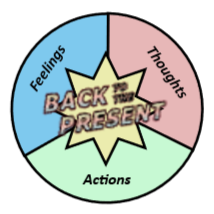
Figure 1: Manifestations
Using Awareness in Daily Life
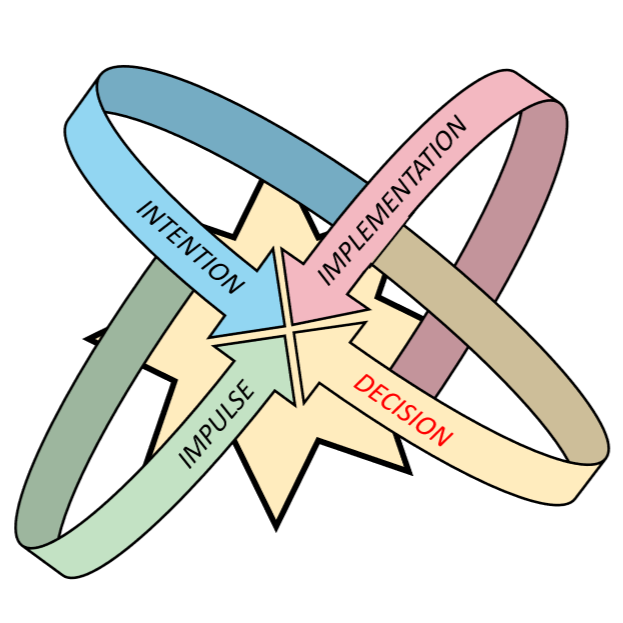
Figure 2: Decision Making
Awareness is a powerful tool that can significantly enhance our decision-making processes, leading to a more fulfilling and balanced life. By being present and mindful of our actions, feelings, and thoughts, we can make better decisions and fully engage with the world around us (Figure 1-Manifestation). This section provides practical tips on how to use awareness in daily life.
Practical Tips for Using Awareness to Make Better Decisions
Controlling Instinctual Primitive Impulses: Instinctual impulses, driven by our physical being and the id, are our most basic and primitive responses aimed at immediate survival and gratification. While these impulses are essential for addressing urgent needs, they can often lead to impulsive decisions that may not serve our long-term interests.
The first step in controlling these impulses is recognizing them. Remind yourself regularly that when we act impulsively on fear, anger, sadness, and temptation we typically create suffering for ourselves and others. Being aware of our immediate, gut reactions allows us to pause and consider whether acting on them is truly beneficial.
Set Clear Emotional Intentions: Our emotions play a significant role in shaping our intentions and motivations. The ego and our emotional being helps us mediate between our feelings and what it is we want. We must set our intentions in a way that recognizes how our wants may create difficulty for others.
Begin each day by setting clear intentions. Setting clear emotional intentions involves understanding what outcomes we want. This requires introspection and self-awareness. Before starting your workday, take a few moments to outline your key tasks and how you want to approach them. Set an intention to stay calm and focused, being clear that making others suffer will lead to unhappiness
Implementing Knowledge: Using the guidance provided by our spiritual awareness of thought, allows us to access both intellectual and intuitive knowledge when making decisions.
Once we have controlled our primitive impulses and set our emotional intentions, we can implement our choices using the intellectual and intuitive knowledge we have accrued in our collective consciousness. This promotes using loving intention for thoughtful and informed decision-making.
Pause and Reflect: Take regular breaks to pause and reflect on your actions, feelings, and thoughts. This helps you stay connected to the present moment and make more conscious decisions.
Set a timer to remind yourself to take a short break every hour. During this break, take a few deep breaths, stretch, and check in with your current state of mind and body.
Practice Mindful Listening: When engaging in conversations, practice mindful listening. Give your full attention to the speaker without planning your response or getting distracted by your own thoughts.
During a meeting, focus entirely on the speaker. Notice their tone, body language, and the content of their message. Avoid interrupting and allow them to finish before you respond.
Prioritize Your Tasks: Use awareness to prioritize your tasks based on their importance and urgency. This helps you manage your time and energy more effectively.
At the beginning of each week, list all your tasks and categorize them by priority. Focus on completing the most important and urgent tasks first before moving on to less critical ones.
Engage in Mindful Activities: Incorporate activities that promote mindfulness into your daily routine, such as meditation, yoga, or mindful walking.
Start your day with a 10-minute meditation session to center yourself and set a positive tone for the day. Alternatively, take a mindful walk during your lunch break, paying attention to the sights, sounds, and sensations around you.
Emphasizing Presence and Mindfulness
Being present in the moment and mindful of your actions, feelings, and thoughts is crucial for making better decisions. Here are some additional ways to cultivate presence and mindfulness in daily life:
Focus on Your Breath: Use your breath as an anchor to bring yourself back to the present moment whenever you feel distracted or overwhelmed.
Whenever you notice your mind wandering, take a few deep breaths and bring your attention back to the present moment. Focus on the sensation of the air entering and leaving your nostrils.
Engage Your Senses: Use your senses to ground yourself in the present moment. Notice the sights, sounds, smells, tastes, and physical sensations around you.
While eating, take time to savor each bite. Notice the texture, flavor, and aroma of your food. This practice can enhance your enjoyment and help you stay present.
Practice Gratitude: Regularly take time to reflect on the things you are grateful for. This can shift your focus from what is lacking to what is abundant in your life.
At the end of each day, write down three things you are grateful for. Reflect on how these positive aspects have impacted your day and your overall well-being.
Addressing ANXIETY and Distraction
ANXIETY is a common challenge that can distract us from the present moment by occupying our feelings and thoughts and making us waste our Limited Resources of time and energy, hindering our ability to make clear and effective decisions. By understanding the impact of ANXIETY and implementing strategies to manage it, we can stay focused and present. Here, we explore five main sources of ANXIETY: the complexity of choice, future perceptions, past burdens, relationship difficulties, and a lack of love of self.
The Impact of ANXIETY on the Present Moment
ANXIETY often pulls our attention away from the present moment by causing us to worry about future events or dwell on past experiences. This can lead to:
Reduced Focus: ANXIETY can make it difficult to concentrate on the task at hand, leading to mistakes and decreased productivity.
Impaired Decision-Making: When anxious, we may struggle to think clearly and make rational decisions, often reacting impulsively or avoiding decisions altogether.
Physical Symptoms: ANXIETY can manifest physically, causing symptoms such as increased heart rate, muscle tension, and fatigue, which can further distract us from the present moment.
Emotional Distress: Chronic ANXIETY can lead to feelings of helplessness, frustration, and sadness, impacting our overall emotional well-being.
The Five Sources of ANXIETY (Figure 3-Five Sources of ANXIETY):
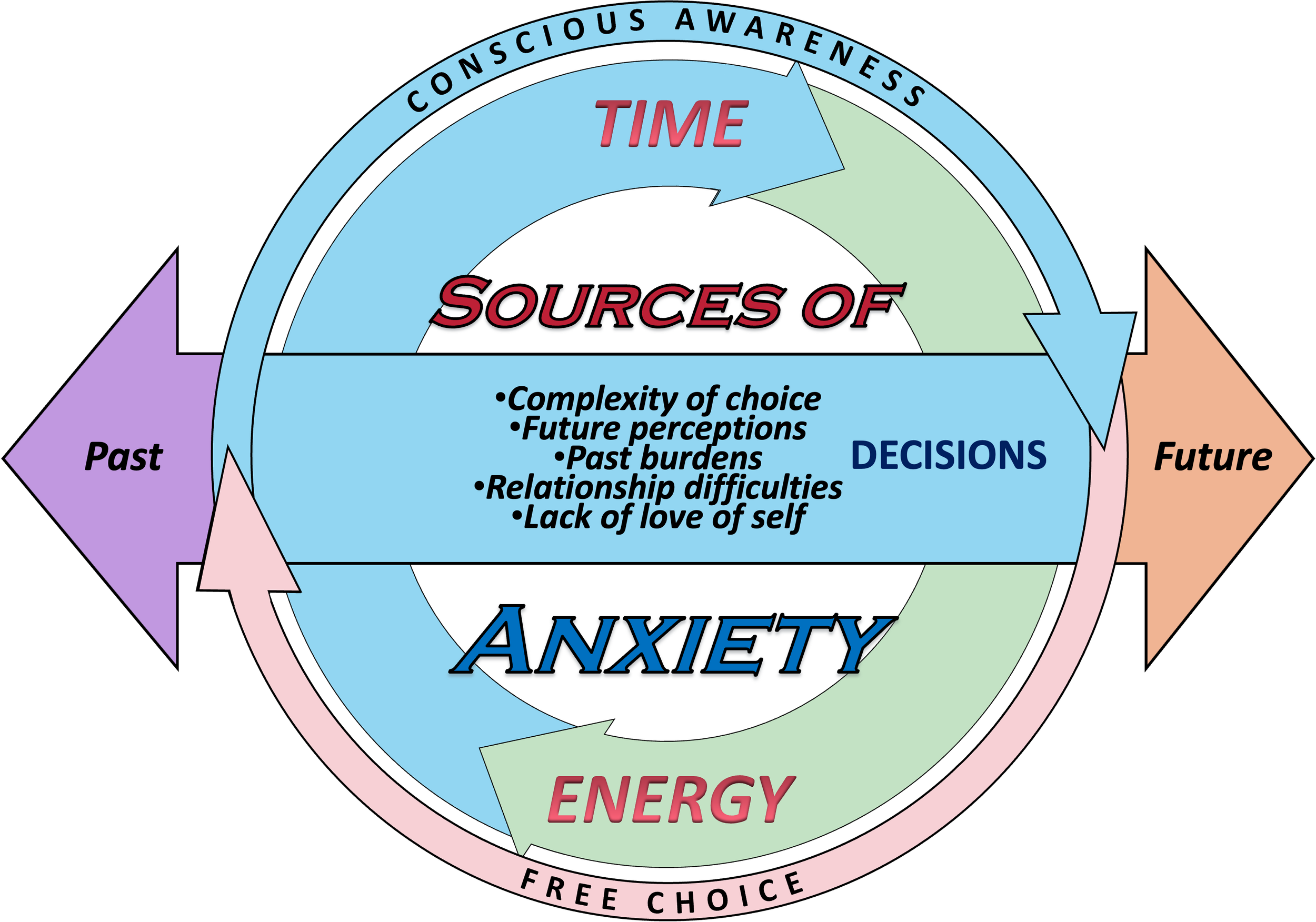
Figure 3-Five Sources of Anxiety
The Complexity of Choice:
Explanation: In modern life, we are often faced with a multitude of choices, from daily decisions to major life changes. The overwhelming number of options can create stress and ANXIETY as we strive to make the best possible decision.
Impact: This complexity can lead to decision paralysis, where the fear of making the wrong choice prevents us from making any decision at all. It can also result in second-guessing and regret, further fueling ANXIETY.
Choosing a career path can be daunting due to the many factors to consider, such as job stability, personal interests, and long-term goals. This complexity can cause significant stress.
Future Perceptions:
Explanation: ANXIETY often stems from worrying about future events and outcomes. This includes fears about potential failures, uncertainties, and the unknown.
Impact: These future-oriented anxieties can prevent us from enjoying the present moment and lead to chronic stress and worry.
Constantly worrying about future financial stability can distract someone from appreciating their current achievements and well-being.
Past Burdens:
Explanation: Past experiences, especially negative ones, can create ANXIETY. This includes lingering guilt, regret, and unresolved trauma.
Impact: Carrying the weight of past burdens can affect our current mental state and decision-making abilities, causing us to react based on past fears rather than present realities.
A person who has experienced a traumatic event may struggle with ANXIETY triggered by reminders of that event, impacting their daily life.
Relationship Difficulties:
Explanation: Conflicts and challenges in personal relationships are a significant source of ANXIETY. This includes issues with family, friends, romantic partners, and colleagues.
Impact: Relationship difficulties can lead to emotional distress, reduced self-esteem, and constant worry about social acceptance and harmony.
Ongoing conflicts with a partner or family member can cause persistent ANXIETY and stress, creating frustration, disappointment, resentment, anger, animosity, contempt, and even hatred, affecting overall well-being and joy (Figure 3-Relationship Difficulties).
Lack of Love of Self:
Explanation: Self-esteem and self-worth are crucial for mental health. A lack of self-love and acceptance can lead to negative self-talk, self-doubt, and ANXIETY.
Impact: Without a foundation of self-love, individuals may constantly seek external validation and fear judgment, leading to chronic ANXIETY and dissatisfaction.
Someone who constantly criticizes themselves and doubts their abilities may experience heightened ANXIETY in social and professional situations.
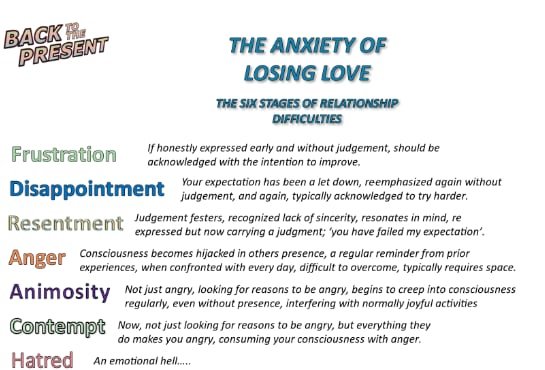
Figure 4: Anxiety of Relationship Difficulties
Strategies to Manage ANXIETY and Stay Focused on the Present
Practice Deep Breathing: Deep breathing exercises can help calm the nervous system and reduce ANXIETY, bringing your focus back to the present moment.
Try the 4-7-8 breathing technique: Inhale for 4 seconds, hold your breath for 7 seconds, and exhale for 8 seconds. Repeat this cycle a few times until you feel more relaxed.
Use Grounding Techniques: Grounding techniques can help you reconnect with the present moment by focusing on your physical sensations.
Try the 5-4-3-2-1 technique: Identify 5 things you can see, 4 things you can touch, 3 things you can hear, 2 things you can smell, and 1 thing you can taste. This exercise can help shift your focus from ANXIETY to the present moment.
Not Acting F.A.S.T.: F.A.S.T. stands for Fear, Anger, Sadness, and Temptation. This technique involves recognizing these emotions and choosing not to react impulsively to them. Instead, take a moment to pause, reflect, and respond thoughtfully, this exercise intends to encourage you to use loving intention to make decisions (the Toolbox for a Joyful Life).
Set an image representing fear, anger, sadness, and temptation as your phone's wallpaper. Each time you receive a call, text, or notification, remind yourself not to react impulsively. Say to yourself, "Don't act F.A.S.T. on fear, anger, sadness, or temptation. Nothing good will come of it!" This practice increases awareness of these emotions, reducing unnecessary suffering and leading to a more joyful and fulfilling life.
Limit Distractions: Create an environment that minimizes distractions, allowing you to focus more effectively on the present task.
Turn off unnecessary notifications on your phone and computer, create a dedicated workspace, and set specific times for checking emails and messages.
Establish a Routine: Having a consistent daily routine can provide a sense of stability and predictability, reducing ANXIETY and helping you stay focused.
Set a regular schedule for your daily activities, including work, exercise, meals, and relaxation. This can help create a sense of order and reduce ANXIETY about the unknown.
Engage in Physical Activity: Regular exercise can help reduce ANXIETY by releasing endorphins and providing a healthy outlet for stress.
Incorporate physical activity into your daily routine, such as a morning jog, yoga session, or evening walk. Physical movement can help clear your mind and reduce ANXIETY.
Seek Support: Talking to a trusted friend, family member, or therapist can provide emotional support and help you manage ANXIETY.
Schedule regular check-ins with a supportive friend or family member to discuss your feelings and challenges. Consider seeking professional help if ANXIETY becomes overwhelming.
Conclusion
Using awareness in daily life and managing ANXIETY effectively are essential for making better decisions and leading a fulfilling life. By being present and mindful, setting clear intentions, and implementing practical strategies to address ANXIETY and distractions, we can enhance our overall well-being and achieve our goals. Embracing these practices can lead to more meaningful relationships (peace), improved productivity, and a greater sense of joy and purpose.