
Toolbox for a Joyful Life

The "Toolbox for a Joyful Life" is a collection of qualities that reflect ethical and moral values, which I often refer to as the tools of loving intention. These values can be tied to both spiritual and religious beliefs but are not exclusive to any single tradition. They form the bedrock of many teachings across various faiths and philosophies and are universal principles that anyone can embrace, regardless of religious or spiritual affiliation.
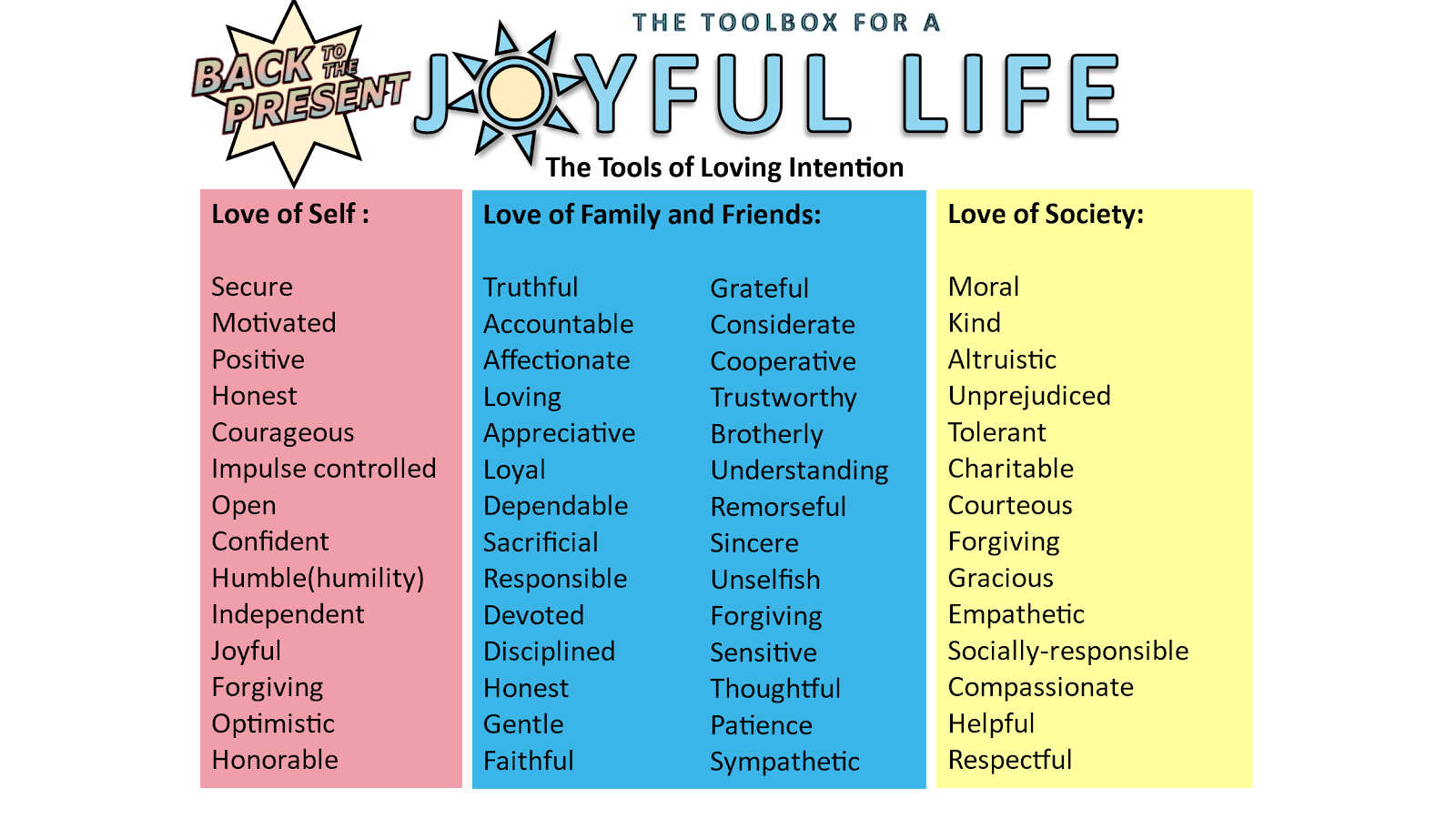
Figure 1-Toolbox for a Joyful Life
Spirituality vs. Religion
While spirituality and religion both provide a foundation for these values, they do so in different ways. Let's explore how spirituality and religion intersect and diverge in their approach to these universal principles.
Spirituality is a broad concept that encompasses a wide range of beliefs and practices. It's often personal and doesn't necessarily align with the required conventions typical of organized religions. Many people consider themselves spiritual but not religious, drawing their values from personal experiences, philosophical teachings, and exploration.
Religious beliefs are typically associated with specific organized religions that have established doctrines, rituals, and communities. These religions may incorporate the values listed here as part of their teachings.
In essence, the values in the Toolbox represent universal ethical and moral principles that resonate with people regardless of their spiritual or religious backgrounds. These characteristics and traits are unique to the human spirit, responsible for humanity’s ability to work together and prosper. When we behave in this manner, typically things improve. To whom you bestow credit for providing you these tools may be important to you and your religious convictions; however, it is my belief that they are accessible to all.
How do you personally reconcile spirituality and religion in your own life? How do these values manifest in your daily actions?
The Intuitive Tools of Loving Intention: Nurturing Joyful Lives in a Capitalistic World
Now, let's delve into how these tools of loving intention operate within us, particularly in the context of a capitalistic world where intellectual achievement is often prioritized over intuitive qualities.
The tools of loving intention—self-love, compassion, empathy, and moral responsibility—reside deep within our subconscious minds. These tools form a collection of intuitive knowledge that guides our decisions, existing beside the intellectual knowledge emphasized by traditional educational systems. Unfortunately, in capitalistic societies, we often prioritize intellectual achievement over the nurturing of these intuitive qualities, which are essential for cultivating joyful and meaningful lives.
From an early age, children are immersed in an education system that prioritizes academic success, measurable outcomes, and economic productivity. While intellectual knowledge is undeniably important, this singular focus neglects the beacon of joy that can be cultivated through teaching children to live with this unique understanding of loving intention. When we ignore the development of intuitive knowledge, we miss the opportunity to teach our young the importance of having good relationships and being joyful people.
Consider the story of Emily, a high-achieving student who excelled academically but struggled with anxiety and loneliness. Emily’s parents began to emphasize the importance of compassion and empathy at home, modeling these behaviors in their interactions. Over time, Emily learned to value her relationships and developed a sense of joy and fulfillment that complemented her academic success.
Think about your own education. How much emphasis was placed on developing intellectual knowledge versus intuitive qualities like empathy and compassion? How did this balance affect you?
The Pink Column: Self-Love and Self-Compassion
To understand the specific qualities of loving intention, let's first examine the attributes associated with self-love and self-compassion.
The qualities in the pink list focus on self-love and self-compassion. Attributes like positivity, honesty, confidence, and joy contribute to a healthy self-image. When we embrace these qualities, we experience greater well-being and build more fulfilling relationships. Self-love and self-acceptance are crucial for personal growth and emotional health.
John struggled with low self-esteem for years, often being his own harshest critic. After attending a mindfulness workshop that focused on self-compassion, John began practicing daily affirmations and self-kindness exercises. He noticed a significant improvement in his overall happiness and his ability to connect with others more genuinely.
Perspectives from Major Religions
Different religious traditions offer unique perspectives on these qualities, highlighting their universal importance.
Christianity: Self-love and self-compassion are rooted in the belief that humans are created in the image of God, implying inherent worth and the need to treat oneself with love and respect. The Great Commandment emphasizes "Love your neighbor as yourself."
Buddhism: Emphasizes self-compassion as a step towards compassion for others, often practiced through loving-kindness meditation (Metta), which begins with self-love.
Hinduism: Highlights the concept of Atman (the self) being part of Brahman (the universal spirit), encouraging self-respect and compassion that extend outward.
Islam: Teaches self-respect and self-care as part of fulfilling one's duties to God, emphasizing balance and caring for one's well-being.
Judaism: The principle "Love your neighbor as yourself" underscores the importance of self-respect and self-care as foundations for loving others.
Taoism: Advocates for living in harmony with the Tao, nurturing health and well-being as part of the natural order.
Sikhism: Views self-love and self-compassion through recognizing the divine spark within oneself, fostering humility and compassion towards others.
Indigenous Spiritualities: Emphasize the interconnectedness of all life, viewing self-love and self-compassion as integral to maintaining balance and harmony.
How do you practice self-love and self-compassion in your daily life? What impact has it had on your relationships with others?
The Blue Column: Loving Friends and Family
Next, let's explore the qualities that are crucial for nurturing relationships with friends and family.
The blue column highlights how we should love and interact with our friends and family. Attributes like love, loyalty, dependability, understanding, and compassion are essential for nurturing healthy, supportive relationships. These qualities foster strong bonds, trust, and mutual respect, which are the foundations of lasting friendships and family connections.
Case Study: Maria and her family decided to implement weekly family meetings where everyone could express their feelings and concerns openly. This practice of open communication and understanding helped resolve conflicts and strengthened their familial bonds, leading to a more harmonious household.
Perspectives from Major Religions
These qualities are also emphasized in various religious traditions, each offering insights into their importance.
Christianity: Emphasizes love and compassion within the family and community, aligning with the call to love thy neighbor and treat others with kindness.
Buddhism: Advocates for compassion (Karuna) and loving-kindness (Metta), promoting empathy, forgiveness, and a deep sense of connection.
Hinduism: Emphasizes Dharma (duty) towards family and society, promoting love, consideration, honesty, and loyalty.
Islam: Stresses the importance of family, advocating for kindness, respect, and responsibility.
Judaism: Places high value on family and community relationships, emphasizing love, respect, and responsibility.
Taoism: Promotes harmonious relationships through gentleness, sincerity, and patience.
Sikhism: Teaches the importance of selfless service (Seva) and devotion to family and community.
Indigenous Spiritualities: Value familial and community bonds, promoting loyalty, respect, and understanding.
Reflect on a time when you had to show loyalty or compassion to a friend or family member. How did it affect your relationship?
The Yellow Column: Engaging with Society
Finally, let's consider the attributes necessary for engaging positively with society as a whole.
The yellow list describes how we should engage with society as a whole. Qualities such as being moral, kind, altruistic, unprejudiced, tolerant, charitable, courteous, forgiving, gracious, empathetic, socially responsible, compassionate, helpful, and respectful contribute to a harmonious and compassionate society.
Inspired by their religious teachings on charity and social responsibility, a community in a small town started a weekly soup kitchen to help those in need. The initiative not only provided meals but also fostered a sense of community and compassion among volunteers and recipients alike.
Perspectives from Major Religions
Major religions also emphasize these societal values, underscoring their importance for a harmonious community.
Christianity: Teaches that loving one's neighbor extends to broader societal interactions, emphasizing social justice, forgiveness, and compassion.
Buddhism: Emphasizes the interconnectedness of all beings and the importance of compassion and loving-kindness towards all.
Hinduism: The concept of Dharma extends to societal responsibilities, promoting moral behavior, kindness, and charity.
Islam: Emphasizes justice, charity (Zakat), and compassion, encouraging social responsibility and empathy.
Judaism: Places strong emphasis on social justice, kindness, and moral responsibility, advocating for charitable actions and societal well-being.
Taoism: Teaches living in harmony with the Tao, fostering societal harmony through moral, kind, and compassionate actions.
Sikhism: Emphasizes selfless service (Seva) and the welfare of all (Sarbat da Bhala), promoting social justice and mutual respect.
Indigenous Spiritualities: Emphasize the interconnectedness of all life and the importance of community, valuing moral behavior and social responsibility.
How can you contribute to your community in a way that reflects the values of compassion, empathy, and social responsibility?
The Intuitive Tools of Knowledge: Our Intuitive Versus Intellectual Identity
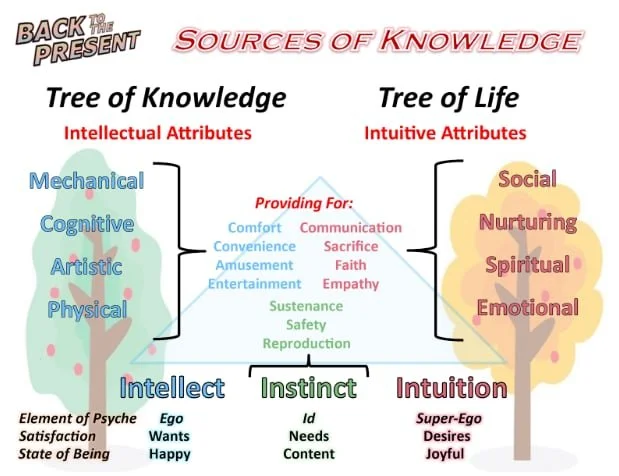
To further understand these values, it's essential to differentiate between our intuitive and intellectual identities.
The "Tree of Knowledge" and the "Tree of Life" depicted in the image illustrate two distinct sources of knowledge that shape our identity: intellectual and intuitive attributes. These intuitive tools of knowledge encompass our emotions, behaviors, and responses, representing a core aspect of our identity that complements our intellectual understanding of the world.
Intellectual Attributes: The Tree of Knowledge
Mechanical, Cognitive, Artistic, Physical: These attributes define our intellectual identity, focusing on skills and knowledge that are often measurable and teachable. They provide for comfort, convenience, amusement, and entertainment, fulfilling the ego’s wants and leading to happiness.
Intuitive Attributes: The Tree of Life
Social, Nurturing, Spiritual, Emotional: These attributes define our intuitive identity. They encompass the innate qualities and emotional intelligence that guide our interactions and relationships with others. These tools are essential for communication, faith, empathy, and sacrifice. They satisfy deeper needs and desires, fostering contentment and joy.
The Role of Intuitive Knowledge in Human Interaction
Intuitive knowledge plays a crucial role in how we connect with others and navigate the complexities of human relationships. This form of knowledge includes:
Communication: Effective communication relies on understanding and empathy, allowing us to connect with others on a deeper level. Intuitive tools help us read non-verbal cues, sense emotions, and respond appropriately, fostering meaningful interactions.
Faith: Having faith in ourselves and others is rooted in our intuitive understanding of trust and belief. This faith is not always based on logical reasoning but on a deeper, intuitive sense of confidence and reliability.
Empathy: Empathy allows us to share and understand the feelings of others, creating a sense of connection and compassion. It is an intuitive response that helps us relate to and support one another.
Sacrifice: The willingness to sacrifice for others stems from our intuitive understanding of love and compassion. It involves putting the needs of others before our own, often without expecting anything in return.
Can you recall a moment when you relied on your intuitive understanding to navigate a difficult situation? How did it impact the outcome?
Integrating Intuitive and Intellectual Knowledge
While intellectual attributes equip us with the skills to navigate the practical aspects of life, it is the intuitive attributes that enrich our lives with meaningful connections and emotional fulfillment. Both forms of knowledge are essential for a balanced and holistic approach to personal development and societal well-being.
By recognizing and nurturing these intuitive tools, we can enhance our ability to communicate effectively, build trust, empathize with others, and make selfless sacrifices. This balanced approach not only contributes to our personal joy and fulfillment but also fosters a more compassionate and connected society.
Case Study: A school district implemented a balanced curriculum that included both academic subjects and social-emotional learning. Students engaged in activities that fostered empathy, communication, and community service. Over time, teachers observed not only improved academic performance but also a more supportive and cohesive school environment.
How can you balance the development of your intellectual and intuitive attributes in your daily life?
A Universal Ethical Perspective
This Toolbox offers a secular perspective on how individuals can positively impact society. It focuses on ethical and moral principles that apply broadly, encouraging everyone to contribute to a better world, irrespective of their religious or spiritual beliefs.
What steps can you take to integrate the principles from the Toolbox for a Joyful Life into your personal and professional life?