
Unlock Your Invisible Toolbox: A Guide to a Joyful Life
Every single one of us is born with a kind of invisible toolbox—it’s like a secret kit that’s filled with everything we need to grow into someone who’s not just smart, but also cool, kind, and thoughtful. Think of it as your very own personal toolkit for a joyful life, that is why I refer to it as the Toolbox for a Joyful Life below (Figure 1). Just like you're naturally equipped to learn how to talk or swim, you also have what it takes to be caring, honest, empathetic, and all those other good things that make us who we are.
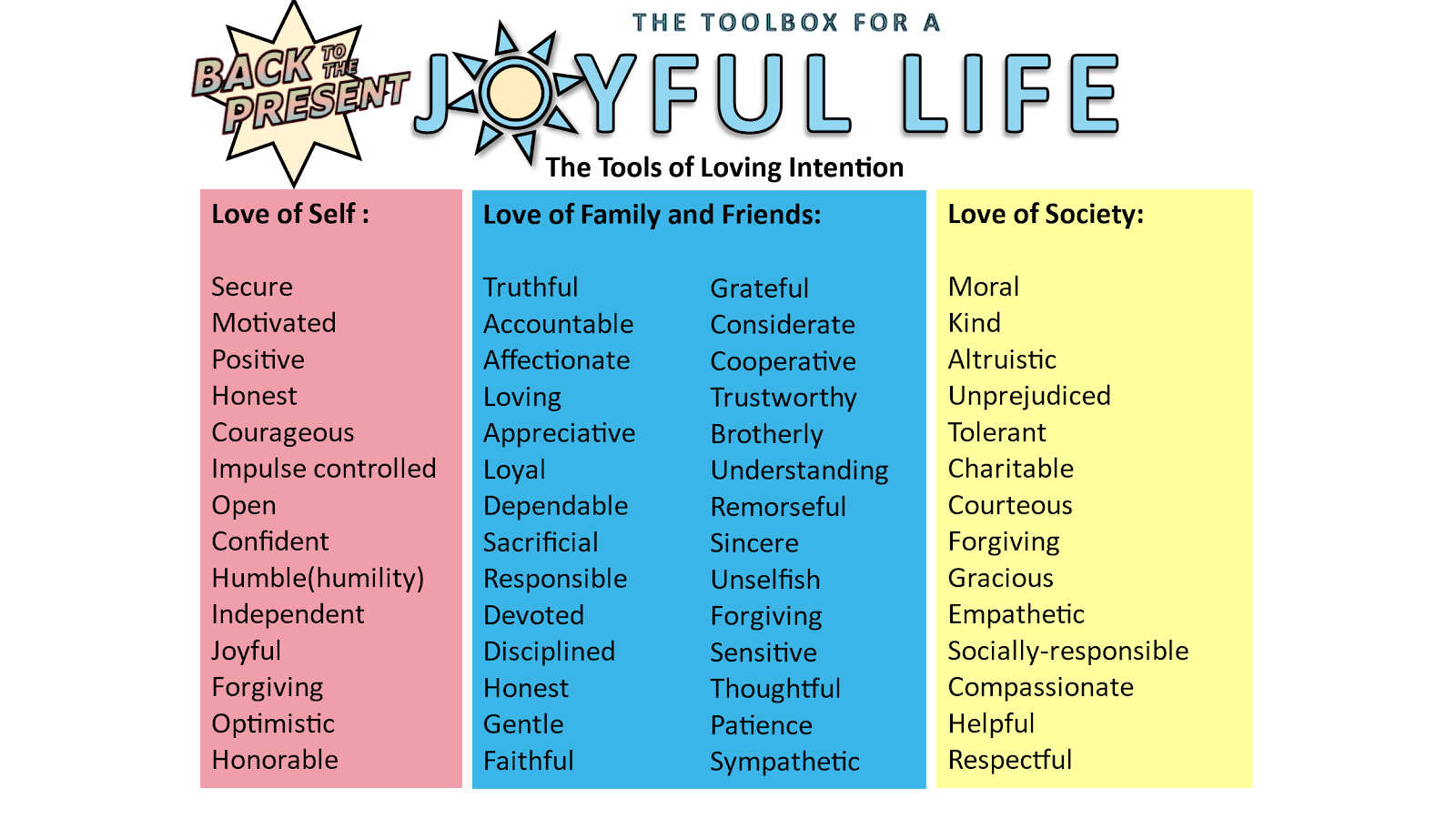
Figure 1-Toolbox for a Joyful Life
What’s one tool from this set you’ve used recently without even realizing it?
When was the last time you felt completely at ease and secure with yourself? What tools from your personal toolbox do you think contributed to that feeling?
Living with loving intention is about turning up the 'Kindness' mode on your life’s compass. Whether it’s big stuff or just small gestures like sharing a song you love or checking in with a friend to see how they’re doing, every action comes from a desire to spread good vibes and make a difference. These little things are the background music of your life, keeping the beat positive, even on the days when things look gray.
Can you think of a small act of kindness you witnessed or carried out today, and how did it make you feel?
Take Sam, for instance, who saw Alex looking lost on his first day in high school and remembered his own uneasy feelings. Sam didn’t just walk by; he walked over, helped Alex find his way, and even introduced him to some friends. It was a small act of empathy and kindness that not only made Alex’s day but also sparked a lasting friendship.
When have you extended a helping hand without being asked, just because it felt like the right thing to do?
Can you share an experience where you felt a strong connection to someone else’s emotions? How did using empathy help in that situation?
Or consider Mia, who noticed her friend Jake struggling with family issues during finals week. Instead of focusing solely on her studies, Mia chose to sacrifice her time and energy to help Jake understand his coursework. This sacrificial act of loyalty and kindness not only helped Jake succeed but deepened their friendship, showing that true friends are there for each other no matter what.
Think of a time when you gave up something for the benefit of another person. How did this act of sacrifice make you feel, and why is that tool important in our lives?
Sacrifice often goes unnoticed. Can you think of an act of sacrifice someone did for you recently, and how did it affect your relationship with them?
And your feelings? They're like a friend who’s always there to celebrate someone's success or offer a shoulder when things get rough. It's about making sure love isn’t just a tucked-away feeling—it’s the vibe you give off and the energy you share with the world.
Imagine you’ve always got this toolbox with you. Instead of screwdrivers and hammers, it's filled with super skills that let you love yourself, family and friends, and society on a whole other level—tools like empathy, sacrifice, communication, and faith, which are essential for trusting and understanding people. These aren’t just any tools; they’re like intuitive powers that help you have meaningful relationships.
Think about Jamie, who stayed up all night helping Chris through his breakup? That’s your toolbox in action—showing empathy and sacrificing sleep to support a friend in need. Or when you organized a surprise party for Lee’s birthday just to see them smile—that’s using your communication skills and empathy to bring joy to others.
Which tool from the toolbox do you feel is your strongest? Which do you wish to develop further, and why?
Using these tools is what being a friendship ninja is all about. You learn how to listen, how to cheer someone up, and how to keep it real. These aren’t just skills; they’re the building blocks for the strongest friendships and family ties. When we use them, we’re not just getting by; we’re making sure everyone around us feels heard and valued.
Our emotional toolkit is a steadfast companion, encouraging us to cheer for successes and offer solace in tough times. It's about ensuring that love and care aren't just inward feelings but are expressed outwardly, shaping the world with positive energy.
How have your feelings led you to take action recently, and what impact did this have on those involved?
While grand gestures can capture our attention, it’s the quiet, consistent acts of kindness that truly weave the fabric of our daily lives. Each gentle word, each small deed of compassion, accumulates like the countless grains of sand that form a beach. It's the daily "hellos," the spontaneous smiles, and the listening ears in moments of need that create ripples of positivity, growing into waves of change. These small, everyday actions are the unsung heroes of transformation, steadily building a legacy of warmth and connection that can outshine even the grandest of gestures.
Reflect on a moment when a simple action had a profound impact. How might you incorporate more of these actions into your routine?
But why aren’t schools packed with lessons on how to be brave or get along with people? Traditionally, schools focus on stuff that’s easy to score, like math problems or history facts. But things like feelings and how to be a good human? Those are harder to measure, and they often don’t get the classroom time they deserve.
In what ways do you think we can recognize and celebrate the use of these intuitive skills in school settings?
The good news is, things are starting to shift. More and more, schools are realizing that understanding and managing your feelings, or knowing how to deal with people, is super important—just as important as any science class. That’s why you might start seeing more classes on social and emotional learning (SEL). These classes help bring out those traits in your invisible backpack and put them into action in everyday life.
What SEL skill do you wish to practice more, and how might it benefit your daily school life?
Learning to be a great friend is becoming as normal as learning how to write an essay. It’s a big change, and it won’t happen overnight. But as teachers, parents, and policymakers start to see how vital these skills are, you’ll see them more and more in classrooms.
Living with loving intention isn't always easy, and it comes with its set of challenges that can test our resolve and commitment. One common hurdle is the fast-paced nature of modern life, which often prioritizes quick results over meaningful interactions, making it hard to remain patient and present for others. Additionally, everyday stresses and personal struggles can drain our emotional reserves, making it difficult to consistently act with kindness and empathy. There's also the challenge of navigating misunderstandings and conflicts, which can lead to frustration and discourage us from sticking to our principles of compassion and understanding. Moreover, the fear of vulnerability, of opening up and possibly not being reciprocated in the same manner, can deter us from engaging deeply. Despite these obstacles, the effort to maintain loving intention is profoundly rewarding, as it not only enriches our relationships but also nurtures our own emotional well-being, creating a cycle of positivity that can uplift our entire community.
By getting a chance to work on all these traits from the toolbox, you’re not just training your brain for tests; you’re training for life. You’re getting ready to be the best you can be, not just for yourself but for everyone around you. That’s what growing up with loving intention is all about. It’s about making sure that with every step you take, you’re not just moving forward; you’re making the world a little brighter for everyone.
As we wrap up our exploration of the invisible toolbox and the power of living with loving intention, I encourage each of you to take a moment to reflect on today's discussion. Think about the tools we've explored—empathy, kindness, communication, sacrifice, and more. These are not just abstract concepts; they are practical tools that can transform your daily interactions and enrich your relationships.
Call to Action:
Now, I invite each of you to identify one specific tool from your toolbox that you feel could make a positive impact on your daily life. Perhaps you choose to focus on empathy, striving to truly understand and connect with those around you. Maybe you decide to exercise kindness, making a conscious effort to perform a small, thoughtful act each day. Or you could enhance your communication, ensuring you express your thoughts and feelings clearly and listen actively to others.
Once you have chosen your tool, commit to using it consistently in your interactions over the next week. Keep a brief journal of your experiences, noting any changes in your relationships and how the use of this tool makes you feel. This is your opportunity to not just learn about these concepts but to live them, to put them into practice in a way that could change your world for the better.
Let’s make a conscious effort to use our tools not sporadically, but as a regular part of our daily lives. By doing so, we not only improve our own lives but also set a ripple of positivity in motion that can spread throughout our communities. Remember, every big change starts with one small step. What will your step be today?