
The Toolbox for a Joyful Life: Emotions, Behaviors, and Responses
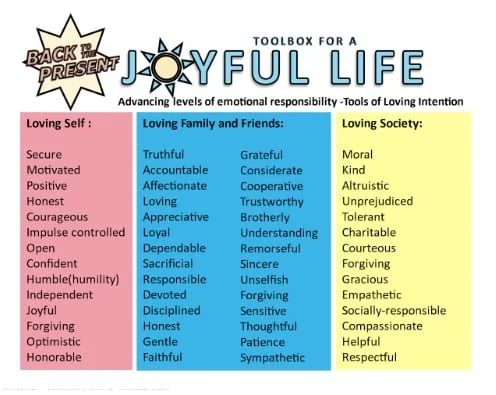
Figure 1-Toolbox for a Joyful Life
Manifesting the moral and ethical values listed within the Toolbox for a Joyful Life can be quite a challenge (Figure 1-Toolbox for a Joyful Life). These values represent the way humanity expresses what I call loving intention.
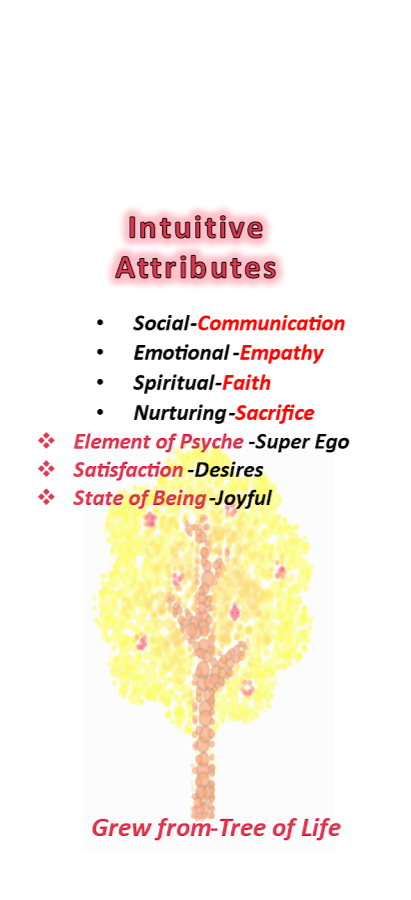
Figure 2-Intuitive Attributes
Loving intention is the conscious and deliberate choice to act by applying these tools into our relationships, fostering meaningful connections and nurturing the well-being of ourselves and others. Our emotional, spiritual, nurturing, and social intuitive attributes have given all of us the opportunity to live so fulfilled, we just need to access and use it (Figure 2-Intuitive Attributes).
The profound ability to utilize these attributes to empathize, have faith, sacrifice, and communicate with others, has permitted us to develop deep connections with the world that go far beyond simply meeting our basic needs like other animals
These values reflect how our physical, emotional, and spiritual Gifts can be manifested through our awareness of our actions, feelings, and thoughts. We can than utilize our awareness to freely choose how we wish to express our emotions, behaviors, and responses in our relationships. This choice plays a significant role in shaping who we become and how others remember us.
Each of these three Manifestations—our actions, feelings, and thoughts—combine, forming elements of our emotions, behaviors, and responses (Figure 2 - Constructing Our Intuitive Identity from Our Manifestations). Our emotions, behaviors, and responses reflect the interplay of our inner world (feelings and thoughts) and external world (actions), creating a perceptual reality of who we become as we develop meaningful relationships. By aligning these tools of Manifestations with loving intention, we maximize our potential for joy and fulfillment, crafting an identity that reflects the best version of ourselves. Together, these components shape how we navigate life and connect with others, becoming defining features of who we are as individuals. These features represent the intuitive part of our identity. These intuitive features combine with our unique blend of intellectual attributes to help us construct how we see ourselves and how we believe others perceive us.
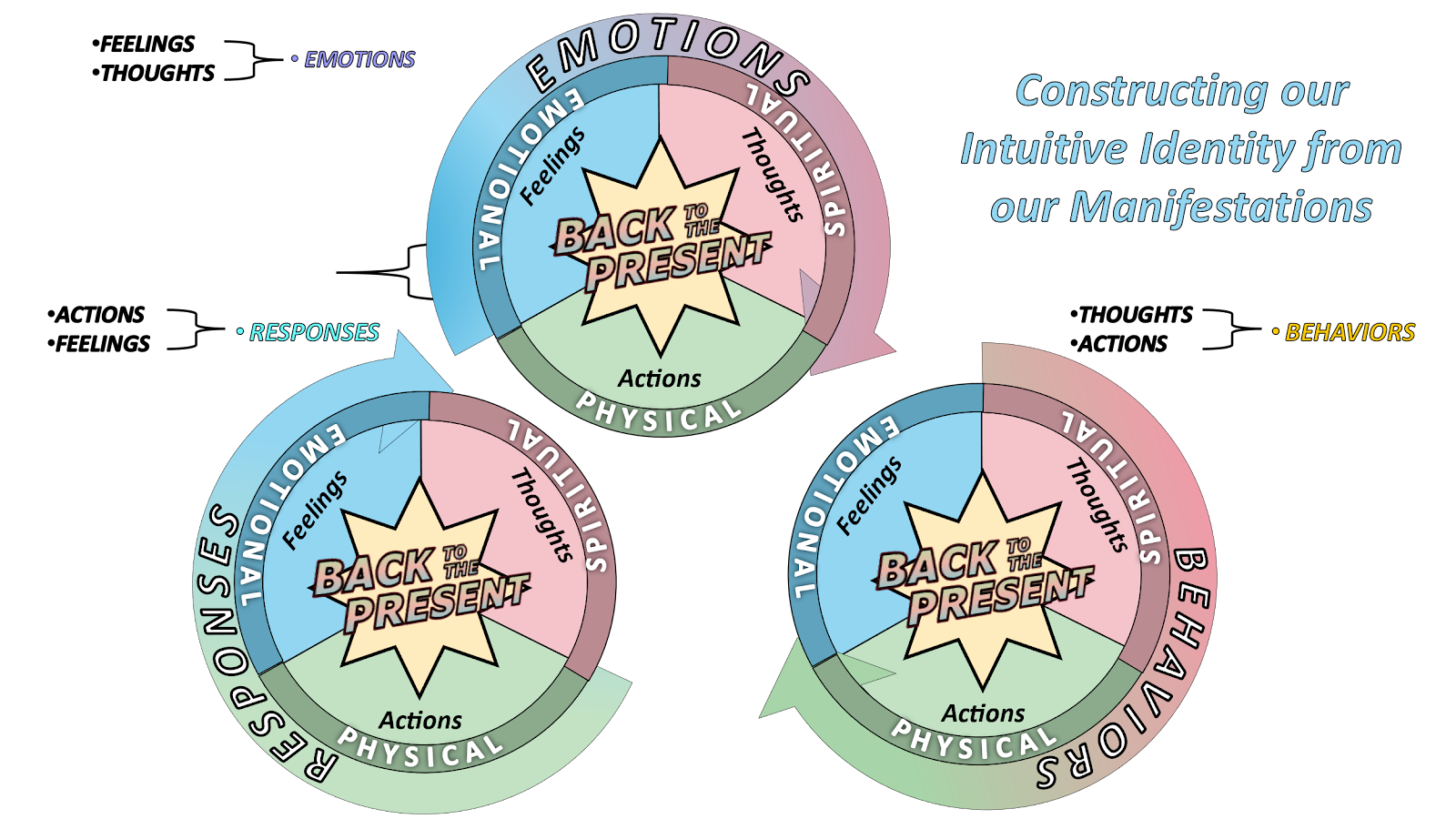
Figure 3-Constructing our Intuitive Identity from Our Manifestations
In summary, the application of loving intention into the world considers the well-being of ourselves and others. These components are the characteristics and traits that make humanity profoundly different from any other species. It is how we apply these tools that allow us to improve upon ourselves, others, and the world as a whole.
At the heart of this Toolbox are the four intuitive attributes of knowledge: empathy, faith, sacrifice, and communication (Figure 2). These tools, which grew from what has been described as the "Tree of Life," provide a foundation for our interactions and guide us in building meaningful connections. Each tool serves a unique purpose:
Empathy our emotional allows us to understand and share the feelings of others, fostering deep emotional connections.
Faith gives us the strength to trust in ourselves and others, even in uncertain times.
Sacrifice demonstrates our willingness to dedicate our time and energy, putting the well-being of others above our own wants, building trust and care.
Communication enables us to express our feelings, thoughts, and emotions clearly, ensuring understanding and collaboration.
These tools intertwine with the values within the Toolbox for a Joyful Life, serving as the roots of our Manifestations (Figure 5 - Manifestations). By consciously using these tools, we cultivate our physical, emotional, and spiritual gifts, allowing us to live with purpose and intention.
The Toolbox for a Joyful Life-Emotions, Behaviors, and Responses
The values and words within the Toolbox for a Joyful Life represent the way we express our physical, emotional, and spiritual Gifts through our actions, feelings, and thoughts. Each of these Manifestations can combine with another, becoming our emotions, behaviors, and responses. manifesting how we navigate life and connect with others. These become features of us as individuals, our intuitive identity. This is how we see
ourselves other people see us. Our emotions, behaviors, and responses reflect the interplay of our inner world (feelings and thoughts) and external actions, creating a perceptual reality of who we become as we develop meaningful relationships. By aligning these tools with loving intention, we maximize our potential for joy and fulfillment, crafting an identity that reflects the best version of ourselves (Figure 2-Toolbox for a Joyful Life).
At the heart of this Toolbox are the four intuitive attributes of knowledge (Figure 3-Intuitive Attributes of Knowledge): empathy, faith, sacrifice, and
communication. These tools, which grew from what has been described as the "Tree of Life," provide a foundation for our interactions and guide us in building meaningful connections. Each tool serves a unique purpose:
Empathy allows us to understand and share the feelings of others, fostering deep emotional connections.
Faith gives us the strength to trust in ourselves and others, even in uncertain times.
Sacrifice demonstrates our willingness to sacrifice our time and energy, putting the well-being of others above our own wants, building trust and care.
Communication enables us to express our feelings and thoughts and emotion clearly, ensuring understanding and collaboration.
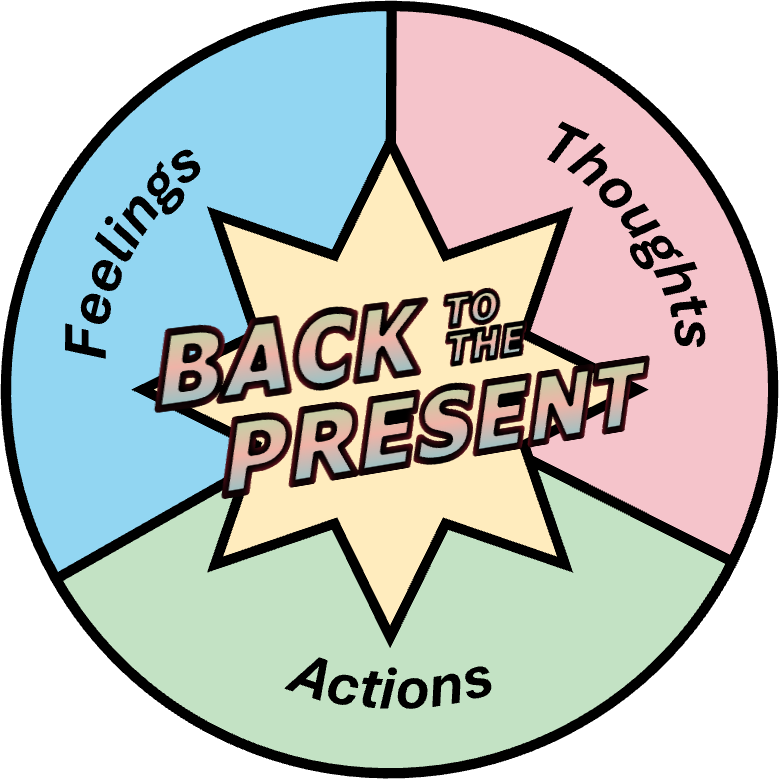
Figure 4-Manifestations
These tools intertwine with the values within the Toolbox for a Joyful Life, serving as the roots of our Manifestations (Figure 4-Manifestations). By consciously using these tools, we cultivate our physical, emotional, and spiritual gifts, allowing us to live with purpose and intention.
The values and words within the Toolbox for a Joyful Life represent the way we express our Gifts through our emotions, behaviors, and responses. Each combination of our Manifestations:
Feelings and thoughts= emotions
Thoughts and actions=behaviors
Actions and feelings=responses
represents an intuitive attribute of knowledge that we use our Manifestations to create. These Manifestations reflect the interplay of our inner world (feelings and thoughts) and external actions, allowing us to develop meaningful relationships and shape how we perceive ourselves and how we believe others perceive us. By aligning these tools with loving intention, we maximize our potential for joy and fulfillment, crafting an identity that reflects the best version of ourselves.
Examples of Manifestation Through the Toolbox
Empathy:
Emotion: Feeling compassion for someone’s struggles.
Behavior: Actively listening to their concerns without judgment.
Response: Offering kind words or assistance that fosters connection.
Example: A friend shares a difficult experience, and you offer a listening ear and supportive advice, strengthening your bond.
Faith:
Emotion: Trusting in yourself or others despite uncertainty.
Behavior: Demonstrating patience and hope in challenging situations.
Response: Strengthening relationships through belief in a positive outcome.
Example: Encouraging a teammate who doubts their abilities, boosting their confidence and performance.Sacrifice:
Emotion: Love or commitment that motivates selflessness.
Behavior: Giving up personal comfort for someone else’s well-being.
Response: Creating deeper trust and connection with those you support.
Example: Spending your weekend helping a family member move instead of pursuing personal leisure.Communication:
Emotion: A desire to connect and be understood.
Behavior: Clearly expressing thoughts and actively listening to others.
Response: Building mutual understanding and resolving conflicts.
Example: Having an honest conversation with a coworker about a disagreement, leading to a productive resolution.
Reflective Questions:
How do you use the tools in your daily life?
Can you recall a recent moment when you displayed empathy, faith, or sacrifice?
How did your actions impact your relationships with others?
Are there tools you could use more intentionally?
Is there a situation where showing more communication or empathy might strengthen a connection?
How can you align your behaviors with your physical, emotional, and spiritual gifts?
What responses reflect your best self?
Think about a time when your response positively influenced someone else. What tools were you using?
How can you ensure your emotions and actions consistently reflect your Intuitive Identity?
The Toolbox for a Joyful Life reminds us that every action, feeling, and thought matters. By consciously using these tools, we manifest our physical, emotional, and spiritual gifts in ways that not only uplift ourselves but also enrich the lives of those around us.