
Living with Loving Intention: A Pathway to a Joyful Life

The "TOOLBOX FOR A JOYFUL LIFE" diagram is a fundamental tool used in the backtothepresent.org program (Figure 1-Toolbox for a Joyful Life). It illustrates a crucial element of being mindful and present, demonstrating how living with loving intention is essential for a fulfilling and joyful existence. I created this list for my daughter when she was two years old to help guide my intentions, clearly envisioning the person I hoped she would become someday. The qualities and behaviors highlighted in the diagram—categorized under Self, Family and Friends, and Society—are foundational to creating meaningful and harmonious relationships with ourselves and others.
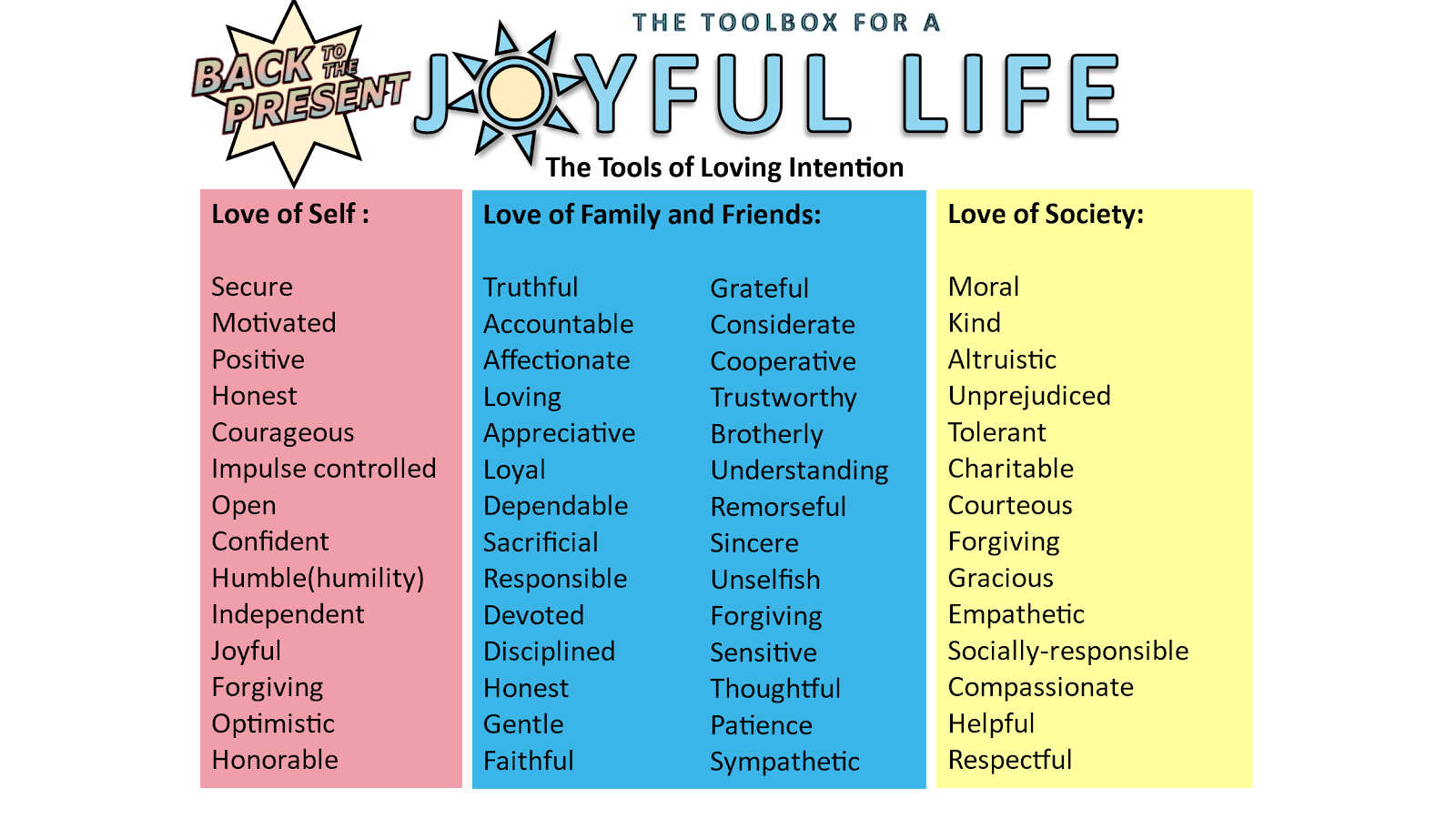
Figure 1-TOOLBOX FOR A JOYFUL LIFE
Emotional States of Being: Contentment, Happiness, and Joyfulness

Figure 2- Emotional States of Being and Satisfaction
There are three Emotional States of Being that humans typically aspire to: content, happy, and joyful, each contributing uniquely to our overall well-being (Figure 2- Emotional States of Being and Satisfaction). These three states respectfully follow our Satisfaction in life, our needs, wants, and desires. Understanding these differences helps us navigate our emotional lives with greater awareness, fostering a more balanced and fulfilling existence.
Contentment is a state of calm satisfaction and acceptance, where one feels at peace with what they have and who they are. It typically forms a stable foundation for emotional well-being when our needs are met.
Happiness is often a transient, pleasure-driven emotion that arises from external circumstances and achievements, such as enjoying a good meal or receiving a compliment. It is typically linked to specific moments and experiences.
Joyfulness, on the other hand, is a deeper, more enduring state of being. It stems from an internal sense of fulfillment and a connection to one’s values and purpose. Unlike happiness, which can be fleeting and situation-dependent, joyfulness is a profound and lasting emotion that persists even through life’s challenges. Understanding these differences helps us navigate our emotional lives with greater awareness, fostering a more balanced and fulfilling existence.
The Subconscious Foundation for Joy
The traits and characteristics depicted in the diagram are inherently built into our subconscious mind. These virtues represent the ideal state of being that we all should aspire to achieve. When we align our actions, feelings, and thoughts with these intentions, our emotions, behaviors, and responses combine to manifest the intuitive identity we share with the world. By displaying these characteristics and traits, we harmoniously shape our relationships with those around us. Using these tools when making decisions helps us control our innate impulsiveness, clarify our intentions, and implement our decisions with these qualities, one step at a time. This fosters an environment of inner peace and external harmony, significantly reducing anxiety and promoting well-being for ourselves and others. Ultimately, living with loving intention allows us to stay mindful and present.
A Collection of Intuitive Knowledge
Over centuries, our ancestors have developed and passed down a set of virtues that are fundamental to human flourishing. These traits are deeply embedded in our subconscious minds awaiting our access. They represent the collective wisdom accumulated through generations of human experience and spiritual insight.
Loving Self: Living with loving intention starts with cultivating grace within oneself. These traits foster inner security and well-being, enabling individuals to be the best version of themselves. When we feel secure, motivated, and positive, we approach life with confidence and courage. Practicing honesty and humility ensures authenticity and personal growth, while impulse control and openness help us navigate life's challenges with resilience and adaptability. Traits like security, motivation, positivity, and honesty have been recognized by our forebears as essential for inner peace and personal growth. Courage and impulse control were necessary for survival and thriving in challenging environments, while humility and forgiveness were key to maintaining harmonious social bonds.
Samantha starts her day with a few minutes of meditation, reflecting on her goals and feelings. She practices self-kindness by setting realistic expectations for herself and acknowledging her efforts, whether big or small. This daily routine helps her stay grounded and motivated.
Reflective Questions:
How do you practice honesty with yourself in your daily life?
What steps do you take to nurture your emotional well-being?
How do you incorporate self-kindness into your routine?
What actions do you take to contribute positively to society?
Loving Family and Friends: Living with loving intention extends to close personal relationships. Cultivating virtues in these relationships fosters strong, healthy, and supportive bonds. The importance of traits such as loyalty, dependability, and sacrifice has been evident in the structure of families and communities throughout history. These qualities ensured the survival and prosperity of kinship groups and fostered trust and cooperation.
John makes it a point to have weekly dinners with his parents, where they catch up and share their experiences. He listens attentively and offers help when needed, showing his empathy and commitment to family bonds.
Reflective Questions:
How do you demonstrate empathy toward your family and friends?
What acts of kindness do you regularly perform to strengthen your relationships?
How do you ensure open and honest communication with your loved ones?
How do you show dependability and accountability in your relationships?
Loving Society: Living with loving intention also encompasses broader social interactions. Emphasizing virtues like social responsibility, kindness, and empathy in society promotes harmony and collective well-being. These are characteristics and traits that have been celebrated in every culture and civilization. They are the bedrock of societal harmony and collective well-being. Altruism, tolerance, and forgiveness promote social cohesion and justice.
Emma volunteers at a local food bank every weekend. She believes in giving back to her community and sees it as a way to practice empathy and social responsibility. Her efforts help provide meals to those in need, fostering a sense of solidarity and support.
Reflective Questions:
What actions do you take to contribute to the well-being of your community?
How do you extend kindness to strangers and community members?
How do you advocate for social justice and support those in need?
How do you maintain honesty and integrity in your public life?
The Spiritual Foundation of Loving Intention
All spiritual messages emphasize the need to love oneself appropriately before extending this loving intention to others. This foundational principle is echoed across various traditions, highlighting that self-love fosters inner peace and balance, enabling individuals to authentically love and support those around them. By nurturing oneself first, one builds the capacity to engage in genuine and compassionate relationships, thereby contributing to a more loving and connected society.
Spiritual Teachings and Loving Intention:
Christianity: The teachings of Jesus emphasize love, compassion, and forgiveness. The commandment to "love your neighbor as yourself" encapsulates the essence of living with loving intention, encouraging individuals to practice empathy, kindness, and social responsibility.
Buddhism: The practice of Metta (loving-kindness) meditation starts with cultivating love for oneself and then extending it to others. This aligns with the emphasis on self-compassion and extending kindness and empathy to family, friends, and society.
Hinduism: The concept of "Ahimsa" (non-violence) and "Seva" (selfless service) are central to Hindu teachings. These principles advocate for living with compassion, kindness, and a sense of duty towards others, which reflect the traits in the toolbox.
Islam: The teachings of Prophet Muhammad highlight the importance of charity, honesty, and kindness. The principle of "Zakat" (charitable giving) and the emphasis on treating others with respect and fairness align with the ethical traits depicted in the diagram.
Judaism: Jewish teachings stress "Tikkun Olam" (repairing the world) and "Chesed" (loving-kindness). These concepts underscore the importance of social responsibility, compassion, and ethical behavior in contributing to the well-being of the community.
The Spiritual Blueprint for a Joyful Life
These spiritual messages collectively convey that the virtues represented in the Toolbox for a Joyful Life (Figure 1) are the foundational tools for living a joyful and meaningful life. They remind us that these traits are not just moral imperatives but practical guides for achieving personal and communal well-being.
Inner Peace and Personal Growth: Traits like honesty, empathy, and kindness foster inner peace and personal growth. When we practice these virtues, we align with our true selves and create a foundation for a balanced and fulfilling life.
Strong, Healthy Relationships: By embodying loyalty, dependability, and compassion, we build strong and supportive relationships with family and friends. These bonds provide emotional security and mutual support, which are crucial for a joyful existence.
Social Harmony and Collective Well-Being: Upholding virtues like social responsibility, tolerance, and forgiveness promotes social harmony and collective well-being. These traits encourage us to contribute positively to our communities and create a more just and compassionate world.
Impact Making Decisions with Loving Intention has on Anxiety
Loving Oneself: Embracing the traits of loving oneself appropriately can lead to a significant reduction in anxiety. Feeling secure and motivated instills confidence, while positivity and joyfulness enhance emotional resilience. Honesty and forgiveness promote self-acceptance, reducing internal conflicts and fostering peace of mind. When we are not loving ourselves appropriately, we can emotionally exhaust ourselves when trying to be good to others. It is imperative to love ourselves appropriately before we begin to extend our loving intention outwards.
Extending Loving Intention to Family and Friends: This involves embodying these moral and ethical virtues. These traits strengthen the bonds we share with our loved ones, creating a supportive and nurturing environment. Being truthful, accountable, and affectionate builds trust and deepens connections. Practicing loyalty, dependability, and sacrifice shows commitment and devotion, fostering a sense of security and belonging. Strong, supportive relationships can greatly alleviate anxiety. Knowing we can rely on our loved ones provides emotional support during challenging times. Practicing empathy and understanding enhances communication, reducing misunderstandings and conflicts that can lead to stress.
Loving Society: Living with loving intention in society involves upholding ethical values that promote collective well-being. These traits foster a sense of community and social harmony. Being empathetic, moral, and kind encourages positive interactions and mutual respect. Practicing altruism and social responsibility contributes to a better world, while tolerance and forgiveness promote inclusivity and peace. Contributing positively to society enhances our sense of purpose and fulfillment, which can reduce feelings of anxiety and isolation. Engaging in compassionate and respectful behaviors creates a supportive community, providing a network of care and mutual aid.
Conclusion
The characteristics and traits outlined in the "Toolbox for a Joyful Life" diagram are integral to living with loving intention (Figure 1). These virtues are built into our subconscious mind, reflecting our innate potential for goodness and compassion. By embracing these qualities, we can create a more joyful and harmonious existence, both for ourselves and those around us. When we align our lives with these values, we cultivate inner peace, reduce anxiety, and foster a more loving and connected world.
Call to Action
Reflect on how you can integrate these virtues into your daily life. Consider ways to cultivate grace within yourself, practice moral virtues with family and friends, and uphold ethical values in society. By living with loving intention, you can contribute to a more joyful and fulfilling existence for all.