
When Intellect Outruns Intuition – Restoring the Ancient Balance
Integrating the Wisdom of Scripture With the CRITICAL UNDERSTANDINGS of Back to the Present
The Problem Hidden in Plain Sight
Humanity is experiencing the fastest intellectual expansion in our species' history. Our ability to create, analyze, manipulate, and innovate is doubling every few years. We live in the most cognitively advanced era ever imagined—yet we are more anxious, divided, spiritually disconnected, and emotionally fragile than any generation before us.
The reason, I believe, is simple:
Our intellectual attributes are accelerating exponentially, while our intuitive attributes are being neglected.
We are becoming brilliant minds living inside unprepared hearts.
This chapter explains why this imbalance developed, how it mirrors the warnings from the world’s greatest spiritual traditions—including the Bible, Qur’an, Torah, and other sacred texts—and why intentionally developing the Tools of Loving Intention is now essential for restoring human presence, purpose, connection, and joy.
1. The Uneven Growth of Human Knowledge
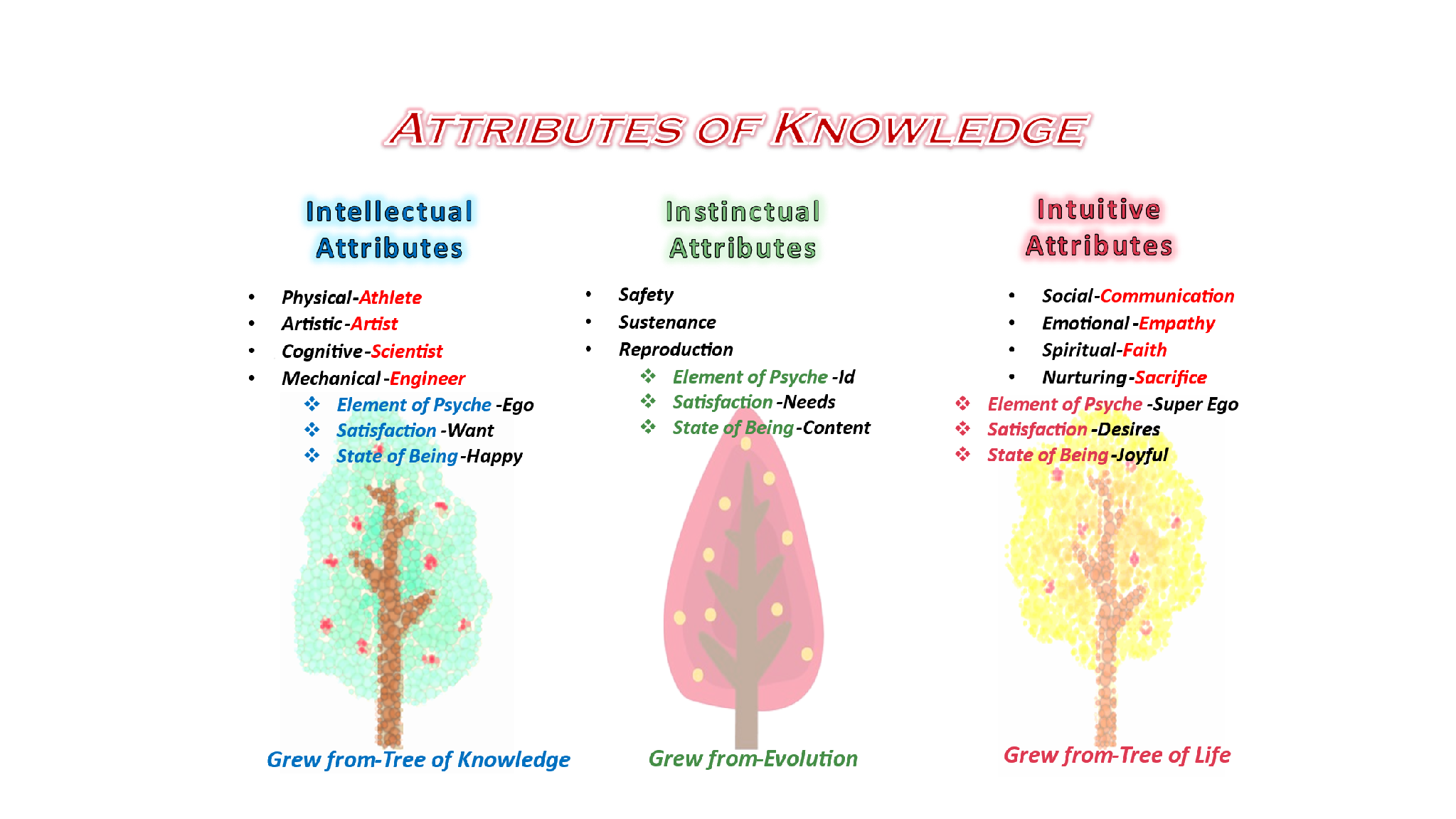
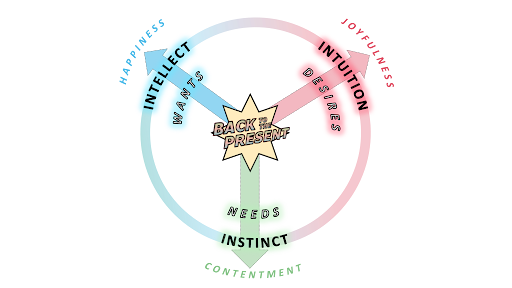
Human beings develop knowledge along three pathways, rooted in our Three Gifts:
Instinct — meeting needs → Contentment
Intuition — forming desires → Joyfulness
Intellect — creating wants → Happiness
But these pathways do not grow at the same pace.
Intellect grows through:
Acquired through conscious effort, teaching, and practice
books, data, school systems-
technology and digital media
the internet and artificial intelligence
global communication
Intellect scales exponentially.
Intuition grows through:
Acquired through subconscious awareness, observation, and experience
presence
emotional modeling
family structure
mentorship
spiritual guidance
community and shared humanity
Intuition grows slowly, relationally, and only with intention.
Reflective Question:Which path of knowledge has shaped more of my daily life: my intellect or my intuition?
Example — The Overwhelmed Teen: A 15-year-old has unlimited information, yet struggles to form friendships or manage disappointment. Intellect thrives; intuition stalls.
2. How Scripture Has Always Warned Us About This Imbalance
Long before psychology or neuroscience, the great spiritual traditions warned humanity about relying on intellect without relationship.
The Bible, Qur’an, and Torah share a unified message:
Knowledge without compassion is dangerous. Wisdom without love is incomplete. Power without empathy leads to suffering.
This universal warning appears in:
The story of the Tree of Knowledge and Tree of Life (Genesis)
The teachings of compassion and mercy across the Qur’an
The Jewish emphasis on chesed (lovingkindness) and shalom (wholeness)
The teachings of Right Speech, Compassion, and non-harm in Buddhism and Hinduism
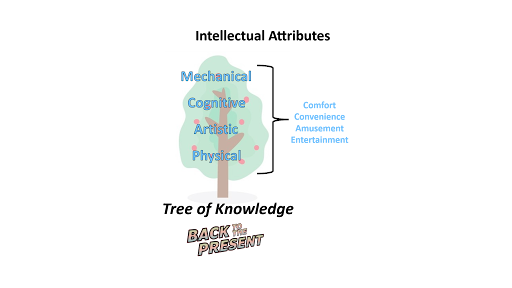
The Tree of Knowledge (Intellect):
Symbolizes:
power, creation, control, manipulation
the ego’s wants-improving quantity and quality of life
technological brilliance without emotional grounding
Its fruits are both good and evil because intellect can help or harm.
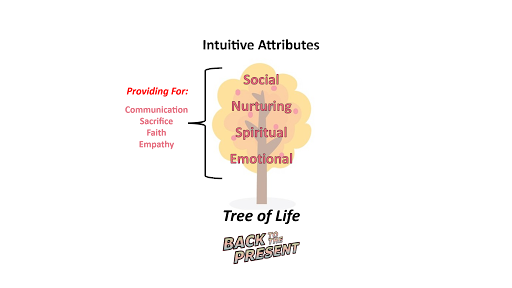
The Tree of Life (Intuition):
Symbolizes:
connection, empathy, sacrifice, compassion
the super ego’s desires-improving relational wisdom through loving intention
the capacity to live with presence and purpose
Its fruits were given abundantly.
Our ancestors taught that intellect must be guided by the intuitive attributes of loving intention.
3. The Intuitive Attributes Reflected in Scripture
Your Tools of Loving Intention—Communication, Faith, Empathy, Sacrifice—are where virtues are elevated by every major religious tradition.
⭐ Communication (Truthful, Compassionate Speech)
“Let your speech always be with grace.” — Col. 4:6
“Speak to people in a gentle way.” — Qur’an 2:83
Buddhism: Right Speech
Hinduism: Satyam (truth without harm)
⭐ Faith (Trust, Vulnerability, Courage)
“Faith works through love.” — Gal. 5:6
“Put your trust in God; He loves those who trust.” — Qur’an 3:159
Judaism: Emunah (trust in relationship)
Buddhism: Shraddha (heart-level trust)
⭐ Empathy (Compassion, Mercy)
“Be kind and compassionate to one another.” — Eph. 4:32
“My mercy encompasses all things.” — Qur’an 7:156
Buddhism: Karuna
Sikhism: Dayā
Judaism: Rachamim
⭐ Sacrifice (Service, Selflessness, Giving Time and Energy)
“Greater love has no one than this: to lay down one’s life for his friends.” — John 15:13
“They give others preference over themselves.” — Qur’an 59:9
Hinduism: Seva
Buddhism: Dana
Indigenous teachings: Service as responsibility to community
These teachings are not theological doctrines—they are lessons in intuitive development.
Scripture has always taught what your framework teaches:
Intuition must grow before intellect can be trusted.
4. What Happens When Intellect Outruns Intuition
When intellect accelerates but intuition lags, society becomes:
emotionally fragile
relationally disconnected
spiritually empty
overwhelmed by want rather than guided by true desire
Intellect answers “How?”
Intuition answers “Why?”
Intellect without intuition leads to:
ANXIETY and overstimulation
impulsivity and emotional instability
loneliness and relational breakdown
loss of meaning and identity
Reflective Question:Where in my life has knowledge replaced wisdom or accomplishment replaced connection?
Example — The Burned-Out College Student: Straight A’s, scholarships, achievements—but no emotional regulation, no resilience, no relational grounding.
5. The Intellect’s Tireless Service to the Ego
Human intellect is extraordinary. It has given us medicine, technology, the arts, sport, shelter, innovation, and remarkable control over our environment. But intellect also serves another powerful master: the human ego.
The ego is not evil—it is simply the part of us that wants more. It wantscomfort, convenience, entertainment, and amusement. And because the intellect is so capable, it works tirelessly to satisfy the ego’s every want.
Over the past century, intellect has created an entire world built on four provisions:
1. Comfort – climate control, advanced housing, frictionless living
2. Convenience – instant access, automation, efficiency
3. Entertainment – endless media, stimulation, distraction
4. Amusement – novelty, thrill-seeking, indulgence
These provisions have improved the perceived quality and quantity of life, but they come with an invisible cost. They are insatiable—no matter how much the ego receives, it always wants more.
This endless pursuit overwhelms consciousness and distracts us from the present moment. Because we do not have everything we want, we experience:
dissatisfaction,
impatience,
comparison,
ANXIETY,
and unhappiness.
The intellect, when left unguided by intuition, becomes caught in an infinite loop—creating more and more provisions that temporarily soothe the ego while moving us further from presence.
Reflective Question:
How often do I chase comfort, convenience, entertainment, or amusement instead of choosing presence?
6. Restoring Balance Through the Tools of Loving Intention
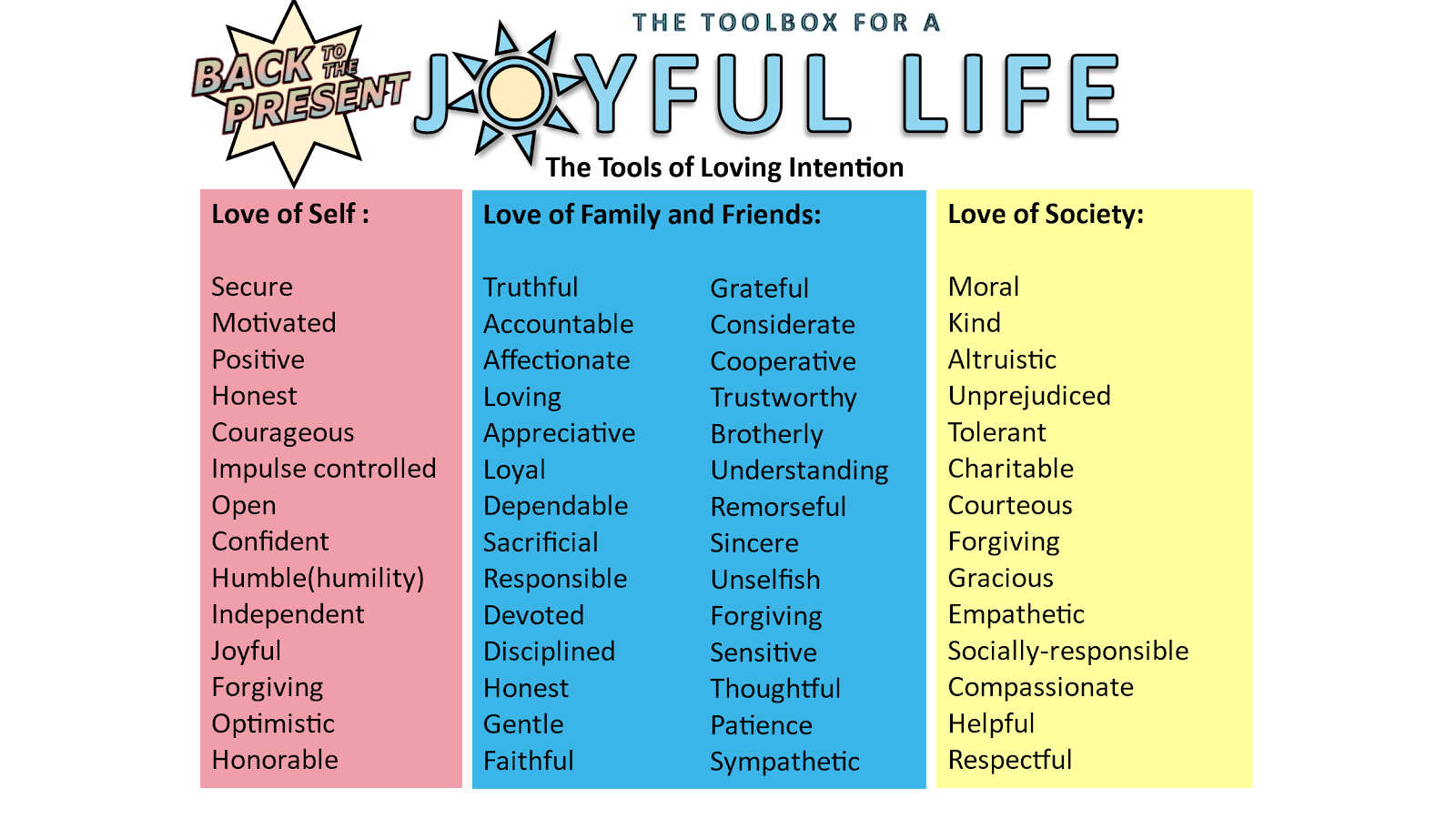
To rebalance humanity, we must intentionally cultivate the intuitive attributes:
1. Communication — honest, open, shared compassionate expression.
2. Faith — trust in oneself, others, and belief that the tools of loving intention are available to all.
3. Empathy — emotional presence and attunement.
4. Sacrifice — using time and energy to help others grow physically, emotionally, and spiritually.
These are the fruits of the Tree of Life.
They protect us from the dangers of unregulated intellect.
Reflective Question:Which intuitive attribute, if strengthened, would most transform my relationships?
7. Why This Balance Is the Future of Human Development
If humanity continues to amplify intellect without strengthening intuition, we risk becoming:
technologically advanced but emotionally impoverished
connected digitally but isolated spiritually
informed but unwise
productive but not present
The Back to the Present framework—offers a path back to presence, balance, and emotional maturity.
It teaches us to:
honor our Three Gifts,
understand our Sources of Knowledge,
resist the F.A.S.T. EMOTIONS,
use time and energy intentionally,
and live with loving intention.
This is the ancient wisdom of scripture brought forward into modern psychology.
Conclusion: Returning to Garden and the Tree of Life
Humanity has always had two paths:
one of intellect, power, and creation,
one of intuition, compassion, and connection.
The world’s scriptures encouraged us to eat abundantly from the Tree of Life because they understood that intuitive wisdom must come first.
This work encourages us back to presence, back to loving intention, and ultimately—backtothepresent, where life is actually lived.