
What Makes You, You?

Think of identity as the personal avatar you create in a game, but for real life. It's made up of all the stuff that makes you unique — like your style, your laughs, your moves, and even your epic fails. It's about the things you're born with, like your ability to nail a three-pointer or draw like a pro, and the stuff you pick up along the way, like nailing a tricky math problem or learning to skate. Identity has two main parts: Intuitive Identity, which is all about your gut feelings and natural reactions to things, and Intellectual Identity, which is like your brain's toolbox full of skills and knowledge you've learned. Together, they're the combo that makes you the one and only "you."
The components of our identity—encompassing both the intuitive and intellectual aspects, along with emotional intelligence, creative thinking, social identity, moral and ethical reasoning, adaptability, curiosity, and interpersonal skills—play a significant role in shaping the karmic influence we share with the world. Karma, understood here as the principle of cause and effect where our actions and intentions have a direct impact on our future experiences, is intimately connected with the multifaceted nature of our identity. Here’s how the components of our identity affect our karmic footprint:
Intuitive and Intellectual Identity: These foundational aspects determine how we perceive and interact with the world. Our intuitive responses guide us in immediate, gut-feeling decisions, while our intellectual capacity allows us to make considered choices. Together, they influence the quality and direction of our actions, which, according to the concept of karma, shape our future experiences.
Emotional Intelligence: The ability to manage our emotions and understand those of others can lead to more compassionate and empathetic actions. By contributing positively to the lives of others, we generate positive karmic energy that can return to us in kind.
Creative Thinking: Creativity in solving problems and approaching situations can lead to innovative actions that have long-lasting positive impacts. By introducing positive changes into the world, we can influence our karma by creating ripples of positivity that extend far beyond our immediate environment.
Social Identity: Our sense of belonging and connection to various groups influences our actions within those communities. Positive contributions that foster group well-being can enhance our karmic influence by strengthening communal bonds and collective harmony.
Moral and Ethical Reasoning: The moral and ethical dimensions of our decisions play a crucial role in karma. Choices made with integrity, honesty, and respect for others can lead to positive karmic outcomes, as they contribute to a more just and equitable world.
Adaptability and Resilience: How we respond to change and adversity not only shapes our personal growth but also affects those around us. By modeling resilience and a positive attitude in the face of challenges, we can inspire others and contribute to a supportive and empowering environment, enhancing our karmic influence.
Curiosity and Openness: A willingness to learn and be open to new experiences encourages growth and understanding, both personally and collectively. This openness can lead to actions that bridge gaps and build understanding among diverse groups, contributing to a more interconnected and compassionate world.
Leadership and Teamwork Skills: Effective leadership and collaboration can amplify our positive impact on the world. By guiding others towards collective goals and working harmoniously, we can create environments where positive karmic influences flourish.
In essence, every facet of our identity influences the energy we put out into the world and, consequently, the energy we attract. By cultivating positive aspects of our identity and engaging in actions that reflect kindness, compassion, and understanding, we can enhance our karmic influence, contributing to a cycle of positivity that benefits ourselves and the world around us.
What's Your Vibe? Getting Your Intuitive Identity
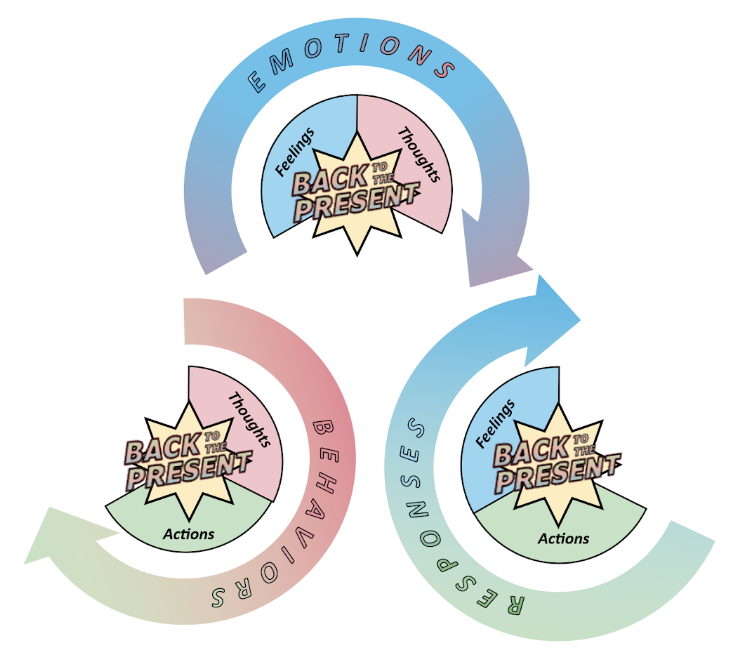
Think of your Intuitive Identity as your personal vibe. It's all about how you naturally react to stuff around you. Like, when you don't even have to think about it, how do you act when something happens? Here's the deal:
Emotions: Your emotions are like the first domino in a chain. They kick off your thoughts. So, if you're happy, you'll start thinking happy thoughts. But if you're scared, you might start thinking about all the stuff that could go wrong. This is the vibe you give off without even trying.
Behaviors: Your thoughts are like the roots of a tree that grow into how you act. If you think you're going to nail that skate trick, you'll go for it. But if you're not sure, you might bail before you even try. That's how your actions show what's going on inside your head.
Responses: Your actions are like echoes. They bounce back and hit you with feelings. Help out a friend, and their smile will make you feel like a superhero. That's the kind of stuff that fills in the rest of your vibe.
So, your Intuitive Identity is just you doing you, without making a big plan. Knowing this stuff about yourself helps you move through life more smoothly, being more you.
What Are You Good At? Your Intellectual Identity
Your Intellectual Identity is like your brain's special toolbox. It's got all the tools you were born with and the ones you've picked up along the way. Here's how it shows up:
Physical Prowess: Some of us are just born ready to move. If you're always the first to finish laps in PE or can't stop doing flips on the trampoline, that's your body's natural smarts at work. It's not just about muscle; it's about how you can almost feel how to move.
Artistic Ability: Got a knack for making tunes or painting pictures? That's your artistic tool shining through. Musicians might just get the flow of music, and artists can make colors do the talking for them.
Cognitive Strength: Ever wonder about the stars or love figuring out tough math problems? That's your inner scientist booting up. It's like having a built-in lab coat in your brain, ready to explore and discover.
Mechanical Aptitude: And for those who can take apart gadgets and put them back together or just love building stuff, you've got a builder's or engineer's tools in your box. It's about seeing the puzzle in 3D and knowing just how to fit everything together.
Everyone's toolbox is different, and it gets fuller the more you learn and grow. Maybe you're born with some tools, but you pick up others from school, friends, and just life. It's all about using what you've got and getting new tools along the way to build your own cool stuff in life.
Emotional Intelligence: This involves the ability to recognize, understand, and manage our own emotions, as well as the emotions of others. It's an important bridge between intuitive and intellectual identity, influencing how we navigate social situations and personal challenges.
Creative Thinking: Beyond artistic ability, creative thinking encompasses the capacity to see the world in new ways, find hidden patterns, make connections between seemingly unrelated phenomena, and generate solutions. It's a trait that can be applied in all areas of life, from problem-solving to personal expression.
Social Identity: This attribute considers how individuals see themselves within social contexts, including family, friends, culture, and community. It reflects how social interactions and relationships influence one's sense of self and can play a significant role in shaping both intuitive reactions and intellectual pursuits.
Moral and Ethical Reasoning: This involves the principles that govern our decisions and behaviors. It's crucial for developing a sense of right and wrong and can deeply influence both our intuitive responses to situations and our intellectual engagement with complex issues.
Adaptability and Resilience: The ability to adapt to change and bounce back from adversity is key to personal development. This trait underscores the dynamic nature of identity, reflecting how we adjust and grow in response to life's challenges.
Curiosity and Openness: A curious mind is open to exploring new ideas, experiences, and perspectives. This attribute fuels the desire to learn and discover, driving intellectual growth and enriching intuitive experiences.
Self-reflection and Mindfulness: The practice of looking inward and being present can enhance self-awareness, allowing for a deeper understanding of one's intuitive and intellectual identities. It encourages a thoughtful exploration of personal values, goals, and behaviors.
Leadership and Teamwork Skills: These skills reveal how individuals interact with others to achieve common goals, highlighting aspects of both intuitive understanding (such as empathy and communication) and intellectual strategies (such as planning and problem-solving).
Incorporating these attributes into a discussion about intuitive and intellectual identity can provide a more comprehensive view of what makes each person unique. It encourages adolescents to consider a wide range of factors that contribute to their sense of self, empowering them to embrace and develop their multifaceted identities.
Emotional intelligence
Emotional intelligence (EI) is like having a superpower that helps you understand and manage your own emotions, figure out how others are feeling, and navigate social situations smoothly. Imagine it as being your own emotional detective and having a remote control for your feelings—you might not be able to change what you feel, but you can control how you react. It's what makes you a great friend, able to understand and support others, and also helps you bounce back from tough times like a superhero facing challenges. With EI, you're better at solving problems without making a fuss, making and keeping friends, and even deciding right from wrong. It's like being the main character in your own story, equipped to handle life's ups and downs with confidence, empathy, and resilience, shaping who you are and how you connect with the world around you.
Emotional Intelligence (EI) enhances both intellectual and intuitive attributes by fostering better communication and empathy. It allows individuals to understand and regulate their emotions, which can improve cognitive processing and artistic expression. EI's emphasis on recognizing and managing emotions also bolsters intuitive skills like empathy, making it easier to connect with others and communicate effectively.
Creative Thinking
Creative thinking is like having an artist's brush in your hand, ready to paint the world in your own colors. It's not just about being able to create art or music; it's about seeing the world from a unique angle. When you let your imagination run wild, you open doors to new ideas, dare to try things others might shy away from, and celebrate what makes you one-of-a-kind. It's like being on an adventure where you're the hero, crafting your path, discovering unexpected solutions, and bringing your own flair to everything you do. This journey of creativity sets you apart, highlighting your individuality. Whether you're figuring out a clever fix, diving into exciting hobbies, or simply viewing life through a vibrant, fresh lens, creative thinking gives you the power to steer your life in inspiring ways. It builds your confidence to share your voice and vision, leaving your unique stamp on the world, reflecting your deepest thoughts and dreams.
Creative Thinking directly impacts artistic and cognitive attributes by encouraging innovative problem-solving and artistic exploration. This creative mindset can lead to unique physical and mechanical inventions, as it pushes the boundaries of conventional thinking. On the intuitive side, creativity enhances communication by encouraging expressive and metaphorical use of language, and it nurtures empathy by fostering an understanding of diverse perspectives.
Social Identity
Social identity is like being part of different clubs—each one, like your family, friends, school, or cultural groups, gives you a special badge. These badges help shape who you are, like what you believe in, how you act, and how you fit into the world. Imagine mixing your favorite music, sports teams, and hobbies into one big personal logo—that's how these groups create your unique identity. It's like being part of a team; you share something in common with others, which makes you feel like you belong. But, it also lets you shine as an individual within the group. As you hang out with different circles, you pick up bits and pieces from each, like a sponge, which helps you figure out your own likes, dislikes, and dreams. This mix of fitting in and standing out helps shape your confidence, your goals, and the way you connect with people. Think of it as a journey of finding out who you are, influenced by the people and groups you vibe with, making you a cool blend of all these experiences.
Social Identity shapes our intellectual attributes by influencing our cognitive development and interests, including our artistic pursuits and mechanical skills, based on the cultural and social groups we identify with. Intuitively, it enriches communication skills and empathy by exposing us to varied social norms and values, encouraging a broader understanding of different viewpoints and fostering a sense of belonging and shared faith.
Moral and Ethical Reasoning
Moral and ethical reasoning is like having an inner guide that helps you decide what's right and wrong. It's about thinking deeply about how your actions affect others and choosing to do what's fair and kind. Just like choosing which path to take in a video game, making decisions based on what's right or wrong shapes who you are.
Imagine you're drawing a self-portrait, but instead of using colors, you're using your choices and actions. Every good choice you make adds a bright color to your picture, showing you're someone who cares about others and wants to make the world a better place. On the other hand, if you make choices that aren't so good, it's like adding a dark spot to your portrait.
As you grow and face different situations, your inner guide helps you navigate through tough choices, like whether to stand up for a friend or what to do when you find something that doesn't belong to you. Listening to this guide and making choices that you're proud of builds your identity, making you known as a fair, kind, and trustworthy person. It's all about building a version of yourself that you're happy to show the world, like creating a masterpiece that reflects the best parts of who you are and how you treat others.
Moral and Ethical Reasoning influences cognitive attributes by engaging critical thinking skills necessary for evaluating complex moral dilemmas. It also informs our intuitive understanding of empathy and sacrifice, guiding us to make decisions that reflect our values and the well-being of others, thus shaping our identity around principles of fairness and kindness.
Adaptability and Resilience
Adaptability and resilience are like being a chameleon that can change colors and bounce back no matter what. Imagine you're playing a video game where the levels keep changing: one minute you're dodging asteroids in space, and the next, you're solving puzzles in an ancient temple. Being adaptable means you can quickly learn the rules of each new level and figure out how to win, no matter how tough it gets.
Now, think of resilience as your ability to keep playing even when you've lost a level multiple times. Instead of giving up, you try again, learn from your mistakes, and get better. It's like having an invisible shield that helps you deal with setbacks, whether it's a bad grade, a fight with a friend, or any other challenge life throws at you.
As you face and overcome these challenges, you're actually shaping who you are. Every time you adapt to something new or bounce back from a setback, you're adding a piece to your identity puzzle. It shows you and everyone else that you're strong, capable, and can handle whatever comes your way. This doesn't just make you a cool person to be around; it also builds your confidence and makes you trust in your own abilities to face the next challenge. So, in a way, being adaptable and resilient is like leveling up in real life, making you more prepared and excited for whatever adventure comes next.
Adaptability and Resilience impact both intellectual and intuitive attributes by encouraging cognitive flexibility and problem-solving under stress, which are crucial for navigating life's challenges. These qualities also enhance communication and empathy, as they require understanding and adjusting to new situations, fostering a resilient spirit that is open to change and growth.
Curiosity and Openness
Curiosity and openness are like being an explorer with an endless map, always ready to discover new lands and treasures. Imagine you're holding a magnifying glass, looking closely at all the interesting stuff around you, eager to learn more about everything. This thirst for knowledge and new experiences is what curiosity is all about. It's like asking, "What's out there?" and "How does this work?" without being afraid of finding something completely unexpected.
Now, think of openness as being willing to jump into a new adventure, even if you're not sure where you'll end up. It's like saying "Yes!" to trying new foods, making new friends, or picking up a hobby you've never thought about before. Openness means you don't shut down ideas just because they're unfamiliar; instead, you welcome them with open arms, excited about what they might teach you.
Together, curiosity and openness are superpowers that shape who you are. They push you to grow by exploring new ideas, meeting people with different stories, and experiencing life in ways you might not have if you stayed in your comfort zone. This adventurous spirit helps carve out your unique identity, showing the world (and yourself) that you're someone who loves to learn, isn't afraid of change, and is always up for an adventure. These qualities make you more adaptable, understanding, and interesting, filling your identity with a rich mix of experiences and perspectives that are all your own.
Curiosity and Openness stimulate cognitive and artistic exploration, driving the desire to learn and understand the world in diverse ways. These traits support mechanical innovation by encouraging experimentation. Intuitively, curiosity and openness expand our capacity for empathy by making us more receptive to new experiences and perspectives, enriching our communication skills and deepening our faith in the unknown.
Self-reflection and Mindfulness
Self-reflection and mindfulness are like having a secret diary and a pause button for your life. Self-reflection is when you think deeply about your actions, feelings, and experiences. It's like writing in a diary where you ask yourself, "Why did I do that?" or "How did that make me feel?" This helps you understand yourself better, recognize what makes you happy or upset, and figure out how you want to act in the future.
Mindfulness is like hitting the pause button in the middle of a busy day. It means paying close attention to what's happening right now, like noticing the feeling of the sun on your skin or really listening to a friend without thinking about what to say next. Mindfulness helps you calm down when things get crazy and makes you more aware of your thoughts and feelings without judging them.
Together, self-reflection and mindfulness shape your identity by helping you know yourself better. They encourage you to think about who you are and who you want to be. By understanding your emotions and reactions, you can make choices that truly reflect your values and goals. This process of looking inside and being present in the moment builds a stronger, more confident you, someone who is in tune with their thoughts and feelings and can face life with a clear mind and heart. It's like being the captain of your ship, steering through life with purpose and awareness, creating an identity that's all about who you really are and how you want to live your life.
Self-reflection and Mindfulness strengthen cognitive attributes by enhancing focus and mental clarity, improving both learning efficiency and artistic expression. These practices also deepen intuitive skills like empathy and communication by promoting a greater awareness of our thoughts and feelings, leading to more thoughtful interactions and a compassionate understanding of others' experiences.
Leadership and Teamwork Skills
Leadership and teamwork skills are like being the captain of a sports team while also being a team player. Imagine you're leading your team to victory, making the big calls, and cheering everyone on. Leadership is about stepping up, guiding others through challenges, and inspiring them to do their best. It's like being the person who lights the way in the dark, showing confidence and decision-making skills that others admire.
Now, think of teamwork as the secret ingredient that makes the team work together like a well-oiled machine. It's about passing the ball, supporting your teammates, and knowing that sometimes, assisting a goal is just as cool as scoring one yourself. Teamwork means recognizing that everyone has unique strengths and that by working together, you can achieve something bigger than what you could do alone.
When you mix leadership and teamwork, you're shaping your identity in a powerful way. You learn to be both strong and supportive, confident and collaborative. These experiences teach you about responsibility, communication, and the importance of valuing others' contributions. They help you understand your own strengths and how you can use them to make a difference in a group. Over time, these skills build a sense of who you are: someone who knows how to take charge when needed but also values working together with others towards a common goal. This blend of leadership and teamwork carves out a unique spot for you, showing the world you're ready to lead, ready to listen, and ready to win together.
Leadership and Teamwork Skills integrate intellectual and intuitive attributes by requiring cognitive strategies for problem-solving and decision-making, alongside mechanical skills for executing plans. Intuitively, these skills enhance communication, build empathy within teams, and often involve acts of faith and sacrifice, as leaders must sometimes prioritize the group's needs over their own.
Once upon a time, in a vibrant town filled with color and life, there lived a young person named Alex. Alex, like everyone, was on a journey to discover who they were, a journey painted with the broad strokes of emotions, behaviors, and responses that together crafted the masterpiece of their identity.
In the canvas of life, Alex's emotions were the colors that brought depth and warmth. Each feeling, from the soft blues of sadness to the bright yellows of joy, added a unique hue to their character. Alex learned to understand and manage these emotions, like an artist mastering their palette. When they felt blue, instead of letting the color spread unchecked, Alex would add a touch of yellow, transforming the sadness into a hopeful green. This emotional intelligence was like a superpower, helping Alex navigate the complex world of social interactions with empathy and resilience.
Behaviors were the brushstrokes that revealed Alex's patterns and habits. With every thought and decision, they painted their actions across the canvas of their world. Creative thinking was Alex's favorite technique, allowing them to solve problems in innovative ways and leave their mark. Whether it was helping a friend in need or pursuing their passion for painting, Alex's actions were deliberate and thoughtful, each one contributing to the evolving picture of their identity.
But it was in their responses to the world around them that the true essence of Alex's identity shone through. These were the moments when feelings and actions intertwined in a dance of cause and effect. For instance, when faced with a challenge, Alex's initial feeling of fear would quickly transform into determination. This determination then propelled them into action, tackling the challenge head-on. These responses, a complex blend of emotions and behaviors, were the finishing touches that completed the portrait of who Alex was.
As Alex journeyed through life, they discovered that their identity was not a static image but a dynamic, ever-changing expression of their innermost self. It was a story told through the feelings they experienced, the thoughts they pondered, and the actions they took. Every emotion felt, every thought considered, and every action taken was a visible manifestation of Alex's identity, a unique expression of their being in the world.
And so, through the highs and lows, the struggles and triumphs, Alex continued to paint their story, learning and growing with each stroke. Their journey was a testament to the power of self-discovery, a reminder that our emotions, behaviors, and responses are the threads that weave the tapestry of our identity. In the end, Alex realized that identity is not just about who we are in the quiet moments alone but also about who we are in the vibrant, chaotic, and beautiful dance of life.