
Mindfulness Exercise for a Joyful Future
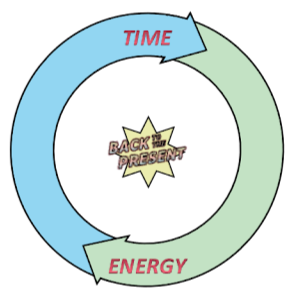
At backtothepresent.org, I am pleased to introduce a mindfulness exercise designed to help you control your attempts at trying to predict the future. This should enhance your well-being by helping you control your tendency to become distracted from the present by your future expectations. Mindfulness has been shown to increase happiness, improve emotional regulation, and sharpen cognitive focus. It's also an effective therapeutic approach for managing anxiety and other mood disorders, which often drain the Limited Resources of time and energy that could be spent enjoying life.
Do you find yourself consumed by worry, fear, or dread as you imagine your future?
These mindfulness exercises are designed to help you become more aware of the only moment you can truly enjoy—the present. By integrating these simple practices into your daily routine, you can reduce the suffering caused by the anxiety that comes from our future perceptions.
Mindfulness fosters self-awareness, allowing you to reach your full intellectual and intuitive potential. It can help you focus on being emotionally responsible to yourself and others, leading to more joyful relationships.
The Practice of Planning to be Joyful
The future is a blank canvas, shaped by our choices—one feeling, one thought, and one action at a time. Our time and energy are spent on what we are doing, feeling, and thinking, creating the life we choose to live. However, our minds are overwhelmed by the vast intellectual possibilities we impose on them, leading to a lopsided existence that neglects the power of intuitive insights.
While our intellectual achievements have brought us conveniences and advancements, they have also created an imbalance. We've neglected the strength of our intuition, which is essential for a joyful existence. Our intellect, driven by the ego's desire for recognition, has dominated our decision-making, often at the expense of loving intention and emotional fulfillment.
Learning to love and live joyfully requires balancing our intellectual pursuits with intuitive wisdom. Unfortunately, our society has become overly focused on intellectual knowledge, neglecting the intuitive insights that guide us toward good relationships and meaningful lives.
To create a joyful future, we must plan with intention. Good relationships are the foundation of joy, and to cultivate them, we need to be emotionally responsible and self-aware. Self-awareness allows us to understand how our actions, feelings, and thoughts impact not only our lives but also the lives of those we care about.
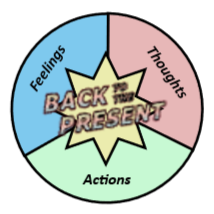
Figure 2 - Manifestation
This first exercise is an acknowledgment practice that helps you stay mindful of the person you wish to become. By focusing on what makes you joyful, you can improve your well-being by becoming more aware of your actions, feelings, and thoughts (Figure 3-Manifestation). This awareness will help you prioritize the intuitive tools you were born with, enabling you to make better decisions and live more fully in the present moment.
Mindfulness Exercise: Creating the Future You Desire
To create a joyful future filled with good relationships, try this exercise:
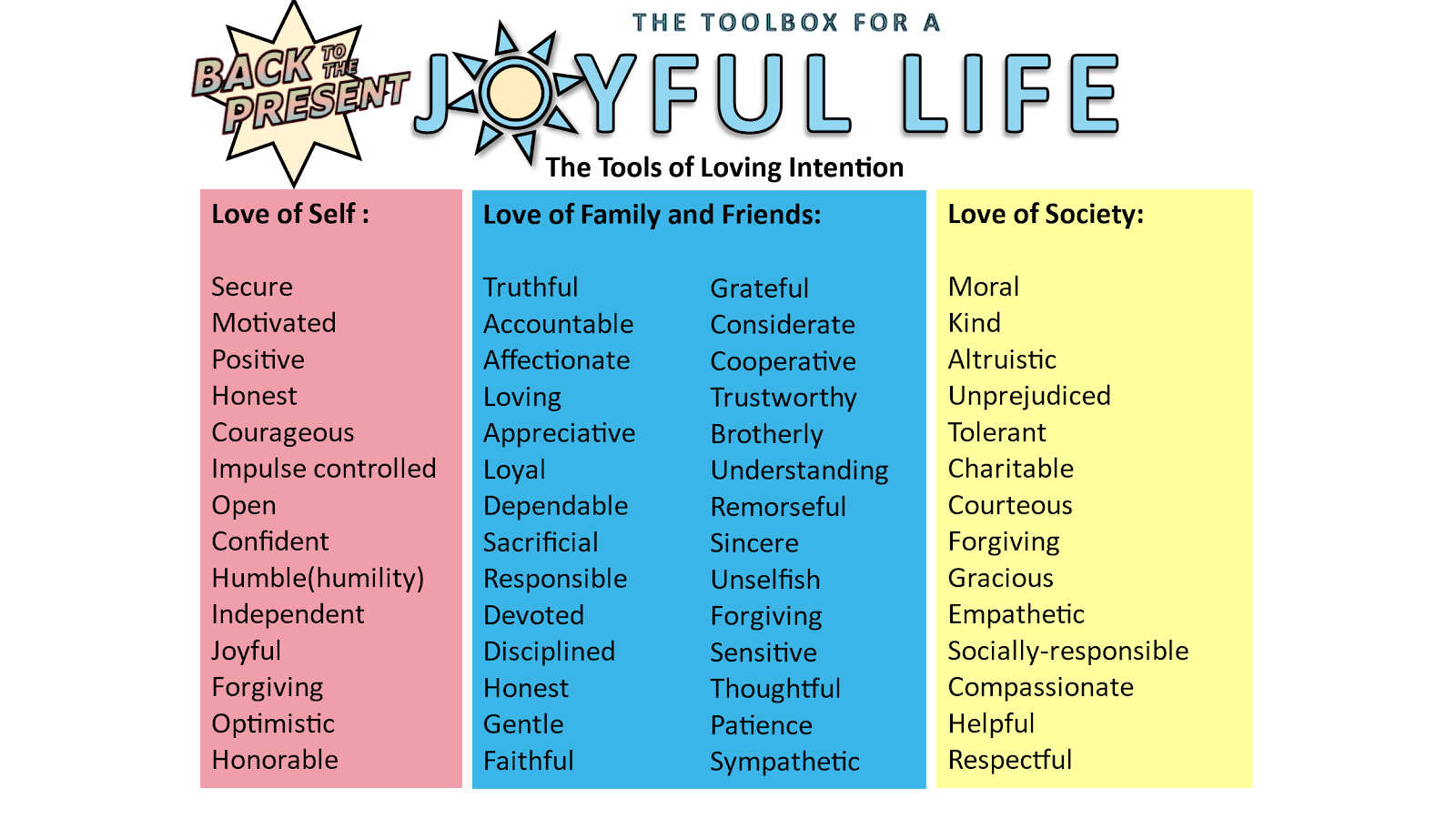
Figure 3- Toolbox for a Joyful Life
Select Three Words: From the Toolbox for a Joyful Life, choose one word from each column that you want to embody more in your life. For example, you might choose "optimistic," "sensitive," and "altruistic." (Figure 3-Toolbox for a Joyful Life)
Set Daily Alarms: Program your phone to remind you five times a day with these words: "optimistic," "sensitive," and "altruistic."
Reflect on the Past: When the alarm goes off, think about the previous day. Ask yourself, "What could I have done to be more optimistic, sensitive, and altruistic?" Reflect on missed opportunities to embody these qualities.
Act in the Present: In the present moment, ask yourself, "What can I do right now to be more optimistic, sensitive, and altruistic?" Take action to implement these qualities immediately.
Plan for the Future: Look ahead to tomorrow and plan how you will embody these qualities. Ask for guidance, saying, "Please help me be more optimistic, sensitive, and altruistic."
Strong, loving relationships are the key to a joyful life. Our education system should prioritize teaching children how to develop these relationships, rather than solely focusing on intellectual achievements. By practicing mindfulness and self-awareness, we can shift our focus from material success to the joy that comes from meaningful connections with others.
Ultimately, joy is a state of mind that comes from practicing making decisions with loving intention. By being more self-aware and mindful, you can take the first steps toward a life filled with purpose and joyful relationships.
This second exercise aims to help you manage the anxiety that comes from worrying about the future by grounding you in the present moment. By focusing on what is within your control right now, you can reduce the overwhelming sense of uncertainty that often fuels anxiety about what lies ahead.
Grounding in the Present to Ease Future Anxiety:
Settle into the Present Moment:
Find a quiet space where you can sit comfortably without distractions.
Close your eyes and take a few deep breaths. Inhale deeply through your nose over 5 seconds, hold for two seconds, and exhale slowly through your mouth for 7 seconds.
Focus on the sensation of your breath entering and leaving your body. Let each breath anchor you more firmly in the present moment.
Acknowledge Your Future Anxieties:
Take a moment to identify the specific future concerns that are causing you anxiety. These might be related to your career, relationships, health, or any other aspect of your life.
As each concern arises, mentally note it without judgment. Simply acknowledge its presence, like observing a cloud passing in the sky.
Shift Focus to the Present:
Gently remind yourself that the future is not yet here, and your power lies in the present moment. The actions, feelings and thoughts you take now will shape your future, but worrying about it prematurely only drains your time and energy.
Bring your attention to what is happening right now. Focus on your surroundings, the sounds you hear, the sensations in your body, and your breath. Allow yourself to fully immerse in the present.
Use the 5-4-3-2-1 Grounding Technique:
5: Identify five things you can see around you. Take a moment to observe each one in detail.
4: Identify four things you can physically feel. Notice the texture, temperature, or pressure of each one.
3: Identify three things you can hear. Focus on the different layers of sound, from distant noises to those closer to you.
2: Identify two things you can smell. If you can’t identify any scents, take a deep breath and focus on the freshness of the air.
1: Identify one thing you can taste. You can either focus on the taste in your mouth or take a small sip of water and notice its flavor.
Create a Positive Future Visualization:
Once you feel grounded in the present, gently bring your future back into focus, but this time, visualize it in a positive light.
Imagine a future scenario where you have successfully navigated your current concerns. Picture yourself feeling calm, confident, and content.
Rather than focusing on specific outcomes, focus on the emotions and state of mind you wish to cultivate. For example, you might visualize yourself as feeling at peace, no matter what happens.
Set an Intention for the Day:
After your visualization, set a small, actionable intention that aligns with the positive future you’ve just imagined. This could be something as simple as, “Today, I will practice patience,” or “I will focus on what I can control.”
Record this intention by setting an alarm to go off 3x/day labled on your cell-phone’s alarm. Whenever the alarm goes off, return to this intention and acknowledge this as a reminder of your focus.
Close the Exercise with Gratitude:
Conclude the exercise by expressing gratitude for the present moment. This could be gratitude for your breath, your ability to take time for yourself, or the awareness you’re cultivating.
Take one last deep breath, and as you exhale, release any remaining tension or worry about the future. Open your eyes and return to your day with a renewed sense of calm and focus.
Daily Practice: Repeat this exercise daily or weekly, especially when you notice anxiety about the future creeping in. Over time, this practice will help you build resilience against future-related anxieties, allowing you to remain grounded and focused on the present, where your true power lies.
This exercise is a powerful tool for managing future anxieties by anchoring yourself in the present moment. By consistently practicing mindfulness, you can reduce the mental clutter that comes from worrying about what’s ahead, freeing up your energy to live more fully and joyfully in the present.
Conclusion and Call to Action:
At backtothepresent.org, we believe that a joyful life begins with mindful living. The future may be uncertain, but by grounding ourselves in the present moment and focusing on what we can control, we can reduce the anxiety that often overwhelms us. The exercises outlined above are simple yet powerful tools designed to help you navigate life with greater productivity, peace, and purpose.
By integrating these mindfulness practices into your daily routine, you are taking the first steps toward a life filled with joyful relationships and intentional decision-making. Remember, your future is shaped by the choices you make today—one thought, one feeling, and one action at a time.
Call to Action:
Start your journey to a more joyful future today. Commit to practicing these mindfulness exercises regularly and watch as your ability to stay present and make decisions with loving intention grows. Share these practices with your loved ones and help create a ripple effect of joy and mindfulness in your community.
Visit backtothepresent.org for more resources, tips, and exercises that will empower you to live a life of mindfulness, purpose, and joy. Together, let's create a future where every moment is cherished, and every decision is made with awareness and intention.