
Five Sources of Anxiety
Purpose:
Offering strategies to manage anxiety and emotional challenges.
Key Points:
Five Sources of Anxiety
Tools to Control Emotional Impulsiveness
Importance of Faith in Decision-Making
Introduction
In today's fast-paced world, anxiety and emotional burdens have become commonplace, affecting millions of people globally. The pressures of daily life, coupled with personal and professional challenges, often lead to overwhelming feelings of stress and anxiety. This discussion aims to offer practical strategies for managing these emotional challenges by exploring the five primary sources of anxiety, providing tools to control emotional impulsiveness, and emphasizing the importance of faith in decision-making. By understanding and addressing these aspects, individuals can achieve a more balanced and fulfilling life, fostering healthier relationships and greater personal contentment.
Five Sources of Anxiety
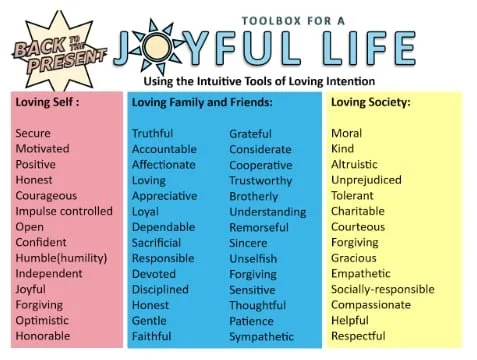
Figure 1-Toolbox for a Joyful Life-The Intuitive Knowledge of Loving Intention
Acting impulsively on F.A.S.T. (fear, anger, sadness, and temptation) emotions compromises the use of intuitive knowledge of loving intention (Figure 1-Toolbox for a Joyful Life-The Intuitive Knowledge of Loving Intention), leading to the following sources of anxiety (Figure 2-Sources of Anxiety):
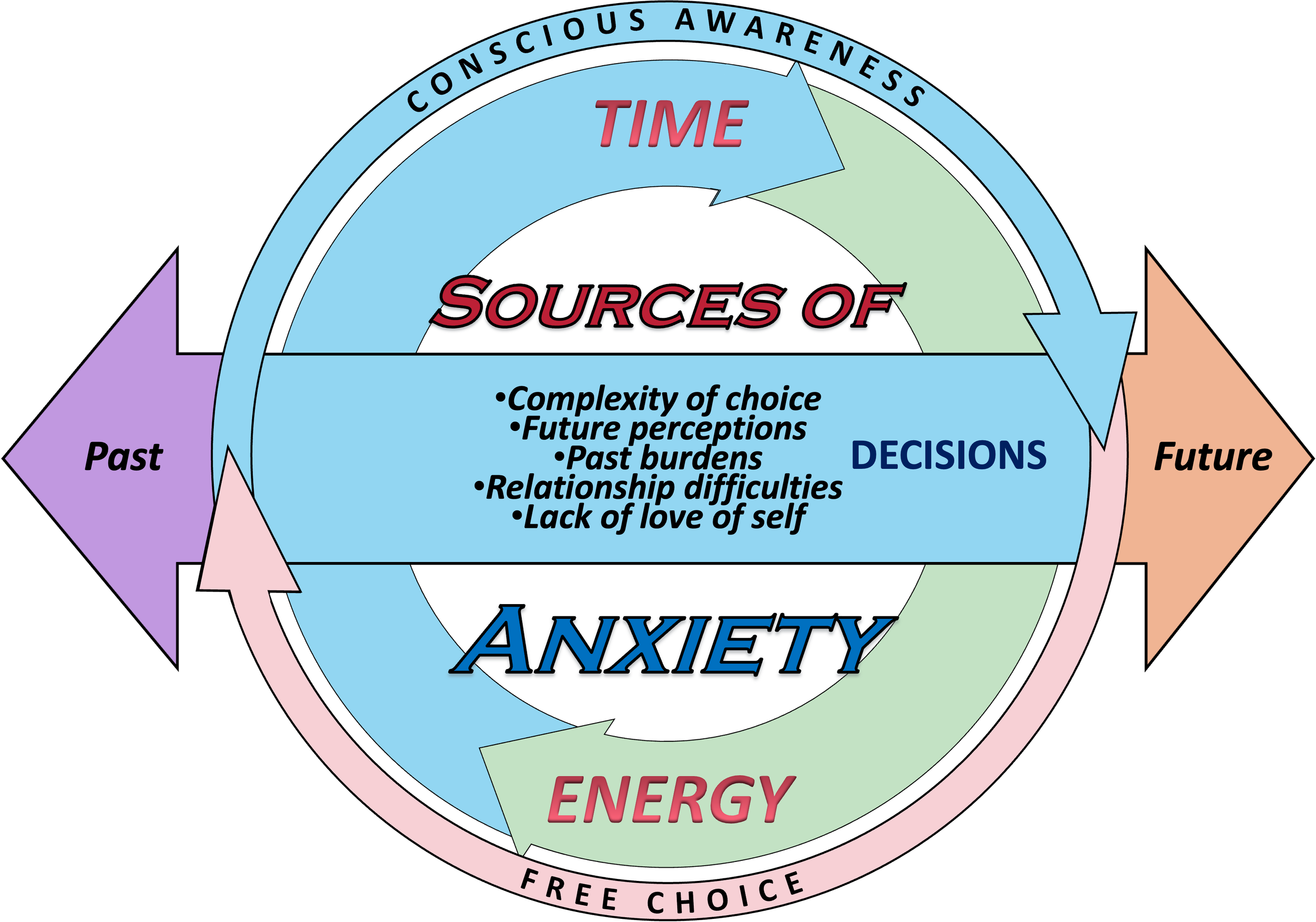
Figure 2-Sources of Anxiety
Complexity of Choice
Description: Anxiety arises from the overwhelming number of choices and the fear of making the wrong decision.
Example: Sarah is anxious about choosing a career path. She feels overwhelmed by the numerous options and fears making the wrong choice. To manage this, she creates a list of her interests and strengths, researches careers that align with them, and consults a career counselor to narrow down her options. By setting clear priorities, she simplifies her decision-making process and reduces her anxiety.
Impact: This can lead to decision paralysis, stress, and second-guessing.
Management: Simplify decision-making processes by setting clear priorities, using decision-making frameworks, and trusting your intuition.
Self-Reflective Questions
What major decisions are currently causing me anxiety?
How do I typically handle decision-making when faced with many options?
Can I identify and prioritize my core values and goals to simplify my choices?
Future Perceptions
Description: Anxiety about future events and outcomes, often fueled by fear of the unknown and uncertainty.
Example: John constantly worries about the future, fearing job loss and financial instability. To combat this, he practices mindfulness by focusing on his current tasks and achievements. He sets realistic short-term goals and creates a flexible financial plan. This helps him stay present and reduces his anxiety about the future.
Impact: This can result in chronic worry, anticipation of negative outcomes, and avoidance of new opportunities.
Management: Focus on the present moment through mindfulness practices, set realistic goals, and prepare for the future with flexible plans.
Self-Reflective Questions
What specific aspects of the future am I most anxious about?
How often do I find myself worrying about things that are beyond my control?
What small, actionable steps can I take today to prepare for my future?
Past Burdens
Description: Anxiety stemming from unresolved issues, traumas, or regrets from the past.
Example: Emily struggles with anxiety due to a past traumatic event. She often feels overwhelmed by negative emotions and memories. She seeks therapy to process her trauma, practices self-compassion, and uses journaling to reframe her past experiences positively. These strategies help her release the emotional burdens and reduce her anxiety.
Impact: This can cause emotional distress, flashbacks, rumination, and a persistent sense of guilt or shame.
Management: Engage in therapy to process past experiences, practice forgiveness and self-compassion, and use techniques to reframe and release negative memories.
Self-Reflective Questions
Are there unresolved issues or past events that still affect me emotionally?
How do I usually cope with memories of past traumas or regrets?
What steps can I take to process and release these past burdens?
Relationship Difficulties
Description: Anxiety related to interpersonal conflicts, misunderstandings, and unmet expectations in relationships.
Example: Mark experiences anxiety due to constant conflicts with his partner. To address this, they both attend couples therapy to improve their communication skills. Mark also practices active listening and empathy, which helps him understand his partner's perspective and reduces their conflicts. As a result, his anxiety related to the relationship decreases.
Impact: This can lead to feelings of isolation, resentment, and chronic stress.
Management: Improve communication skills, practice empathy and active listening, and seek counseling to address relationship issues.
Self-Reflective Questions
What recurring conflicts or issues do I face in my relationships?
How do I typically react during conflicts with loved ones?
What communication skills can I improve to enhance my relationships?
Lack of Self-Love
Description: Anxiety resulting from low self-esteem, self-doubt, and a lack of self-compassion.
Example: Lisa has low self-esteem and frequently doubts her abilities, leading to anxiety. She starts practicing positive affirmations daily, engages in activities she enjoys, and sets aside time for self-care. Over time, these practices boost her self-worth and reduce her anxiety.
Impact: This can manifest as negative self-talk, avoidance of self-care, and dependence on external validation.
Management: Cultivate self-love through positive affirmations, engage in activities that promote self-worth, and practice self-care regularly.
Self-Reflective Questions
How do I perceive myself in terms of worthiness and self-love?
What negative self-talk or beliefs do I hold about myself?
What activities or practices can I engage in to cultivate self-love and self-compassion?
Tools to Control Impulsiveness
Mindfulness Meditation
Description: Regular practice increases awareness of thoughts and emotions, allowing for a more measured response.
Techniques: Focus on breathing, observe thoughts without judgment, and practice daily for consistent benefits.
Example: Whenever Alex feels overwhelmed by anxiety, he takes a few minutes to practice mindfulness meditation. He focuses on his breath and observes his thoughts without judgment. This practice helps him calm his mind and respond to stressors more thoughtfully.
Self-Reflective Questions:
How often do I take time to be present and mindful of my thoughts and emotions?
What triggers usually cause me to react impulsively?
How can I incorporate mindfulness meditation into my daily routine?
Cognitive Behavioral Techniques
Description: Identifying and challenging irrational thoughts helps regulate emotional responses.
Techniques: Keep a thought journal, question the validity of anxious thoughts, and replace them with more balanced perspectives.
Example: When Maria notices she is having irrational thoughts about failing an exam, she writes them down in a thought journal. She then challenges these thoughts by questioning their validity and replacing them with more balanced perspectives, such as acknowledging her previous successes and the effort she has put into studying.
Self-Reflective Questions:
What irrational thoughts or beliefs frequently lead to my anxiety?
How do I usually challenge or validate these thoughts?
What cognitive behavioral strategies can I use to reframe negative thoughts?
Physical Activity
Description: Exercise reduces stress hormones and increases endorphins, promoting a sense of well-being.
Techniques: Incorporate regular physical activities such as walking, yoga, or sports into your routine.
Example: David feels anxious after a stressful day at work. He goes for a run, which helps reduce his stress hormones and boosts his mood. Regular physical activity becomes a part of his routine, helping him manage his anxiety more effectively.
Self-Reflective Questions:
How does physical activity impact my mood and stress levels?
What types of physical activities do I enjoy and find relaxing?
How can I ensure I include regular exercise in my weekly schedule?
Time Management
Description: Organizing and prioritizing tasks reduces the feeling of being overwhelmed.
Techniques: Use planners, break tasks into manageable steps, and set realistic goals.
Example: Sophie feels anxious about her workload. She uses a planner to organize her tasks, breaks them into smaller steps, and prioritizes them based on urgency and importance. This helps her manage her time better and reduces her feeling of being overwhelmed.
Self-Reflective Questions:
What tasks or responsibilities make me feel overwhelmed?
How do I currently prioritize and organize my tasks?
What time management tools or strategies can help me feel more in control?
Not Act F.A.S.T. Exercise
Description: This technique helps control reactions to fear, anger, sadness, and temptation.
Steps: Set an image representing these emotions as your phone's wallpaper, remind yourself not to react impulsively each time you receive a notification, and reinforce the mantra "Don't act F.A.S.T. on fear, anger, sadness, or temptation."
Example: Jake often reacts impulsively when he feels fear or anger. He sets an image representing F.A.S.T. emotions as his phone wallpaper. Each time he receives a notification, he reminds himself of the mantra "Don't act F.A.S.T. on fear, anger, sadness, or temptation." This practice increases his awareness and helps him respond more calmly to emotional triggers.
Self-Reflective Questions:
How do fear, anger, sadness, and temptation typically influence my behavior?
When was the last time I acted impulsively due to these emotions, and what was the outcome?
How can I remind myself to pause and not act F.A.S.T. in emotionally charged situations?
Faith in Decision-Making
Trust in the Process
Description: Having faith means believing that outcomes will align with your best interests, even if they are not immediately apparent.
Practice: Reflect on past experiences where things worked out despite initial anxiety, and trust that current challenges will also resolve in time.
Example: When faced with uncertainty about a major life decision, such as moving to a new city for a job, Rachel reflects on past experiences where things worked out despite initial anxiety. This helps her trust that the current challenge will also resolve in time, reducing her anxiety.
Self-Reflective Questions:
When have I experienced positive outcomes despite initial anxiety or uncertainty?
How can I remind myself to trust the process during challenging times?
What past experiences can I reflect on to reinforce my trust in the process?
Spiritual Practices
Description: Engaging in spiritual activities connects us to the intuitive knowledge provided within. Practices involving spiritual understanding offer comfort and a sense of connection to something greater than oneself.
Practices: Regular prayer, meditation, affirmations, and participation in faith communities provide support and reduce feelings of isolation.
Example: Tom finds comfort in his spiritual practices. He attends regular meditation sessions at his local community center and participates in prayer groups. These activities provide him with a sense of connection and support, helping him manage his anxiety.
Self-Reflective Questions:
What spiritual practices bring me comfort and a sense of connection?
How often do I engage in these practices, and how do they impact my anxiety levels?
What new spiritual activities or communities could I explore to enhance my faith?
Embracing Uncertainty
Description: Faith helps in accepting uncertainty as a part of life, reducing the need to control every aspect of the future.
Strategies: Focus on living in the present moment, let go of the need for certainty, and cultivate an attitude of openness and curiosity.
Example: Linda often feels anxious about not knowing what the future holds. She practices embracing uncertainty by focusing on the present moment and letting go of the need for certainty. She adopts an attitude of openness and curiosity, which helps reduce her anxiety about the unknown.
Self-Reflective Questions:
How do I generally feel about uncertainty and the unknown?
What strategies can help me embrace uncertainty rather than fear it?
How can I practice living in the present moment more fully?
Positive Outlook
Description: Faith encourages a positive outlook, which can reduce stress and enhance emotional resilience.
Techniques: Practice gratitude, maintain a hopeful perspective, and surround yourself with positive influences.
Example: Michael practices gratitude daily by writing down three things he is thankful for each morning. This habit helps him maintain a hopeful perspective, reduces his stress, and enhances his emotional resilience. By focusing on the positive aspects of his life, he manages his anxiety more effectively.
Self-Reflective Questions:
How often do I focus on the positive aspects of my life?
What practices can help me maintain a hopeful and positive perspective?
How can I incorporate gratitude into my daily routine to boost my emotional resilience?
Conclusion
Understanding and managing anxiety and emotional burdens are crucial steps towards leading a joyful and fulfilling life. By identifying the five primary sources of anxiety—complexity of choice, future perceptions, past burdens, relationship difficulties, and lack of love of self—we can better understand the root causes of our emotional struggles. Implementing tools to control emotional impulsiveness, such as mindfulness meditation, cognitive behavioral techniques, physical activity, time management, and the Not Act F.A.S.T. exercise, empowers us to respond to stressors with greater resilience and composure.
Moreover, embracing faith in decision-making provides a sense of purpose and trust in the process, helping to alleviate the burden of anxiety. By integrating these strategies into our daily lives, we can create a foundation for emotional stability and well-being.
Call to Action
I encourage you to take the first step towards managing your anxiety and emotional burdens by reflecting on the self-reflective questions provided in this discussion. Identify the areas where you need the most support and start implementing the suggested strategies. Remember, change takes time and consistency, so be patient with yourself as you embark on this journey.
Additionally, consider sharing these insights with friends and family who may also benefit from these strategies. By fostering a supportive community, we can collectively enhance our emotional well-being and create a more mindful and compassionate world.
Visit backtothepresent.org for more resources, tips, and exercises to help you stay grounded in the present moment and live a life of joy and fulfillment. Join our community, participate in our programs, and take charge of your emotional health today. Together, we can overcome anxiety and embrace the present with open hearts and minds.