
The Three Stages of Decision-Making
Every decision you make shapes how you feel—and how others experience you.
The three stages of Decision Making—impulse, intention, and implementation—offer a practical way to pause, choose wisely, and act with loving intention.
When these stages are aligned, decisions lead toward contentment, happiness, and joyfulness.
When they aren’t, emotional suffering and relational strain often follow.
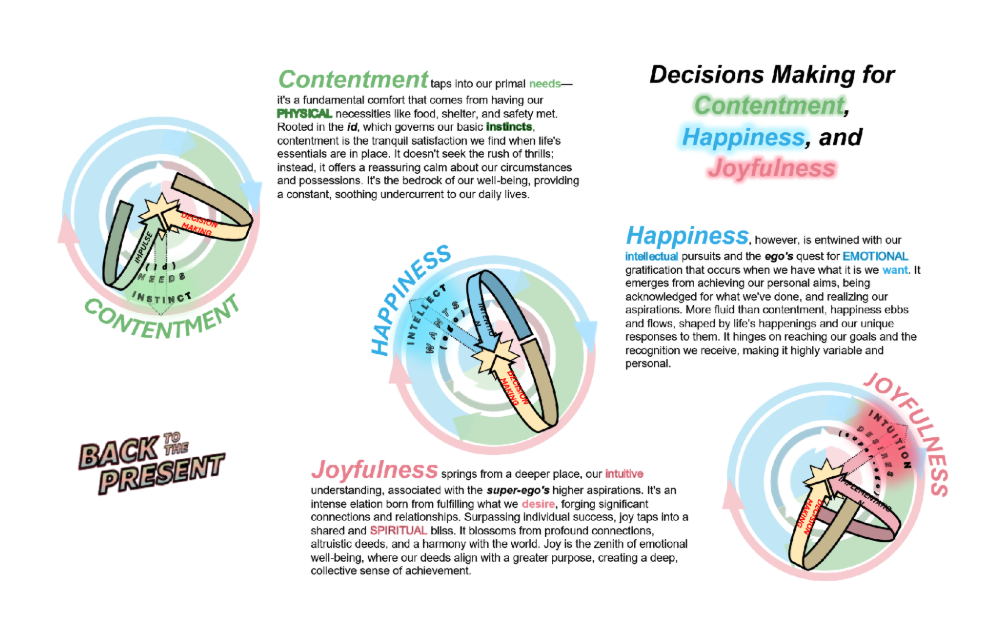
The Three Stages
1. Impulse
Your first reaction—often driven by fear, anger, sadness, or temptation.
Impulse is natural, but acting here often creates regret.
2. Intention
A conscious pause to ask:
How do I want to respond—and why?
This is where values, empathy, and loving intention guide choice.
3. Implementation
Putting intention into action—calmly, clearly, and responsibly.
This is where decisions become outcomes.
Why This Matters
Most emotional suffering isn’t caused by events—it’s caused by how we respond.
By learning to pause between impulse and action, we reclaim our ability to choose responses that protect relationships, reduce guilt and shame, and honor our limited time and energy.
Try This Today
Think of a recent moment when you reacted quickly.
What was your impulse?
What intention would have better served the situation?
How might mindful implementation have changed the outcome?
Every moment offers another opportunity to choose differently.
Guided Exercise: The Three Stages of Decision-Making
A practical way to reduce emotional suffering and choose with intention
This exercise helps you slow down emotionally charged moments and move from reaction to responsibility. You can use it in real time or reflect on a recent situation.
Step 1 — Notice the Impulse

Begin by recalling a recent moment when you felt emotionally activated.
Ask yourself:
What was my immediate reaction?
What emotion showed up first—fear, anger, sadness, or temptation?
Did my body tense, speed up, or want to act quickly?
Instruction:
Do nothing yet.
Simply notice the impulse without judging it.
Impulse is information—not instruction.

Step 2 — Choose an Intention
Now pause and shift from reaction to choice.
Ask yourself:
What do I want to create in this moment?
What matters more here—short-term relief or long-term outcome?
How do I want this situation to feel once it’s over?
Consider responses rooted in:
empathy
honesty
patience
communication
respect
Instruction:
Name your intention in one clear sentence.
Example:
“My intention is to express my feelings without harming the relationship.”

Step 3 — Practice Implementation
Now act—slowly and deliberately.
Ask yourself:
Does this action match my intention?
Am I speaking or acting with awareness?
Would I be comfortable standing by this decision later?
Instruction:
Take one small, intentional action aligned with your stated intention.
Example:
Instead of reacting defensively, say:
“I want to talk about how this affected me, because I value our relationship.”
Reflection
After the moment passes, take a brief check-in.
Did my action align with my intention?
How did this choice affect my emotional state?
Did it reduce or increase emotional suffering—for me or others?
Daily Practice Prompt
Choose one situation today—small or large—and consciously walk through:
Impulse
Intention
Implementation
Write down what you noticed.
Over time, this practice strengthens emotional clarity, relational trust, and inner peace.
Key Reminder

Every decision is an opportunity.
You cannot control the impulse—but you can choose the intention and guide the outcome.
This is how emotional suffering is reduced—one decision at a time.