
Sustenance, Safety, and Reproduction as Basic Needs
The fundamental needs for sustenance, safety, and reproduction have driven human behavior throughout history. These essential needs—securing food, ensuring safety, and reproducing—remain as relevant today as they were in the earliest days of human evolution. However, as humans evolved and gained conscious awareness, we also began to shape our survival and reproduction through creative evolution: a process of using intelligence and choice to influence the genetic and social future of our species.
Human Behavior Driven by Sustenance, Safety, and Reproduction
From the beginning, humans have been motivated by three basic needs: obtaining food and water, ensuring safety from threats, and reproducing to continue the species. Early humans instinctively prioritized securing sustenance and safety before reproduction became a focus. This pattern of prioritization ensured the continuation of the species in harsh environments.
In times of abundance, humans shifted their time and energy from survival to reproduction. However, in periods of scarcity, reproduction was delayed to avoid overextending limited resources. Early human societies understood, often unconsciously, that bringing new life into a world with insufficient resources would threaten both parents and offspring.
Example: In early hunter-gatherer societies, families often postponed reproduction during food shortages, focusing on survival until conditions became more favorable.
This behavior is visible in modern societies, where individuals often delay starting families until they feel financially secure or have a stable environment. The instincts that guided our ancestors continue to shape decisions today, even though the circumstances have evolved.
Parallels with Animal Instinct
Humans share many survival instincts with animals, particularly the drive to secure food and safety before reproduction. Animals instinctively delay mating when their environment cannot support offspring. Early humans followed this same instinctual pattern, focusing on survival before reproduction.
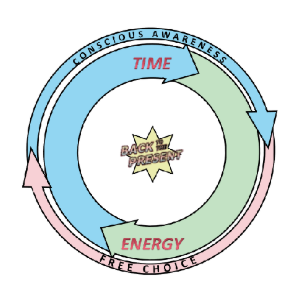
Figure 1-Unique Abilities and Limited Resources
What sets humans apart is the development of conscious awareness and free choice, which enabled us to recognize how time and energy impact our existence (Figure 1-Unique Abilities and Limited Resources). We could learn from past experiences, store this knowledge, and apply it to plan for the future. Unlike animals, which rely solely on instinctual drives, humans gained the ability to make complex decisions about their future, especially when and how to reproduce. This foresight allowed us to delay reproduction not just in response to immediate environmental factors, but also based on long-term planning. This marked the point where humans began to shape their future more intentionally, moving beyond instinct.
Creative Evolution and Human Adaptability: Shaping Our Own Future
As humans evolved, they realized that they were not limited by specific ecosystems. Our adaptability allowed us to live almost anywhere and eat nearly anything, fundamentally changing the way we approached survival and reproduction. By working together and solving survival challenges with collective intelligence, humans became increasingly efficient at meeting their basic needs. This freed up time and energy to reflect on ways to improve survival even further.
This mastery over our environment led to a key shift: humans could now choose where to live and what to eat. We could make this choice for ourselves, choosing to leave the confines and safety of our clan or tribe and attempt to explore the world and see what else it had to offer. With basic needs met, attention turned to reproduction, where free choice played a more significant role. Unlike animals that relied on instinctual signals like physical traits or mating displays, humans began to select partners based on attributes that would offer each other an enhanced likelihood of survival—such as intelligence, physical strength, and cooperation.
This conscious selection of mates introduced a new process: creative evolution. Humans were no longer bound by the slow pace of natural selection, which is driven by environmental pressures over long periods. Instead, through deliberate choice, humans began to shape the genetic and social future of their offspring with each generation.
By choosing partners who had intellectual and intuitive attributes that supported survival and success, humans actively influenced the gene pool. This form of creative evolution enabled rapid changes in the qualities humans valued in future generations, such as resilience, cooperation, and ingenuity. Through cooperation and foresight, humans began to engineer their evolution, moving beyond the natural limitations imposed by instinct and the environment.
The Acquisition of Knowledge Would Change Everything
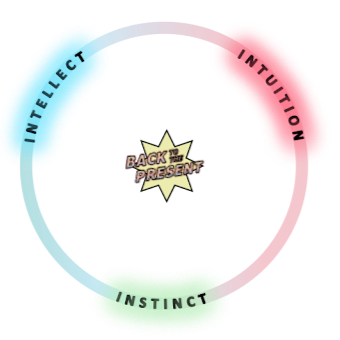
Figure 2-Sources of Knowledge
Intellectual and intuitive knowledge differ greatly from instinct in that they are developed through conscious thought, experience, and learning, rather than automatic, biologically driven reactions (Figure 2-Sources of Knowledge). Instinct is an inherent, unconscious response to environmental stimuli, like the drive to secure food or reproduce for survival. In contrast, intellectual knowledge involves reasoning, problem-solving, and foresight—skills that allow humans to plan, strategize, and make informed decisions, ultimately improving both the quality and quantity of life.
Intuitive knowledge is more subconscious, drawing on accumulated experiences to guide behavior and decision-making, often without conscious awareness. This form of knowledge gave humans an understanding of the power of making decisions with loving intention, which we found could enhance not just survival, but every aspect of life (Figure 3-Toolbox for a Joyful Life-The Tools of Loving Intention).
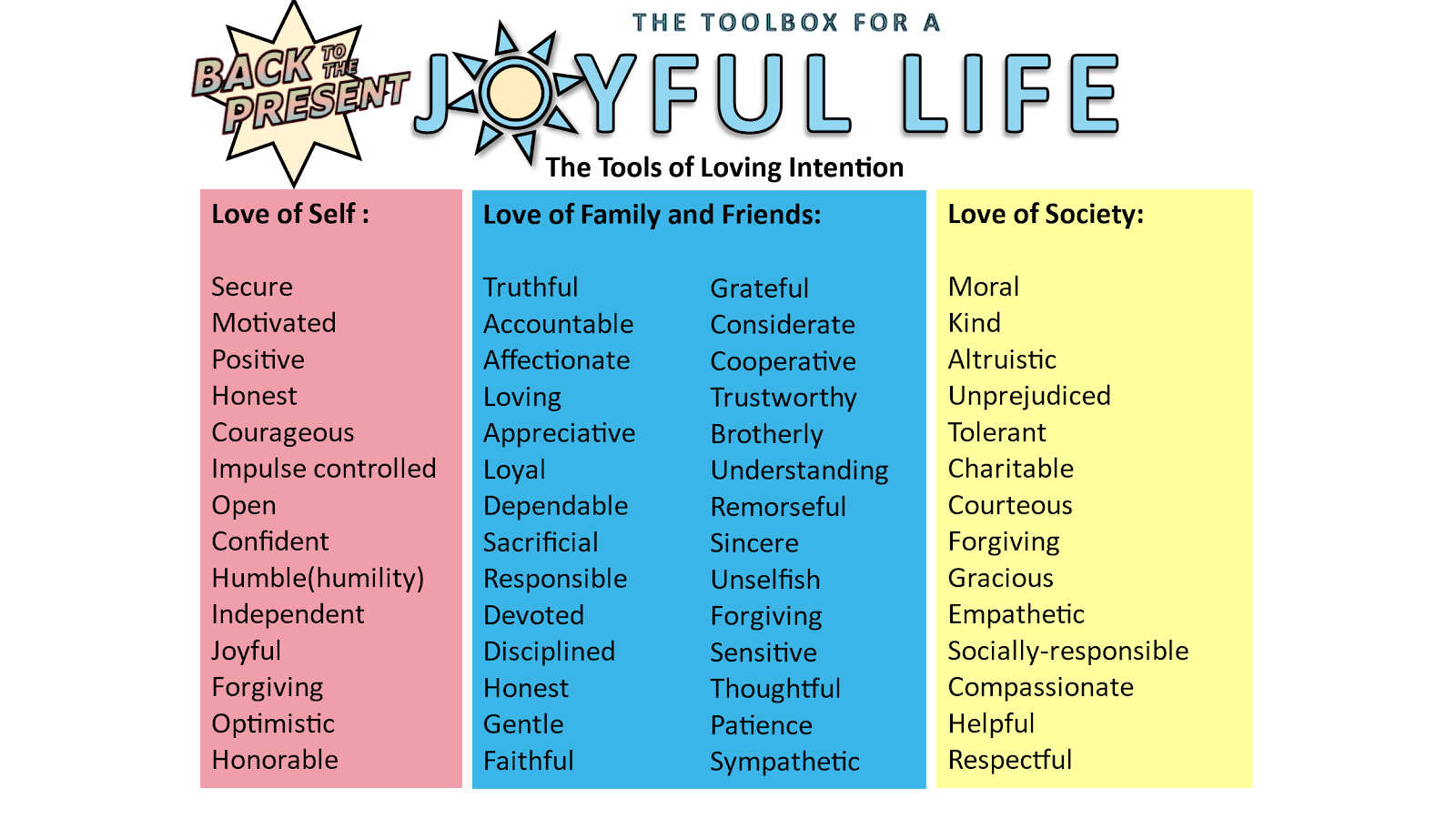
Figure 3-Toolbox for a Joyful Life-The Tools of Loving Intention
When choosing reproductive partners, humans moved beyond instinctual drives like physical traits and mating displays typical of animals. Instead, they sought partners with intellectual and intuitive attributes that would enhance the long-term survival and well-being of their offspring and community. This shift from purely instinctual reproduction to a more thoughtful, intentional approach marked a critical evolution in human development.
Conclusion: Humanity’s Unique Path to Survival and Evolution
The fundamental needs of sustenance, safety, and reproduction have driven human survival from the beginning. By prioritizing these needs, early humans laid the foundation for life in unpredictable environments. However, as humans gained conscious awareness, they unlocked new opportunities to influence their survival and reproduction through creative evolution.
Unlike animals, whose survival and reproduction are primarily governed by instinct, humans evolved the capacity to consciously decide when and how to reproduce. This ability, combined with our adaptability and efficiency in meeting basic needs, allowed us to shape our genetic and social development with intention. We needed control over our instincts and the acquisition of intellectual and intuitive knowledge would provide us a creative path forward . Through cooperation and innovation, humans have not only ensured survival but also taken control of the future direction of their species.
The journey from securing food and safety to deliberately designing our genetic legacy highlights the unique human capacity for self-determination. As we continue to evolve, we remain guided by the same basic needs that have driven us for millennia, but now we do so with a far greater awareness of the power of choice.
Reflection:
As we reflect on the evolution from instinctual survival to deliberate decision-making, enhanced by our intellectual and intuitive intelligence, it’s evident that the fundamental needs for sustenance, safety, and reproduction continue to shape much of human behavior. What has changed is our ability to engage in creative evolution—the conscious manipulation of our environments, deep understanding of relationships, and even genetic outcomes, which has made us the unique species we are today.
In modern times, our pursuit of financial security, job stability, and health still reflects these ancient needs for sustenance and safety. However, meeting these needs has become far more complex in today’s developed world. The wide array of choices we’ve created with our intellectual advancements has, in many ways, overwhelmed our consciousness, leading to increased ANXIETY. Decisions to delay having children until we feel secure mirror the evolutionary balance between survival and reproduction. Yet, through conscious choice, we now approach these decisions with far greater precision, no longer driven purely by instinct.
Looking ahead, we must ask ourselves: How can we leverage our evolved capacity for:
Intellectual imagination and creativity to create what we want.
Intuitive understanding and application of loving intention in relationships
Conscious Awareness of time and energy for foresight
Creative evolution
to tackle the challenges of the present and future? As our intellect has contributed to an increasingly complex world, how can we draw on the intuitive lessons from our evolutionary past—where adaptability and collaboration were key to survival—to build a more sustainable and harmonious future?
The interplay between our ancient instincts and the intellectual and intuitive knowledge we have acquired offers us the capacity for conscious choice, prompting an essential question: What will we create with the time, energy, and resources we now possess? Our future—both biologically and culturally—may very well depend on how wisely we use the power of creative evolution.