
Anxiety: The ‘Devil’ in Disguise
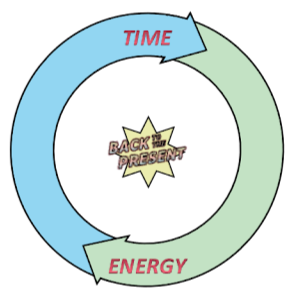
Figure 1- Limited Resources and the Manifestations of feeling and thought
Imagine you're sitting in a peaceful room, trying to enjoy a quiet moment, but an unseen, malevolent force robs you of time and energy by controlling your feelings and thoughts. It's as if something sinister creeps into your mind, relentlessly disrupting your peace. You find yourself distracted from the only moment of life you can truly enjoy—the present. Have you ever felt this way, as though something is robbing you of your ability to fully embrace the here and now?
This unseen force, anxiety, is like a shadow over your consciousness. It undermines your decision-making abilities, clouds your judgment, and drains you of time and energy, leaving you exhausted and uncertain (Figure 1- Limited Resources and the Manifestations of feeling and thought). It’s as if you’re fighting a battle in your mind, yet you’re not sure who the enemy is or how to defeat it. If I asked you to describe this torment, how would you articulate it? What does your personal ‘shadow’ look like?
Take Sarah, for example. She's a high school student who feels an overwhelming sense of dread before exams. Despite being well-prepared, she can’t shake the feeling that she’s going to fail. This anxiety consumes her, making it difficult for her to concentrate, and ironically, this very distraction puts her at risk of underperforming. Sarah’s anxiety isn’t just about the test; it’s about a fear of failing that invades her thoughts and feelings, stealing her peace of mind.
What could be more sinister than a force that diverts you from the only moment of life you can truly savor? This moment, the present, is where you can fully employ your gifts, but anxiety invades, monopolizing your feelings and thoughts. It robs you of the joy and potential inherent in the now, the only time where implementing change is possible. Pretty evil, wouldn’t you agree?
Anxiety operates by creating a fog of worry about the future and regret about the past, distracting us from the present moment. It ensnares your feelings and hijacks your thoughts, leading to a cycle of endless what-ifs and worst-case scenarios.
Consider John, a young professional constantly worrying about his future. He’s so fixated on potential career pitfalls that he’s unable to enjoy the successes he’s already achieved. This mental hijacking drains his emotional energy and clouds his ability to make clear, reasoned decisions. It’s a thief of mental clarity, leaving him stranded in a sea of uncertainty and fear.
When was the last time you felt your mind being pulled into a cycle of worry and doubt, distracting you from what was right in front of you?
This relentless intrusion of anxiety into our consciousness is more than a mere inconvenience; it's a profound disruption of our ability to live fully. When we're trapped in the grip of anxiety, we're not truly living; we're merely existing in a state of heightened apprehension and diminished presence. It's a state that paradoxically prepares us for a future that never arrives, while the present slips away, unappreciated and unutilized.
Anxiety often manifests as a lack of emotional confidence, eroding our decision-making abilities and our capacity to handle potential outcomes. It casts a long, dark shadow over many, significantly impacting their mental well-being. Here, we try to shed light on this debilitating condition, offering insights into its nature and logical reasons for its existence. Have you ever wondered why anxiety seems to hit hardest when you're on the verge of something important? Why does it seem to thrive on our most significant moments?
Imagine a person about to make a big life decision—perhaps choosing a career path or deciding to move to a new city. The weight of the decision is so heavy that they are paralyzed by fear of making the wrong choice. Anxiety, like a demonic presence, takes hold, whispering all the possible ways things could go wrong. This isn’t just a fear of failure; it’s a fear that consumes the present moment, preventing them from making any decision at all.
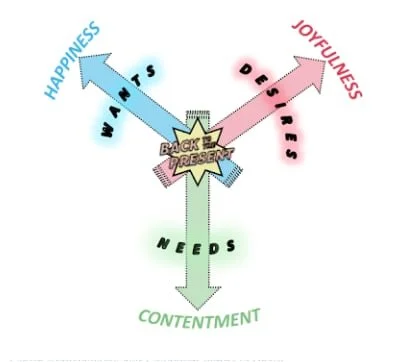
(Figure 2-Satisfactions and Emotional States of Being)
The historical depiction of evil or the devil as an external force needs to be reevaluated. We need to take this metaphor out of the shadows and understand it as a symbol for the mental struggles we face. Understanding how we inadvertently invite these negative influences into our minds (as feelings and thoughts) is crucial. Have you ever caught yourself feeding your own anxiety by dwelling on negative possibilities? How often do we let these ‘demons’ take control without even realizing it?
Humans, unlike other animals, have the unique ability to make conscious decisions. While instincts for survival exist, in modern times, we rely less on these instincts and more on thoughtful consideration. Our decisions now encompass not only survival but also the wellbeing of those around us; the sheer numbers of choices is making us vulnerable to anxiety.
Two thousand years ago, life's simplicity was based on basic needs like food, shelter, and safety. Today, our focus has shifted to the complexities of modern life, where anxiety and its manifestations are more prevalent yet different for everyone. Now we create anxiety about what we want to make us happy, versus what we need to provide contentment (Figure 2-Satisfactions and Emotional States of Being). By understanding the origins of anxiety, we can begin to address it effectively through mindfulness, helping us reclaim our consciousness and enjoy the present moment.
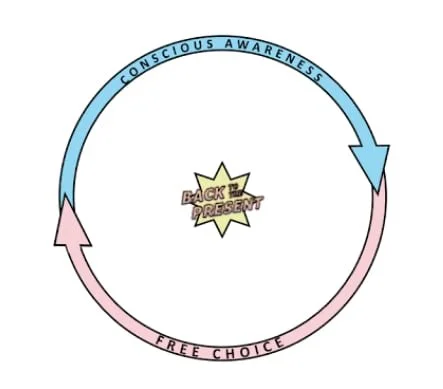
Figure 3-Unique Abilities.
As humans evolved, we developed sophisticated ways to communicate emotions, going beyond basic responses. This conscious awareness gave us the power to freely choose our emotional responses and communicate them effectively. Guidance, particularly spiritual, became essential in this evolution, teaching us how to manage our inherent emotional impulsiveness constructively (Figure 3-Unique Abilities).
Consider someone who has learned to manage their emotions through mindfulness. When confronted with a stressful situation, instead of reacting impulsively with anger or fear, they take a moment to breathe, assess the situation, and respond thoughtfully. How different might our lives be if we could all do this consistently?
A conscience emerged as a guide for loving behavior, optimizing our individual and collective successes. It directs us towards positivity, optimism, confidence, and security, encouraging us to love ourselves fully. This knowledge, intuitive and often acquired through observation, contrasts with intellectual knowledge, which, while making life easier, can distract us from our greatest potential (Figure 4-Sources of Knowledge).
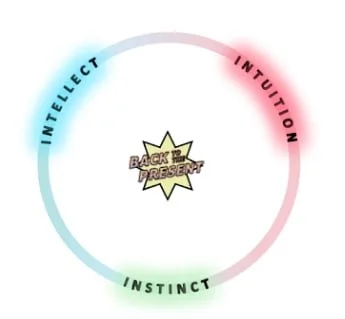
Figure 4-Sources of Knowledge.
Understanding and managing our emotions is critical. Emotions, the combination of your feelings and thoughts, while extensive and often impulsive, are not ideal decision-makers. They are messages, expressing our feelings and thoughts but should not dictate our choices. A reactionary approach, controlled by fleeting emotions, often leads to chaos and suffering.
Mindfulness is a powerful tool in managing emotions. It encourages self-compassion, confidence, and control over impulses. By being mindful, we can fully embrace the present moment without being distracted by thoughts and feelings. Achieving personal goals brings temporary satisfaction, but lasting fulfillment comes from relationships and connections.
In summary, leading a fulfilling life requires a deep understanding of how we use and sometimes misuse our emotions. Anxiety acts as an alarm, triggering our sympathetic nervous system and often putting us in a state of heightened alertness. However, we can regain control over our anxiety through the power of intuitive knowledge and the practice of mindfulness. Learning to employ tools of loving intention empowers us to effectively navigate life's challenges, leading to decisions that not only bring us joy but also strengthen our relationships (Figure 5-Toolbox for a Joyful Life).
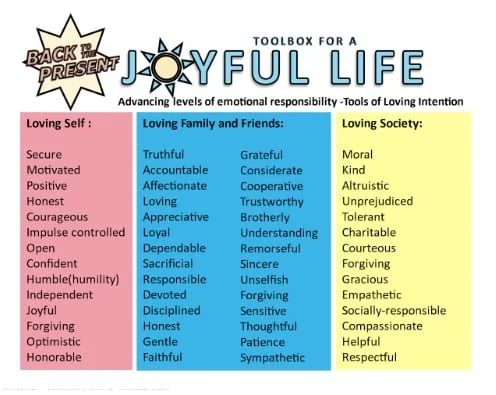
Figure 5-Toolbox for a Joyful Life
It’s essential not to let anxiety, metaphorically depicted as the ‘devil,’ distract us from the present moment. This moment is where our true potential and gifts can be fully realized and enjoyed. By focusing on the present, we can apply the ‘Toolbox of a Joyful Life’ – a conceptual framework that helps us to utilize various strategies and tools for managing emotions and fostering positive relationships. This toolbox can be a guide to living a life that is not just about surviving anxiety but thriving despite it, making the most of every moment we have.