Creative Evolution- Humanity’s Awakening to Conscious Choice
The First Awakening of Human Consciousness
The story of creation, as depicted in biblical terms, can be understood as a metaphor for the first awakening of human consciousness. This was the moment when humanity became aware of time and energy, and with that awareness, realized we have the ability to freely choose what we would like to do, feel, or think next. This profound realization marked a turning point in human evolution, moving us from acting solely on instinct to finding a manner to consciously shape our existence.
Creation and Evolution: Interdependent Forces
For humans, evolution and creation are not separate processes but interdependent forces. The birth of conscious awareness—or creation—enabled us to make intentional choices that, in turn, guided our evolution. Unlike other species, which evolve primarily through instinctual drives and environmental pressures, humans gained the Unique Ability to use conscious awareness and free choice to shape their development.
This new form of consciousness (one with an awareness of time and energy) allowed us to transcend biological adaptation and use knowledge, imagination, and choice to influence both our genetic and cultural futures. Creative evolution, rooted in our capacity to gain intellectual and intuitive knowledge, became a deliberate approach to shaping not only our species but also the world around us- such as the domestication of animals for food and companionship.
The Awareness of Time and Energy: The Birth of Choice
Our awareness of time and energy is foundational to the human experience of freedom of choice. Once humans became conscious of the fact that time and energy are Limited Resources, they gained the ability to make deliberate decisions about how to use them. This awareness marks the shift from purely instinctual behavior—driven by immediate needs like survival and reproduction—to more thoughtful, long-term planning.
For animals, behavior is largely dictated by instinct, with little regard for the future. However, humans, upon recognizing that our time is finite and our energy is not limitless, understood that we could consciously choose how to spend these Limited Resources. This awareness introduces the concept of free choice—the ability to prioritize our efforts, decide what we want to do, feel, or think next, and shape our lives according to what we value most.
Freedom of Choice: Shaping Our Future
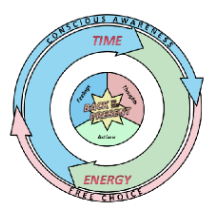
(Figure 1- Unique Abilities, Limited Resources, and Manifestations
This ability to understand the impact of our actions, feelings, and thoughts over time means we are no longer just reacting to the present moment. We can project how we manifest our existence into the future, weighing potential outcomes, and freely choosing paths that align with our goals, values, and aspirations.
By storing our past experiences, calling upon that stored knowledge in the present, and using it to plan for the future, we unlock the potential for creativity, innovation, and the power to shape not only our individual destinies but the broader evolution of our species. As shown in Figure 1, the cyclical representation of time and energy highlights how these Limited Resources must be carefully balanced. With conscious awareness of this balance, we gain the ability to make thoughtful choices that shape our relationships and the trajectory of not only our lives, but that of the society around us. (Figure 1- Unique Abilities, Limited Resources, and Manifestations).
Creative Evolution and the Power of Presence
Creative evolution continues the evolutionary process but allows us, as humans, to consciously shape it by placing our unique fingerprint upon it. While other animals live purely in the present, guided by instinctual knowledge, they unknowingly use their time and energy to be productive, maintain peace in their relationships, and fulfill their primary purpose: ensuring the survival of their species through reproduction. They stay present because they are aware of no other moment but the current one.
Humans, however, have the Unique Ability to reflect on the past and plan for the future. Yet, this same awareness can also distract us from the only moment we truly control—the present. This is why I encourage individuals to practice the Critical Understanding of the Three Agreements through the mindfulness mantra daily. This practice serves as a reminder of the importance of being present and using our Gifts—physical, emotional, and spiritual—in the here and now.
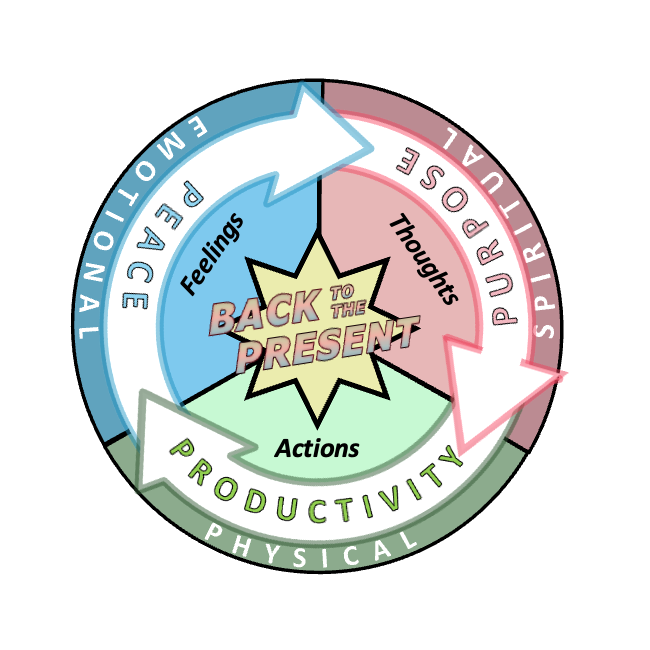
Figure 2-Gifts, Agreements, and Manifestations
The Three Agreements: Staying Present and Aligned
As depicted in Figure 2, the Three Agreements—Productivity, Peace, and Purpose—form a continuous cycle (Pledge of Agreements) that guides our use of time and energy. Every day, we have the opportunity to consciously apply these Agreements, aligning them with our physical actions, emotional feelings, and spiritual thoughts to be mindful and present.
Each day, I will use my physical gifts to be productive.
Each day, I will use my emotional gifts to be at peace in all my relationships.
Each day, I will use my spiritual gifts to guide me to make decisions to fulfill purpose.
By following this pledge, we remind ourselves that the only time we can truly make an impact and experience life is in the present moment. Staying aware of how we use our time and energy, allows us to align our actions, feelings, and thoughts with our Gifts in the present by being productive, maintaining peaceful relationships, and making purposeful decisions (Figure 2-Gifts, Agreements, and Manifestations).
The Tree of Knowledge and the Tree of Life: The Foundations of Intellect and Intuition
In this metaphorical creation story, humanity’s intellectual and intuitive knowledge are symbolized by the Tree of Knowledge and the Tree of Life, respectively. These two Sources of Knowledge represent the added forces driving human evolution—intellect and intuition—both of which humanity began to cultivate once consciousness combined with awareness.
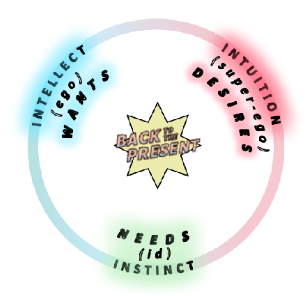
Figure 3-Satifactions and Attributes of Knowledge
Intellect, which comes from the Tree of Knowledge, provided humanity with reasoning, problem-solving, and foresight. It allowed us to analyze, plan, and create. This intellectual growth empowered humans to consciously decide where to live, what to eat, and how to manipulate their environments to better meet their needs at first, and later their awareness of wants and desires as well (Figure 3-Satifactions and Attributes of Knowledge).
Intuition, symbolized by the Tree of Life, gave humanity a deeper, more subconscious understanding of the world. It allowed us to connect with others through empathy, nurturing, faith, and communication. Intuition fostered the loving intention that became the foundation of human relationships, allowing us to transcend mere survival and build emotionally connected, spiritually aware communities.
The fusion of intellect and intuition became the core of creative evolution, as humans began to use these two forms of knowledge to shape their lives deliberately and with productivity, peace, and purpose in mind.
The Awareness of Time, Energy, and the Power of Choice
Our awareness of time and energy is foundational to the human experience of freedom of choice. Once humans became conscious that time and energy are Limited Resources, we gained the ability to make deliberate decisions on how to use them. This shift from instinct-driven behavior to thoughtful planning marked a turning point in human evolution.
While animals act purely on instinct to meet immediate needs, humans recognized that time is finite and energy is not limitless. This knowledge gave us the power to choose how to prioritize our efforts, how to spend our time and energy, and how to shape our lives with productivity, peace, and purpose. We no longer merely reacted to the present moment; we could project into the future, evaluate possible outcomes, and choose paths aligned with our goals and values. This freedom of choice opened up the doors to creativity, innovation, and a deeper ability to shape not only our individual lives but the broader evolution of our species.
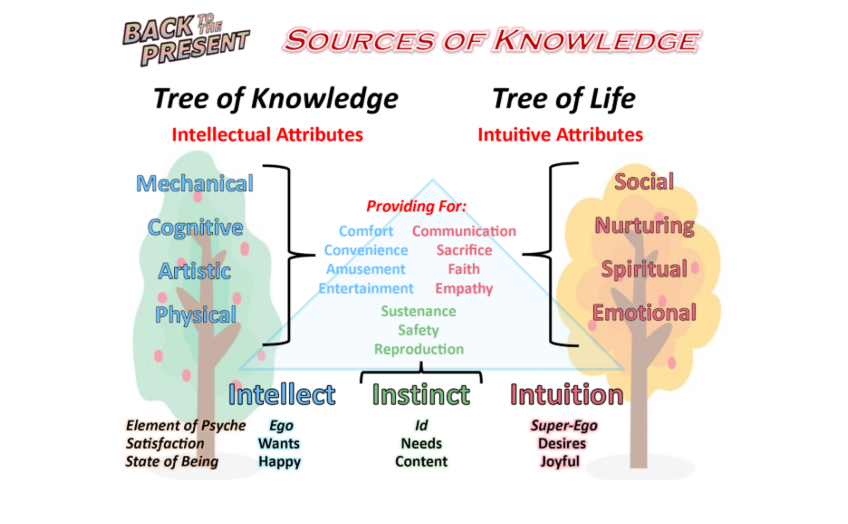
Figure 4-Attributes of Knowledge
Intellectual and Intuitive Attributes: The Building Blocks of Creative Evolution
Creative evolution involves not just surviving but thriving by consciously shaping the future through the selection and development of intellectual and intuitive Attributes of Knowledge (Figure 4-Attributes of Knowledge). These attributes are the traits we look for in our reproductive partners and the characteristics we cultivate in our children, ensuring that future generations are equipped to succeed. As you have outlined, these attributes fall into two categories:
Intellectual Attributes: These are the traits that allow us to shape the physical world and our factual understanding of it. These intellectual attributes have been accentuated in our society to create more of what we want: comfort, convenience, amusement, and entertainment). They include:
Physical (The Athlete): Strength, endurance, dexterity, coordination, sensory perceptions, attractiveness, and nutritional requirements for health, which ensure survival.
Artistic (The Artist): Creativity and expression, which foster innovation by provoking feelings and thoughts that please or pleasure us.
Cognitive (The Scientist): Problem-solving, logic, and reasoning, which drive progress and understanding of the world and our place in it.
Mechanical (The Engineer): Providing practical skills allowing us to see how things fit together to operate, providing us the ability to manipulate the environment to create what it is we want.
Intuitive Attributes: These are the traits that connect us emotionally and spiritually, allowing us to create what it is desire, to build healthy relationships and communities. They include:
Social (Communication): Not only our linguistic ability but the ability to understand facial expression, body language, and tone and inflection in voice to convey thoughts, feelings, and actions that foster collaboration.
Nurturing (Sacrifice): The willingness sacrifice the Limited Resources of time and energy to care for others, ensuring the survival of the community.
Spiritual (Faith): The belief in the inherent ability we all have to apply loving intention into the world to make improvements upon what was, benefiting all of the worlds inhabitants providing purpose that guides our emotions, behaviors, and responses (Figure 5-Intuitive Manifestation of Knowledge).
Emotional (Empathy): The ability to recognize the feelings and thoughts of others, providing the capacity to connect with others on an emotional level, strengthening relationships.
Figure 5-Intuitive Manifestation of Knowledge
These Attributes of Knowledge are central to creative evolution because they guide our choices in selecting partners, raising children, and building societies. The intuitive attributes, in particular, must be developed first. They form the foundation of loving intention, which allows us to support and elevate others. Once these intuitive qualities are in place, we can train and teach those we care about to develop the intellectual attributes that will help them succeed in making improvements in the quantity and quality of the perceived physical world.
The Role of Loving Intention in Creative Evolution
A key element of creative evolution is the application of loving intention—the conscious effort to make others better, not just for survival, but to create a more harmonious and fulfilling life. This intention is rooted in intuitive attributes and is expressed through communication, faith, nurturing, and empathy. Loving intention allows humans to improve the lives of those around them, fostering a community in which knowledge, both intellectual and intuitive, can be passed down and expanded upon (Figure 6-Toolbox for a Joyful Life-The tools of Loving Intention).
Through creative evolution, we don’t just respond to our environment—we shape it by keeping productivity, peace, and purpose in mind. By selecting partners who embody the intellectual and intuitive attributes we value, we ensure that future generations are equipped with the tools they need to thrive. This conscious approach to evolution enables us to not only survive but to actively direct the course of our development, both biologically and socially. This is why the process is called creative evolution.
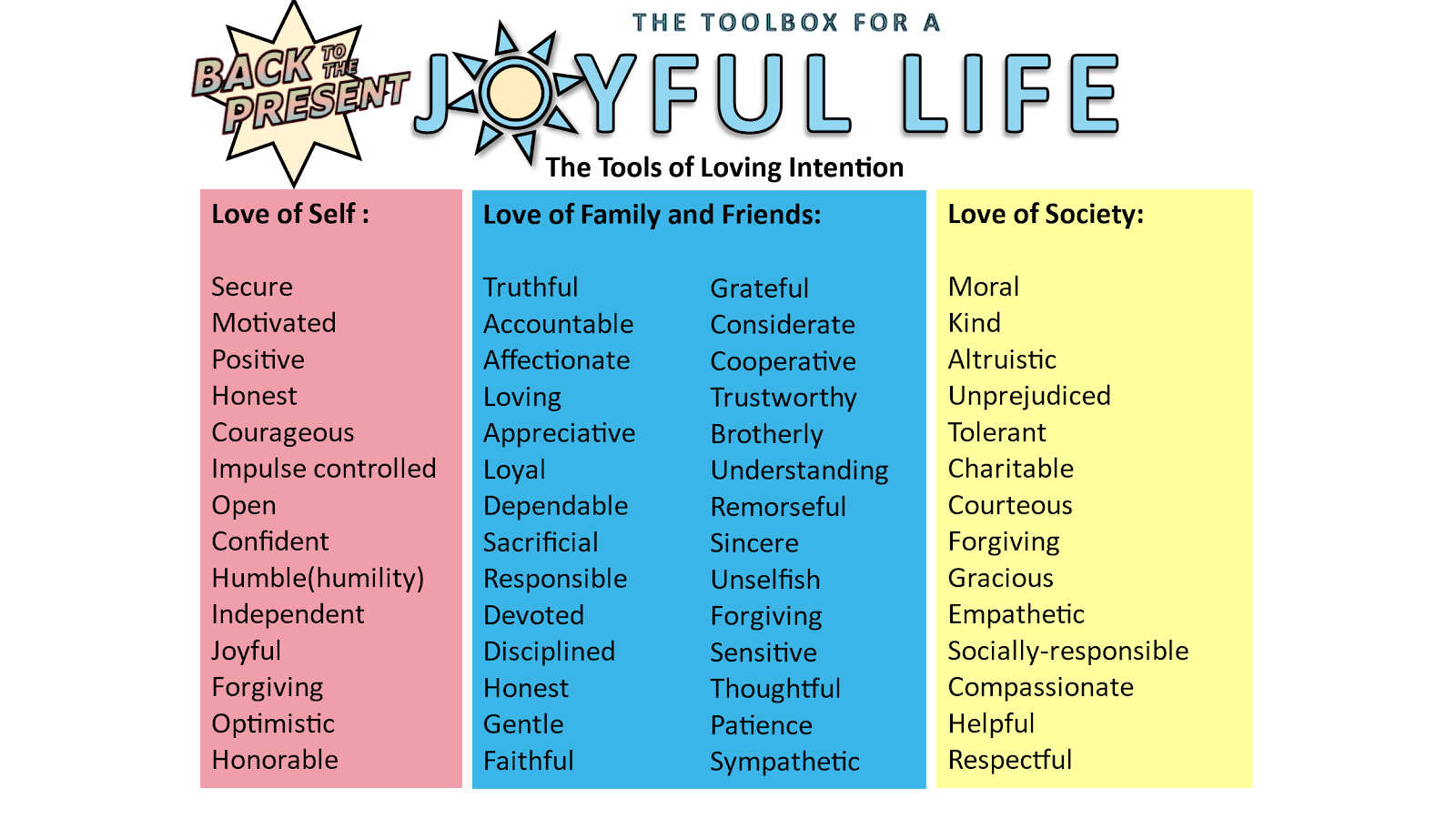
Figure 6-Toolbox for a Joyful Life-The tools of Loving Intention
In this way, we use our awareness of time and energy to make intentional choices that shape the genetic, cultural, and emotional landscape for future generations. We no longer rely on instinct alone to determine how we evolve but instead use free choice to ensure that our descendants inherit qualities that will help them navigate an ever-changing world.
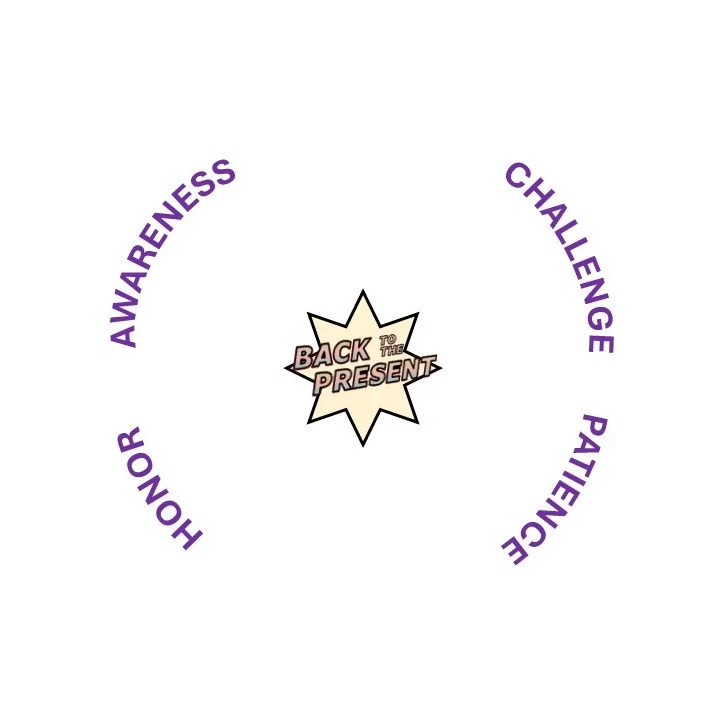
Figure 7-Obligations)
As we practice creative evolution, we balance the roles of intellect and intuition in our lives—applying logic and reason to solve problems and create systems, while also using communication, nurturing, faith, and empathy to strengthen our relationships and communities. By doing so, we place our unique human fingerprint on the evolutionary and creative process, guiding it with purpose and intention.
Ultimately, creative evolution allows us to be active participants in the shaping of our future. Through conscious choices in how we use our Gifts—whether physical, emotional, or spiritual—we continue to evolve not just as individuals but as a species capable of love, compassion, and innovation. By staying grounded in the present moment, practicing four awareness Obligations, we make sure that the time and energy we invest lead to a future filled with meaning, growth, and connection (Figure 7-Obligations).
Mindfulness Practice and the Four Obligations: Shaping Our Existence
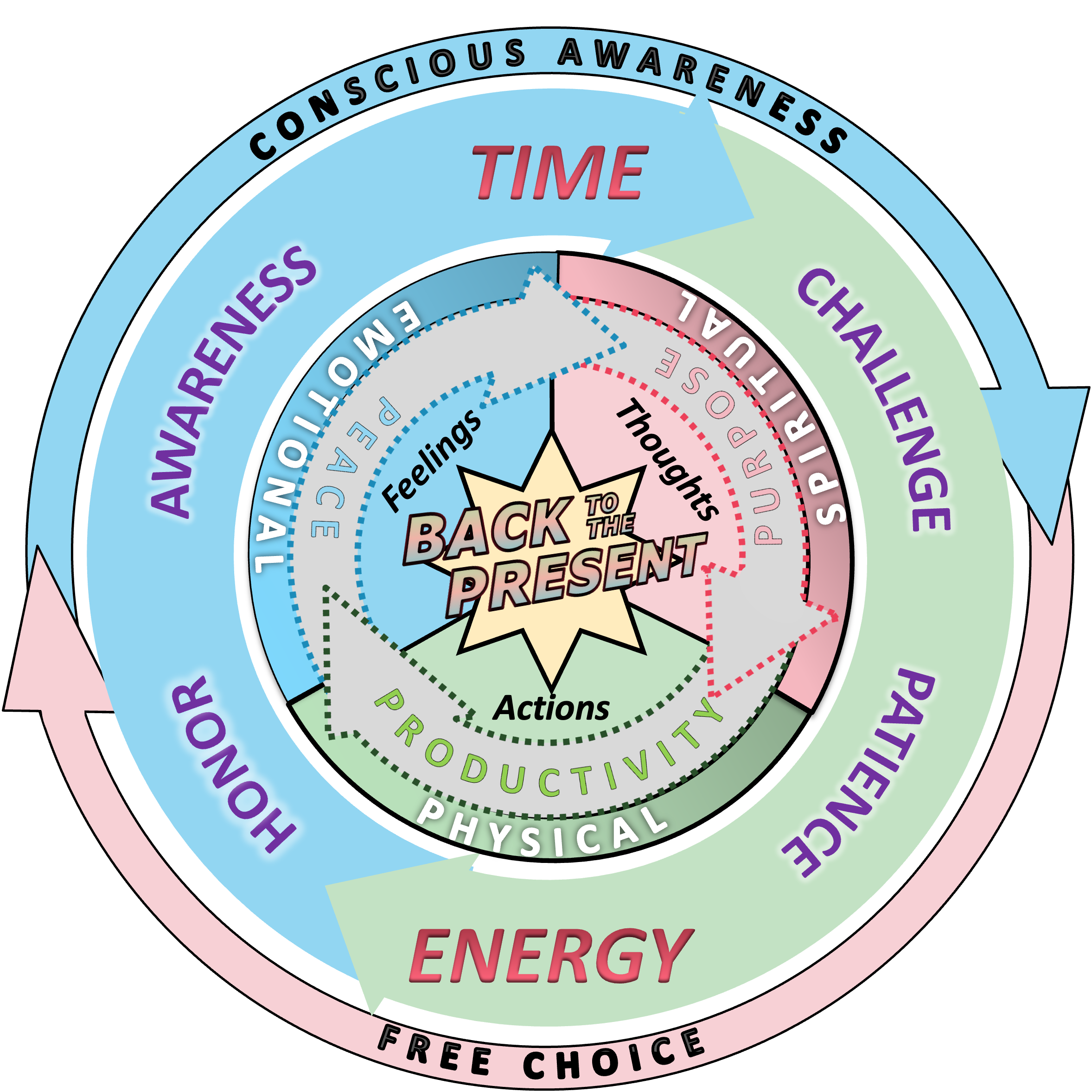
A mindfulness practice based on four Obligations—awareness, challenge, patience, and honor—guides us to live fully in the present moment. By focusing on these Obligations, we learn to direct our time and energy towards fulfilling our Gifts—physical, emotional, and spiritual—in ways that align with our values and purpose. This is accomplished by combine them with our Unique Abilities of conscious awareness and free choice to actively shape our individual and collective reality.
Awareness- keeps us present and mindful of the choices we make.
Challenge-by embracing challenge, we push ourselves to use free choice of what we are doing, feeling, and thinking to grow.
Patience-by practicing patience we allow room for thoughtful, purposeful growth physically, emotionally, and spiritually.
Honor-by living with honor, we care for our Gifts byaligning our actions, feelings, and thoughts with loving intention.
In this way, these Obligations allow us to Manifest our Agreements: to be productive, at peace in our relationships, and to fulfill our purpose. This conscious alignment in the present moment directly influences the undeniability of creative evolution, where each decision we make shapes the trajectory of our lives and the future of our species. By adhering to these four Obligations, we ensure that our evolution is not left to chance but actively shaped by mindful, intentional choices. Above in Figure 8, you will find a summary image of the model I have created for backtothepresent.org.This model is intended to use the CRITICAL UNDERSTANDINGS, connected in the above discussion, to become more mindful of the joy available in the present moment. Here is a Mantra I call An Affirmation of an Inspiration to explain what it is I mean.