
Overview of Human Uniqueness
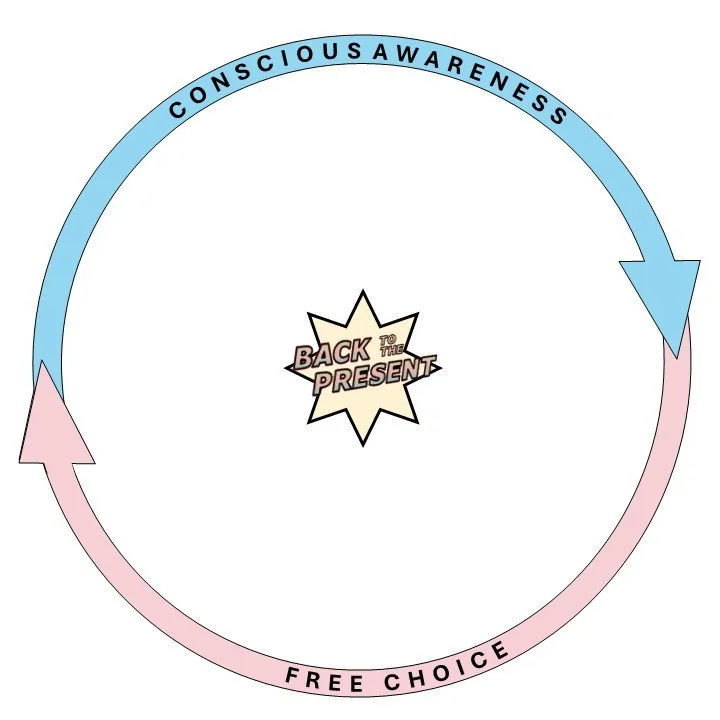
Figure 1-Unique Abilities
Humans possess a remarkable set of attributes that set us apart from other animals. To fully embrace our lives in each and every moment, it is essential to understand two main components of human uniqueness: conscious awareness and free choice, these are our Unique Abilities (Figure 1-Unique Abilities). By understanding and harnessing these unique abilities, we can navigate our lives with greater intention, make more informed decisions, and achieve a deeper sense of fulfillment and personal growth.
Personal Reflection:
How often do you take a step back to reflect on your current state of mind and life choices?
Can you recall a recent decision where you consciously evaluated your options rather than reacting impulsively?
Consciousness: The Foundation of Human Experience
Consciousness is the state of being awake and alert, capable of perceiving and reacting to the world around us. It allows humans to experience the environment, differentiate ourselves from it, and respond to various stimuli. This state is not unique to humans; other animals also possess consciousness, enabling them to be awake and alert, and to make perceptual differentiations between themselves and their surroundings.
However, human consciousness has an additional layer that elevates our experience: awareness.
Experience and Perception:
When was the last time you consciously noticed the details of your environment? What did you observe?
How do you differentiate yourself from the world around you? What sensory inputs do you rely on the most?
Awareness: The Leap Beyond Consciousness
Awareness represents a significant evolutionary leap. While consciousness allows us to be awake and alert, awareness empowers us to reflect on our experiences, direct our thoughts, and intentionally plan for the future. This profound capability distinguishes humans from other animals.
Awareness enables us to:
Direct Thoughts and Actions: Unlike other animals that react purely based on instinct, humans can consciously choose how to respond to different situations. This ability allows us to be mindful of our actions and make decisions that align with our values and goals.
Think of a situation where you reacted purely on instinct. How might conscious awareness have changed your response?
What strategies do you use to direct your thoughts and actions towards achieving specific goals?
Plan for the Future: Awareness allows us to envision potential outcomes and make decisions that shape our future. By reflecting on possible scenarios, we can create actionable plans and set achievable goals.
How often do you envision potential outcomes before making a decision? Can you think of a time when this practice significantly influenced your choice?
What long-term goals have you set for yourself, and how do you plan to achieve them?
Reflect on the Past: We can store and recall past experiences to inform our present actions and future plans. This reflective ability helps us learn from our successes and mistakes, guiding us toward better choices.
Reflect on a past experience that taught you a valuable lesson. How does this memory influence your present actions?
How do you use your past experiences to inform your decisions today?
The Significance of Understanding Consciousness and Awareness and the Choices that Would Follow
Embracing our lives fully requires an understanding of both consciousness and awareness. These components of human uniqueness provide us with the tools to navigate our existence thoughtfully and purposefully.
Enhanced Decision-Making:
By being aware of our thoughts and feelings, we can make informed decisions that align with our long-term goals and values.
This conscious decision-making process helps us avoid impulsive reactions that may lead to undesirable outcomes.
Can you think of a recent decision that aligned with your long-term goals and values? How did awareness play a role in that decision?
What steps do you take to ensure your decisions are well-informed and not impulsive?
Improved Emotional Regulation:
Awareness of our emotions enables us to manage them effectively, reducing unnecessary suffering and enhancing our overall well-being.
This emotional regulation fosters healthier relationships and a more fulfilling life.
How do you manage your emotions during stressful situations? What techniques have you found most effective?
Can you recall a time when being aware of your emotions helped you navigate a challenging situation more effectively?
Efficient Use of Time and Energy:
Understanding the impact of time and energy on our existence encourages us to use these limited resources wisely.
By being present in each moment, we can optimize our actions, feelings, and thoughts to achieve our desired outcomes.
How do you prioritize tasks in your daily life to ensure efficient use of your time and energy?
Think of a moment when being present in the moment helped you achieve a better outcome. What was different about that experience?
Personal Growth and Fulfillment:
Awareness allows us to continually learn and grow from our experiences, contributing to our personal development.
This growth helps us to fulfill our potential and live a life of purpose and joy.
In what ways have you grown personally over the past year? How did awareness contribute to that growth?
What actions can you take to align your daily activities with your long-term goals for personal fulfillment?
Key Takeaways
Consciousness and Awareness: These foundational aspects of human uniqueness are crucial for living a purposeful and fulfilling life. Consciousness allows us to perceive and react to the world, while awareness enables us to reflect, plan, and make intentional choices.
Enhanced Decision-Making: Being aware of our thoughts and feelings helps us make informed decisions aligned with our long-term goals and values, avoiding impulsive reactions.
Improved Emotional Regulation: Awareness of our emotions allows us to manage them effectively, fostering healthier relationships and overall well-being.
Efficient Use of Time and Energy: Understanding the impact of time and energy on our existence encourages wise use of these limited resources, optimizing actions, feelings, and thoughts to achieve desired outcomes.
Personal Growth and Fulfillment: Continuous learning and growth from our experiences contribute to our personal development, helping us fulfill our potential and live a life of purpose and joy.
By embracing conscious awareness and free choice, we can navigate life with greater intention and achieve a deeper sense of fulfillment.
Conscious awareness has endowed humans with a profound capability: the ability to freely choose what we would like to do, feel, or think next. This gift of free choice differentiates us from other animals and has been pivotal in shaping human evolution and culture.
Understanding Free Choice
Free choice is the capacity to make decisions intentionally, based on awareness and reflection, rather than merely reacting to stimuli. This ability allows us to:
Navigate Complex Situations: We can consider various options and outcomes before making a decision.
Imagine you are deciding whether to take a new job offer. Instead of reacting impulsively to the salary increase, you take time to consider the work-life balance, company culture, and long-term career growth. This reflective process ensures that your choice aligns with your personal and professional goals.
How do you approach complex situations that require careful consideration of options and outcomes?
Plan and Prioritize: We can set goals and create strategies to achieve them, taking into account our past experiences and future aspirations.
You set a goal to improve your physical health. Instead of vaguely wishing to be healthier, you create a specific plan: joining a gym, scheduling workouts, and setting milestones like running a 5K. By prioritizing these actions, you make steady progress toward your health goal.
What methods do you use to plan and prioritize your goals and aspirations?
Reflect and Learn: We can analyze our actions and their consequences, learning from our successes and failures to make better choices in the future.
After a project at work doesn't go as planned, you take time to analyze what went wrong. You identify that poor communication was a key issue. Learning from this, you implement regular check-ins and clearer guidelines in future projects, leading to better outcomes.
The Mechanism of Free Choice
Perception and Differentiation:
Our senses provide us with information about the world around us, enabling us to perceive and differentiate between various stimuli.
This sensory input forms the basis of our conscious experience, allowing us to recognize and respond to different situations.
You notice that working in a noisy environment reduces your productivity. By recognizing this, you choose to work in a quieter space, thus improving your focus and efficiency.
Intention and Direction:
Awareness enables us to form intentions and direct our thoughts, feelings, and actions toward specific goals.
Unlike instinctual reactions, these directed actions are deliberate and purposeful, reflecting our unique ability to plan and foresee future outcomes.
You decide to learn a new language. Instead of passively hoping to pick it up, you set an intention to study daily, use language learning apps, and practice with native speakers. Your deliberate actions help you achieve fluency.
Evaluation and Reflection:
Conscious awareness allows us to evaluate our experiences, considering both immediate and long-term implications.
This reflective process helps us make informed choices that align with our values and desired outcomes.
You reflect on your spending habits and realize that impulsive purchases are hindering your savings goals. By evaluating your financial decisions, you implement a budget and track your expenses, leading to improved financial health.
Implications of Free Choice
The ability to freely choose our actions, feelings, and thoughts has several significant implications for human life:
Personal Autonomy:
Free choice empowers us to take control of our lives, making decisions that reflect our personal values and goals.
This autonomy fosters a sense of responsibility and ownership over our actions, feelings, and thoughts and their consequences.
Story: Sarah had been working in a high-paying corporate job for several years but felt unfulfilled. One day, she took a step back to reflect on her life and realized that her true passion lay in teaching. With conscious awareness, she evaluated her skills, interests, and long-term goals. Despite the fear of financial instability, she chose to pursue a career in education, enrolling in courses to become a certified teacher.
Principle: Sarah's conscious awareness enabled her to recognize her dissatisfaction and identify a new career path aligned with her values and passions. Her free choice empowered her to take control of her life and make a significant change, leading to personal fulfillment.
Can you think of a decision where you felt a strong sense of personal autonomy? What was the outcome?
How do you ensure that your actions reflect your personal values and goals?
Moral and Ethical Decisions:
Conscious awareness allows us to consider the moral and ethical dimensions of our choices.
We can reflect on the potential impact of our actions, feelings, and thoughts on others, guiding us to act with empathy and compassion. This allow su to create self-awareness.
Story: Tom loved the convenience of disposable products but became increasingly aware of the environmental impact of his choices. After learning about the effects of plastic waste, he decided to consciously change his habits. He started using reusable bags, bottles, and containers, and even began composting at home.
Principle: Through conscious awareness, Tom recognized the broader implications of his daily choices. By intentionally deciding to adopt more sustainable practices, he aligned his actions with his ethical values, demonstrating empathy and responsibility toward the environment.
When faced with a moral or ethical dilemma, how do you reflect on the potential impact of your actions on others?
Can you share an example of a time when you made a decision based on empathy and compassion?
Creativity and Innovation:
Free choice fuels creativity and innovation, enabling us to explore new ideas and approaches.
By imagining different possibilities, we can develop novel solutions to challenges and advance human knowledge and culture.
Story: Emma, a graphic designer, noticed a gap in the market for affordable and customizable wedding invitations. She took time to brainstorm and reflect on her experiences and skills. With conscious awareness, she envisioned a business that would offer personalized designs at reasonable prices. She used her free choice to develop a business plan, launch a website, and market her services on social media.
Principle: Emma's conscious awareness of market needs and her creative potential enabled her to innovate. By making intentional choices, she successfully turned her idea into a thriving business, showcasing the power of creativity and innovation.
Describe a situation where you used creativity and innovation to solve a problem. What was the process like?
How do you cultivate creativity in your daily life?
Emotional Regulation:
Awareness of our emotions provides us with the tools to manage and regulate our feelings effectively.
We can choose to respond to emotions in ways that promote well-being and positive relationships.
Story: Jack often found himself overwhelmed with stress at work, leading to frequent outbursts and strained relationships with colleagues. Realizing the negative impact on his well-being and professional life, he began practicing mindfulness and meditation. With conscious awareness of his emotions, he learned to pause and reflect before reacting. Over time, he became more composed and better at managing stress.
Principle: Jack's conscious awareness allowed him to identify and understand his emotional triggers. By choosing to practice mindfulness, he effectively regulated his emotions, improving his well-being and workplace relationships.
What practices do you use to maintain emotional balance and well-being?
Can you recall a time when managing your emotions led to a positive change in your relationships?
Fulfillment and Joy:
By consciously choosing actions that align with our values and aspirations, we can create a fulfilling and joyful life.
This intentional living helps us achieve a sense of purpose and satisfaction.
Story: Lisa always felt a deep desire to give back to her community but struggled to find the time. One weekend, she consciously decided to prioritize her time and began volunteering at a local shelter. The experience brought her immense joy and a sense of purpose, and she continued to volunteer regularly, finding it profoundly fulfilling.
Principle: Lisa's conscious awareness of her desire to contribute to her community led her to make intentional choices about how she spent her time. By aligning her actions with her values, she experienced greater fulfillment and joy in her life.
What activities or actions bring you the most joy and fulfillment?
How do you prioritize these in your life?
How do you align your daily actions with your values and aspirations to achieve a sense of purpose?
Practical Applications
To harness the power of conscious awareness and free choice, consider the following practices:
Mindful Decision-Making: Take time and energy to reflect on your choices, considering both short-term and long-term implications.
Before accepting a job offer, Alex took a week to reflect on how it aligned with his long-term career goals and personal values. This mindful decision-making process ensured he made a choice that felt right for him.
How can you incorporate more mindful decision-making practices into your daily routine?
Reflect on a decision you made recently. How could mindfulness have influenced the outcome?
Goal Setting: Define clear goals and create actionable plans to achieve them.
Maria set a goal to run a marathon within a year. She broke it down into smaller, manageable milestones, such as running 5K, 10K, and half-marathon races, and created a training schedule to stay on track.
What are your most important long-term goals? How do you plan to achieve them?
How can breaking down larger goals into smaller milestones help you stay on track?
Emotional Awareness: Regularly check in with your emotions, understanding and managing them to support your well-being.
Whenever Sam felt overwhelmed, he practiced deep breathing exercises and journaling to understand his emotions. This awareness helped him manage stress and approach challenges more calmly.
How do you regularly check in with your emotions? What benefits have you noticed from this practice?
What techniques do you use to manage stress and emotional challenges effectively?
Continuous Learning: Reflect on past experiences, learning from successes and mistakes to inform future decisions.
After a failed business venture, John took time to analyze what went wrong. He attended workshops, read books on entrepreneurship, and sought advice from mentors, using these insights to succeed in his next venture.
How do you approach learning from your past experiences? Can you share an example of a lesson learned?
What steps can you take to ensure continuous personal and professional growth?
By embracing conscious awareness and the ability to choose freely, we can navigate life with the intentions of productivity, peace, and purpose, creating a fulfilling and meaningful existence.
Conclusion
In conclusion, conscious awareness and free choice are the cornerstones of human uniqueness. Understanding and harnessing these capabilities allows us to:
Enhance Decision-Making: By being aware of our thoughts and feelings, we can make informed decisions that align with our long-term goals and values, avoiding impulsive reactions.
Improve Emotional Regulation: Awareness of our emotions allows us to manage them effectively, fostering healthier relationships and overall well-being.
Use Time and Energy Efficiently: Understanding the impact of time and energy on our existence encourages wise use of these limited resources, optimizing actions, feelings, and thoughts to achieve desired outcomes.
Foster Personal Growth and Fulfillment: Continuous learning and growth from our experiences contribute to our personal development, helping us fulfill our potential and live a life of purpose and joy.
By embracing conscious awareness and the ability to choose freely, we can navigate life with greater intention, achieve a deeper sense of fulfillment, and lead a more meaningful existence. Applying these principles in daily life empowers us to be present in each moment, make thoughtful decisions, and build a future that aligns with our values and aspirations.
Actionable Steps for Readers:
Practice Mindfulness: Spend a few minutes each day in mindfulness meditation to enhance your awareness of the present moment.
Before starting your day, sit quietly and focus on your breath for five minutes. This practice can help center your mind and increase your awareness of the present moment, making it easier to stay focused and calm throughout the day.
Reflect on Decisions: Take time to reflect on past decisions and their outcomes to inform future choices.
At the end of each day, spend a few minutes journaling about the decisions you made. Reflect on what went well and what could have been done differently. This reflection helps you learn from your experiences and make better decisions in the future.
Emotional Check-In: Regularly check in with your emotions to understand and manage them effectively.
Set aside time during your lunch break to assess how you’re feeling. Are you stressed, happy, or anxious? Identifying your emotions allows you to address them constructively, such as taking deep breaths to calm down or sharing your feelings with a friend or colleague.
Plan and Prioritize: Use awareness to plan your day, prioritizing tasks that align with your long-term goals.
At the beginning of each week, list your top priorities and break them down into daily tasks. By aligning your daily actions with your long-term goals, you ensure that your time and energy are spent on what truly matters to you.
By integrating these practices into your daily routine, you can live a more conscious, aware, and fulfilling life, fully embracing the unique abilities that set us apart as humans.