
A Tale of Choice and Creation in Paleolithic Minds
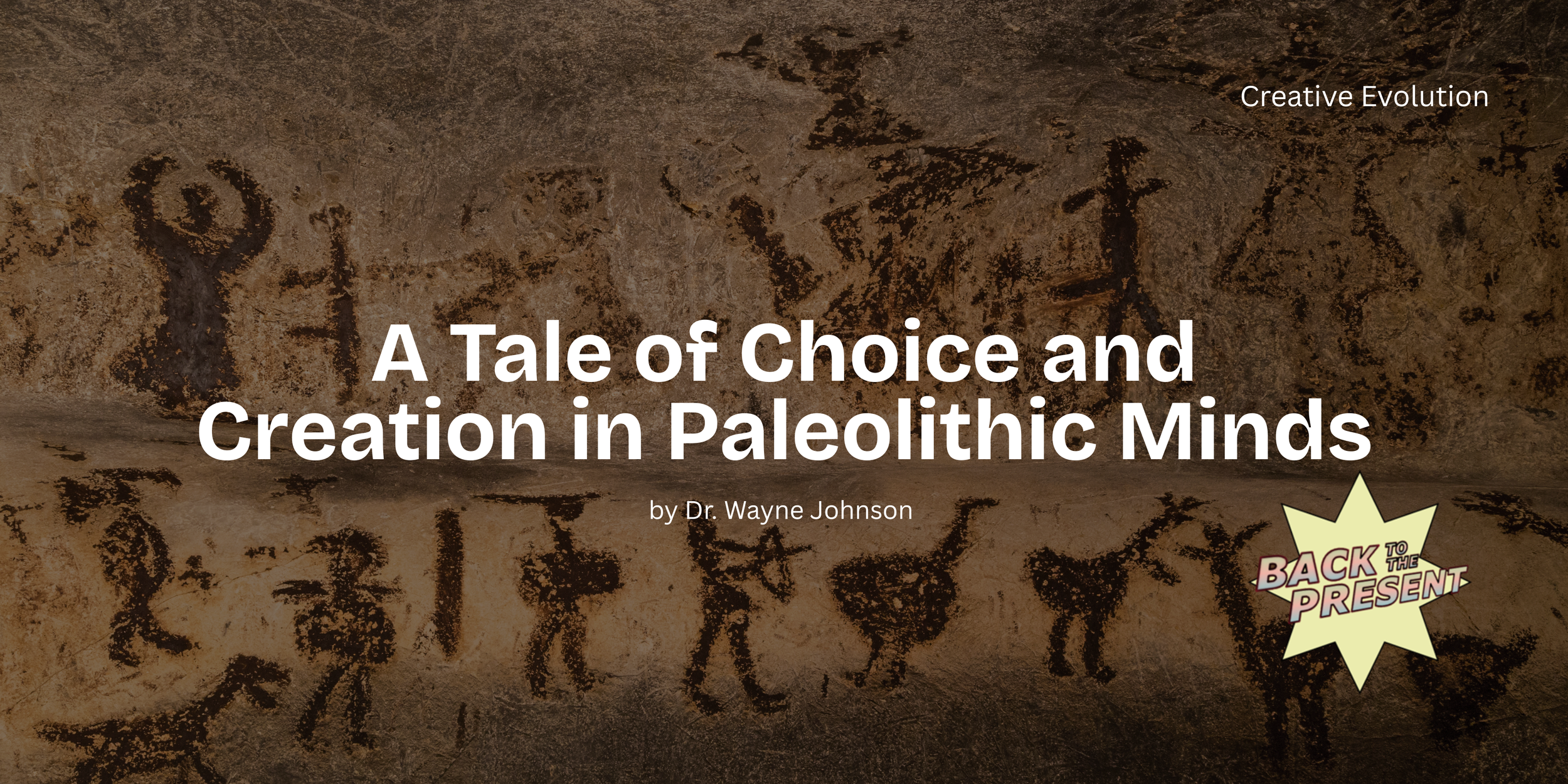
Evan and Ava’s journey of awakening mirrors the cognitive evolution that shaped early human behavior. Just as Paleolithic Minds: The Origins of Human Cognition by Dr. Peter Gray explores how the cognitive abilities of early humans were driven by survival needs, Evan and Ava’s story reveals how their choices—rooted in instinct—gradually evolved into more intentional, conscious decisions. These cognitive traits, honed in the Paleolithic era, continue to influence modern human behavior and thought processes.
The Awakening of Evan and Ava
Long ago, in a world where survival dictated most actions, Evan and Ava’s story showcases how early humans began to break free from purely instinctual behaviors. According to Dr. Peter Gray, the cognitive abilities of early humans were highly advanced for their time, shaped by the demands of a challenging environment. In Evan and Ava, we see the same evolution: complex problem-solving, cooperative social interactions, and the beginnings of deep communication all emerge as they explore their surroundings.
Social Structures and Cooperation
Dr. Gray’s insights into the social structures of Paleolithic societies are evident in Evan and Ava’s journey. They come from different clans, but their ability to form a partnership is reflective of how early humans thrived in small, close-knit groups that fostered cooperation. As they interact, their shared skills and knowledge create an opportunity for survival, reinforcing Gray’s argument that advanced social skills and cooperation were critical to human development.
Language and Communication
Just as Gray highlights the development of language as a cornerstone of cognitive evolution, Evan and Ava’s ability to communicate deepens their connection and shapes their journey. Language enables them to move beyond survival-based interactions, allowing them to share emotions, ideas, and plans. This communication fosters their conscious awareness and helps them shape not only their own future but that of their kind—an echo of the cultural transmission Gray emphasizes in his work.
Play and Learning as Cognitive Growth
Evan and Ava’s journey can also be seen as a metaphor for the role of play in learning, as suggested by Dr. Gray. As they explore their world, they are not simply surviving—they are learning through trial, error, and discovery. Their creative problem-solving and evolving partnership echo Gray’s assertion that play was a critical component of early human cognitive development, as it allowed for skill acquisition and innovation in a safe environment.
Modern Implications: Cognitive Evolution in the Present
Paleolithic Minds suggests that many traits from our ancient ancestors still influence modern human behavior. In the same way, Evan and Ava’s story serves as a reminder that the origins of human cognition—problem-solving, cooperation, communication—continue to shape our thoughts and decisions today. Their journey from instinct to intentional choice reflects the cognitive evolution that began in the Paleolithic era and is still embedded in how we think, act, and interact in the modern worl