
Balancing Intellectual and Intuitive Knowledge
A well-rounded life needs more than facts, and it needs more than feelings. Intellectual knowledge helps us analyze, learn, plan, and solve problems. Intuitive knowledge helps us recognize meaning, understand relationships, and respond with empathy. Each way of knowing becomes stronger when it is balanced by the other.
Back to the Present describes this balance as an important part of Identity. Intellect helps us improve our circumstances; intuition helps us improve the way we relate to life and to one another.
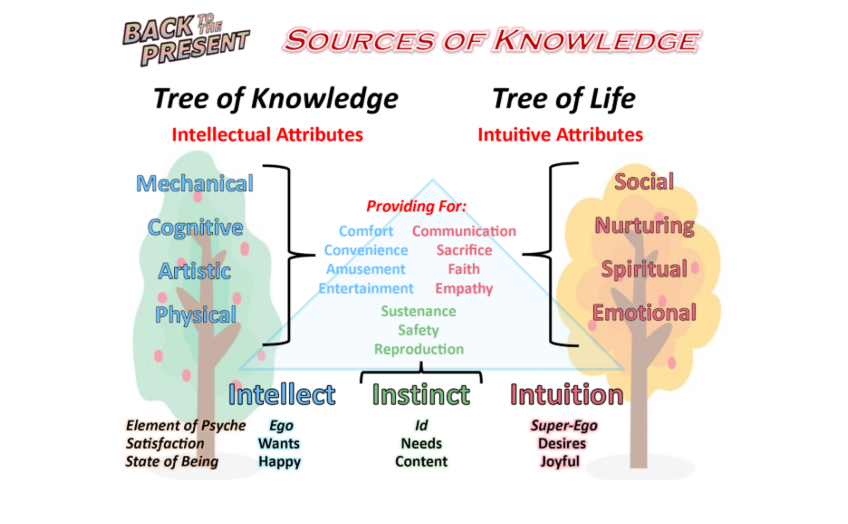
What Intellectual Knowledge Offers
Intellectual knowledge is developed knowingly through study, practice, observation, and logical reasoning. It helps us understand facts, theories, systems, and cause-and-effect relationships.
The Intellectual Attributes include the physical, artistic, cognitive, and mechanical. They allow us to master skills, create and appreciate art, solve complex problems, and understand how objects and systems work.
These abilities support achievement, competence, and innovation. They help us plan how to satisfy needs and wants, and they can contribute to contentment and happiness. Their strength is precision: intellect can compare options, test ideas, and explain why a solution works.
What Intuitive Knowledge Offers
Intuitive knowledge often arrives without a visible chain of reasoning. It is shaped through observation, relationship, experience, and the subconscious integration of what we have learned. We may experience it as a quiet recognition, a sense of direction, or an understanding of another person’s emotional state.
The Intuitive Attributes include the social, nurturing, spiritual, and emotional. They are expressed through communication, appropriate sacrifice, faith, and empathy.
Intuition helps us recognize the meaning of a situation as a whole. It supports connection, emotional understanding, and the deeper desires tied to contribution and purpose. These qualities help make joyfulness possible.
Why Relationships Need Both
In relationships, intellect helps us articulate thoughts, solve practical problems, and understand patterns. Intuition helps us sense unspoken feelings, recognize what kind of support may be needed, and respond with care.
Imagine a friend who says, “I’m fine,” while their voice and posture suggest otherwise. Intellect understands the words. Intuition notices the larger message. A balanced response does not assume or diagnose; it asks a compassionate question and listens to the answer.
Logic without empathy can make a correct solution feel cold. Empathy without clear thought may recognize pain without finding a responsible path forward. Together, the two forms of knowledge support both understanding and action.
How Balance Contributes to Joy
Intellectual achievement can bring confidence, stimulation, and the satisfaction of learning. Intuitive understanding can bring emotional fulfillment, inner peace, and meaningful connection.
A person may feel proud after mastering a difficult skill and deeply fulfilled after using that skill to help someone. The accomplishment and the relationship do not compete. Intellect creates capability; intuition helps direct capability through loving intention.
This balance keeps achievement from becoming the whole measure of Identity. It also keeps intuition grounded enough to be implemented wisely.
The Sources of Knowledge
The Sources of Knowledge are instinct, intellect, and intuition. Each source contributes something different to Decision Making.
Instinct detects immediate conditions and supports survival.
Intellect evaluates facts, patterns, options, and consequences.
Intuition recognizes meaning, relationship, and direction.
A balanced decision asks what the body is signaling, what the evidence shows, and what choice aligns with values and connection. Balance does not mean giving every source equal weight in every situation. It means hearing the relevant information without letting one source dominate automatically.
Practical Ways to Develop Both
Pair study with reflection. After learning something new, ask how it affects people, relationships, and purpose.
Review decisions. Notice whether instinct, intellect, intuition, or a combination guided the choice and what outcome followed.
Practice active listening. Attend to facts, words, tone, emotion, and context without assuming you already understand.
Make room for quiet. Mindfulness, time in nature, and unhurried reflection can make intuitive signals easier to notice.
Test intuition responsibly. Treat a gut feeling as information to explore, not unquestionable proof.
Solve problems with empathy. Ask not only what will work, but how the solution will affect the people involved.
Balance in the Present Moment
Balance is not a permanent achievement. It is a practice renewed in the present moment. Sometimes a decision needs careful analysis. Sometimes more information will not resolve it, and intuition must help identify direction.
When intellect and intuition work together, our actions, feelings, and thoughts become more coherent. We can pursue knowledge without losing connection, and we can follow meaning without abandoning responsibility.
A balanced Identity uses what the mind knows and what the whole person understands—then brings both into life through presence and loving intention.