
What is Anxiety?

Figure 1-Present Moment
Anxiety is something almost everyone feels at some point, but what exactly is it? Anxiety is a natural emotional response to perceived uncertainty, fear, or stress. It arises when we feel unsure about our ability to handle future events, make decisions, or cope with potential outcomes. While it can be a helpful warning signal, motivating us to take action in the face of real danger, anxiety often becomes a source of distraction. It pulls us away from the present moment, making us overthink or become overwhelmed by worries about the past or future .
At its core, anxiety happens when we lose confidence in our ability to make decisions or handle whatever might come next. This fear and uncertainty distract us from the only moment of life we can truly experience and shape—the present moment.
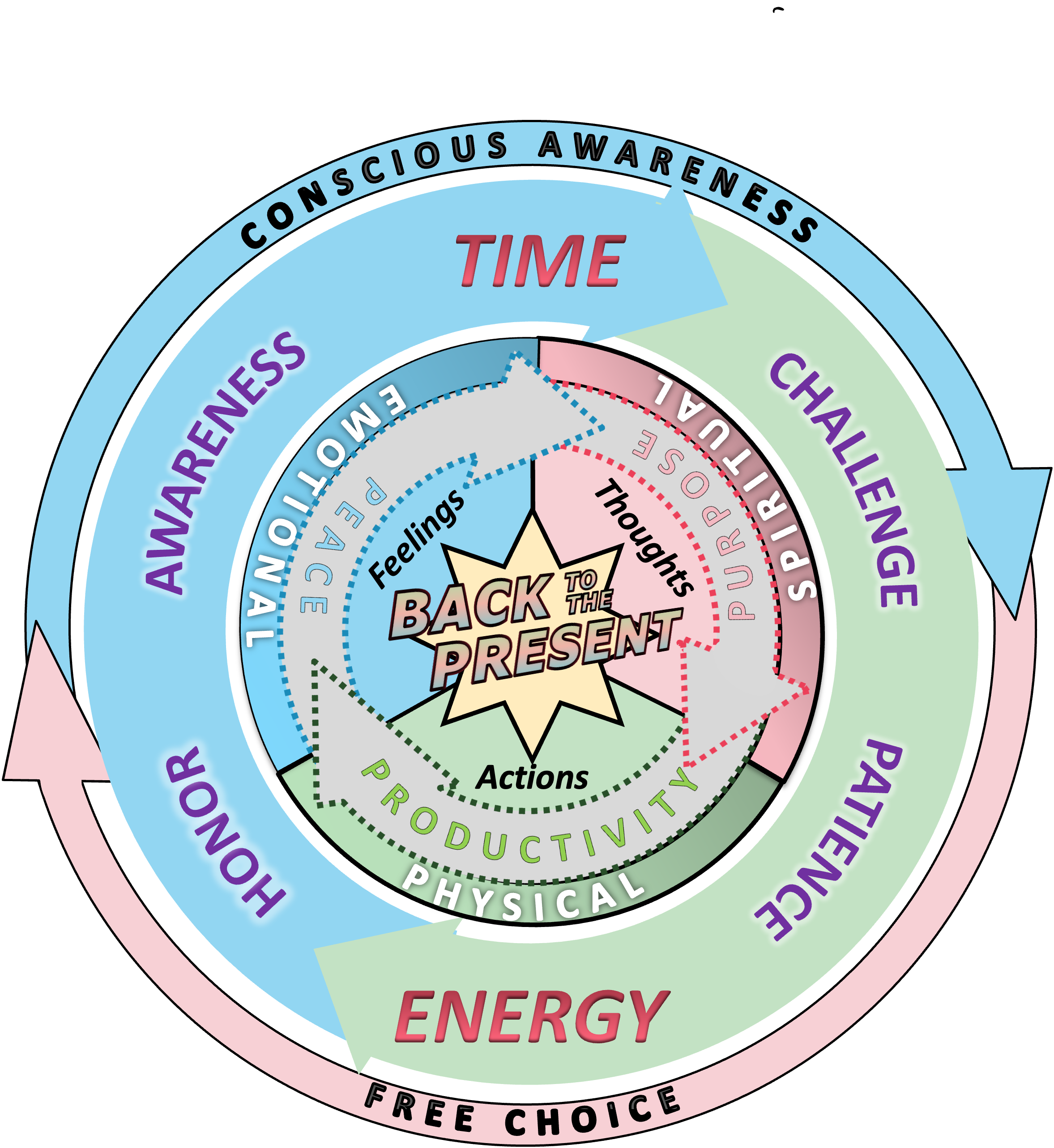
Presence is the practice of fully immersing ourselves in the here and now, without being caught up in regrets about the past or fears about the future. When being mindful of what it is that you are doing, feeling, and thinking you can experience the bliss of presence. This is where your time and energy can be used efficiently with productivity, peace, and purpose in mind. It’s about being conscious and aware of what is happening around us and within us right now—whether it’s our breath, our emotions, or the actions we are taking. When we’re truly present, we can use our physical, emotional, and spiritual Gifts to their fullest potential, making clear decisions, connecting more deeply with others, and embracing peace in each moment (Figure 2-Limited Resources, Unique Abilities, Gifts, Manifestations, and Agreements).
In contrast, anxiety often clouds our ability to stay present, making us feel disconnected from our true selves and the people around us. It distracts us from the joy and wisdom that can only be found in the present, causing unnecessary stress and draining our Limited Resources of time and energy. One of my major goals in writing this is to help you become more familiar with the practice of presence—how to bring your awareness back to the here and now, where life truly happens.
Personal Insight: A while ago, as a primary care doctor who deeply values spending time with my patients, I faced a major career decision. The payor model in place—working with private insurance and Medicare—was preventing me from providing the care I truly wanted to offer. I had two options: either stay and continue to be frustrated or leave the system entirely and switch to a fee-for-service or concierge model, where patients would pay directly for services. The choice was huge. Should I take the leap into something new and unknown, or stay in the comfort of my established routine?
As the deadline approached, anxiety took over. I found myself imagining worst-case scenarios, like no one showing up. I couldn’t focus, and everything felt overwhelming. But by practicing mindfulness, I was able to slow down and clear my mind. I focused on my breath, in and out, and let go of the chaotic thoughts clouding my judgment. After a few minutes, I felt calm. My thoughts slowed down, and the decision that once felt enormous became more manageable. I trusted myself again, and that gave me the clarity I needed. This experience reminded me just how powerful mindfulness can be in cutting through the noise of anxiety and reconnecting with our inner peace.
Reflective Question: Think about a time when anxiety took over. What was happening, and how did you handle it? Take a moment to think about how your body and mind reacted.
Mindfulness Exercise: Let’s try this together. Close your eyes and take a deep breath in for a count of four. Hold it for a moment, then exhale slowly for a count of four. Pay attention to how the air feels as you breathe in and out. If your mind starts to wander, just gently bring your focus back to your breath. Do this three times. How do you feel now? Notice any changes in your mind or body.

Anxiety: From Survival to Distraction
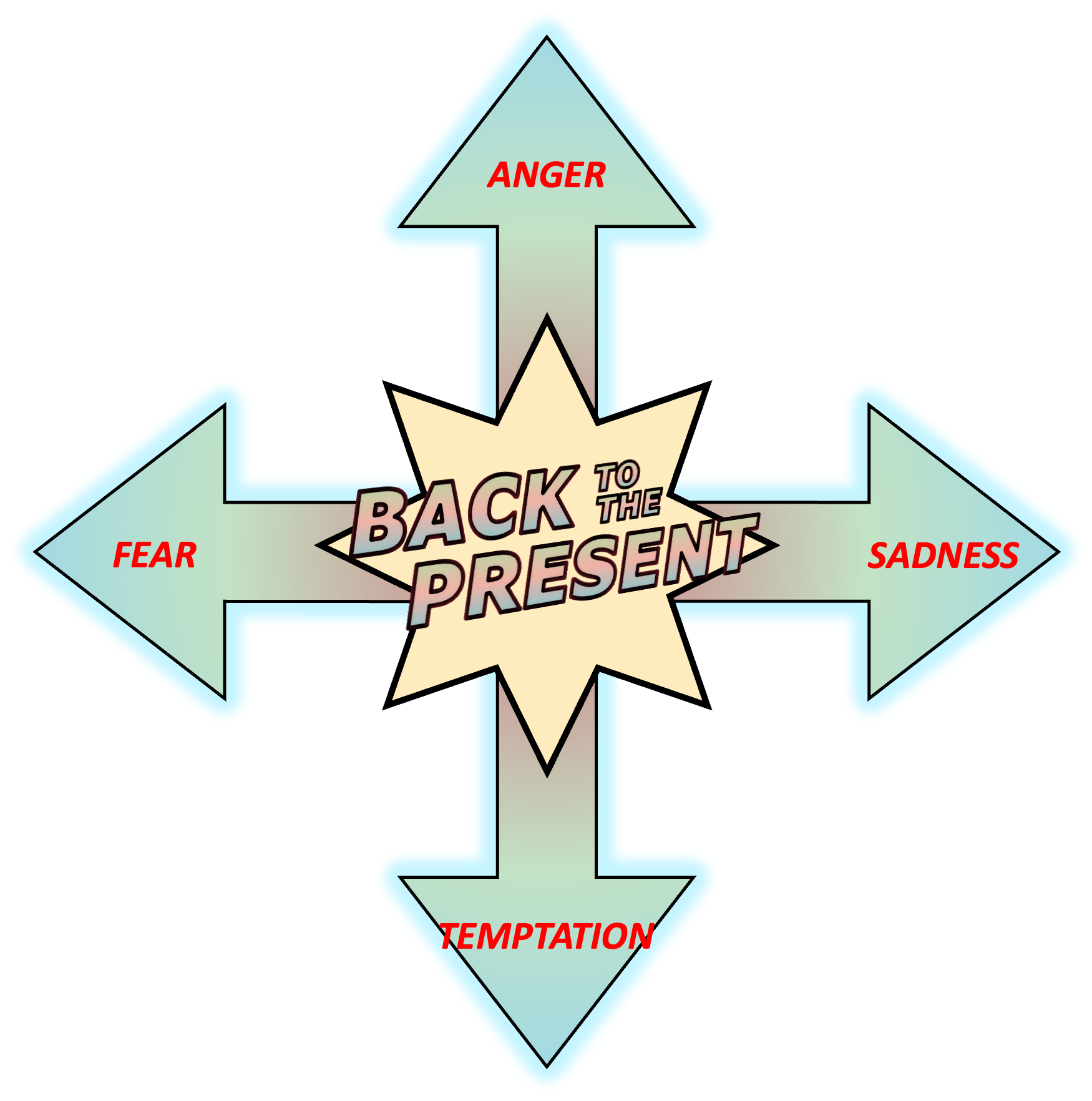
A long time ago, anxiety was a wonderful motivator of our being, used as a survival tool. It triggered quick responses to danger—like running from a predator or seeking shelter. Our instincts react swiftly to fear, anger, sadness, and temptation, where such responses are crucial for survival, helping us stay safe. Today, however, when we act F.A.S.T. (fear, anger, sadness, and temptation), we often create unnecessary suffering, either for ourselves or for those we care about (Figure 3-F.A.S.T. Emotions).
In today’s world, anxiety often becomes a distraction. Instead of helping us survive, it clouds our ability to make decisions and enjoy the present moment. When we lose focus on the here and now, caught up in feelings and thoughts unrelated to what we’re actually doing, we end up wasting our Limited Resources of time and energy. That’s when anxiety takes hold.
Why does this happen? It’s because we are uniquely aware of how time and energy shape our lives. We have the ability to access past knowledge and experiences and use them to make choices that influence our future. While this ability is powerful, it can also pull us away from the present moment, filling us with worry, doubt, and anxiety.
Case Study: Take Sarah, a high school senior. As graduation approaches, she feels the pressure to choose the right college. She starts worrying about leaving home, disappointing her family, and failing in the future. The anxiety affects her sleep and grades. But after learning a few mindfulness techniques, Sarah begins to calm her mind. By staying present, she learns to make decisions with confidence, even when uncertainty still lingers.
Reflective Question: How has anxiety affected your decisions? Do you think mindfulness could have changed your experience?
The Three Gifts: Physical, Emotional, and Spiritual
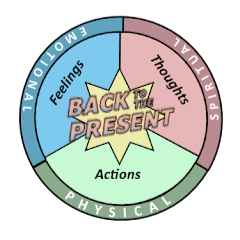
We all have three amazing Gifts: our physical strength, our emotional depth, and our spiritual guidance and wisdom. I tell you this because, in the present moment, these Gifts offer us the needed tools to shape the world we live in. These Gifts give us the power to create our lives, one decision at a time, making choices about what we want to do, feel, and think next (Figure 4-Gifts and Manifestations). But sometimes, we get caught up in anxiety, which occupies our feelings and thoughts, distracting us from the present moment, making us waste our time and energy. We can easily forget to use these Gifts efficiently and to their fullest potential when we become distracted from the present moment.
Reflective Question: How do you use your physical, emotional, and spiritual Gifts in your daily life? Are there ways you could be more mindful about how you use them?
Everything we do, feel, and think is a result of these three Gifts working together. We have the power to choose what we want to do, how we want to feel, and what we want to think. By using them intentionally, we can bring loving intention into the world and improve not just our own lives, but the lives of those around us. (Figure 3-Toolbox for a Joyful Life).
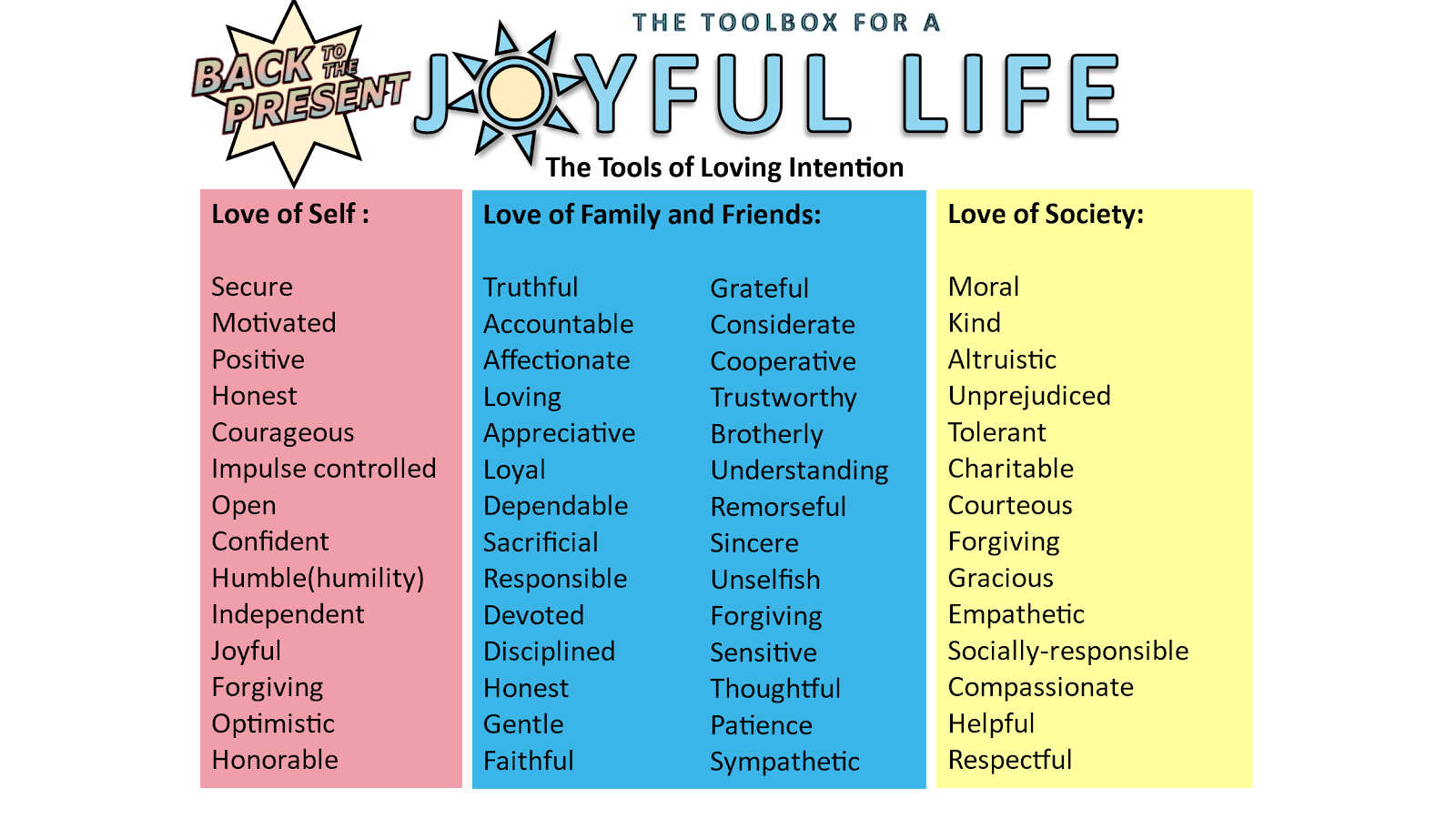
However, when anxiety takes over, it clouds our awareness, occupying our consciousness with feelings and thoughts that have nothing to do with the present moment. We get stuck in a cycle of worry and fear, unable to make the most of our Gifts. We become distracted, and our minds are filled with “what ifs” and regrets that prevent us from enjoying the present moment.
Case Study: John, a middle-aged man, was once strong and active, but after an injury, he could no longer work or engage in the activities he loved. His emotional health began to decline, and anxiety about his future took over. But through mindfulness, John learned to focus on the present. He found new ways to utilize his Gifts, which helped him find productivity, peace, and purpose, despite his challenges.
Mindfulness Exercise: Take a moment to think about your own Gifts. Close your eyes and think of one physical, one emotional, and one spiritual strength you have. How do these Gifts show up in your daily life? How could you use them more effectively to create positive change?
The Power of Love and Knowledge
One of the greatest gifts we have is our ability to love. Unlike animals, who focus on teaching survival, humans can love in a deeper way by sharing our wisdom (knowledge) with others—helping them make better choices and live more joyful lives. This is a vital part of our emotional and spiritual Gifts.
While our physical bodies have an expiration date, the feelings and thoughts we leave behind, as knowledge, can continue to impact the world long after we’re gone. This knowledge can live on, shaping the future for generations.
Reflective Question: Think about someone you care about. How have you shared your knowledge or experiences with them to help them grow? How did that make you feel?
Personal Anecdote: When my daughter was two, I created a list of qualities I wanted her to have as she grew. This list became her "Toolbox for a Joyful Life"—a set of attributes that, if she developed them, would help her a life with little anxiety. These qualities are about being emotionally responsible to yourself and others. They are intuitive because, somehow, they are built in, without an awareness of where they came from. Empowering her to value connection with others, which make our relationships better.
My wife and I worked hard to help our daughter access the tools in her Toolbox, doing our best to put these tools on display. I recognized that these tools were built in, all she needed to do was access them by observation. This would trigger her consciousness, empowering her to access these tools of loving intention so that she could have a joyful life of her own. If she embraces these qualities, I’m confident build meaningful relationships. If not, she may struggle emotionally and miss out on the wisdom that helps make us all better.
The Collective Consciousness
Our subconscious mind is like a massive storehouse of feelings and thoughts. This wisdom is not just from our own experiences, but also from the instinctual (unconscious), intellectual (conscious) and intuitive (subconscious) knowledge passed down by those before us. This "Collective Consciousness" is full of insights waiting to be tapped into (Figure 4-Sources of Knowledge and Forms of Consciousness).
The concept of Collective Consciousness draws from various philosophical and psychological ideas that suggest humans share a universal body of wisdom and knowledge. Carl Jung’s notion of the collective unconscious describes how archetypes and shared experiences influence individual behavior. Similarly, Pierre Teilhard de Chardin’s noosphere emphasizes a collective realm of thought that evolves as humanity advances. David Bohm’s theory of the holomovement and Ervin Laszlo’s Akashic Field propose interconnectedness across the universe, with shared knowledge accessible to all. Additionally, in the realm of social science, collective intelligence demonstrates how groups tap into shared knowledge to make decisions or solve problems. These ideas support the notion that Collective Consciousness allows individuals to connect with a deeper, unified source of wisdom, helping guide personal growth and the collective evolution of humanity.
Reflective Question: How often do you take time to reflect on the wisdom you’ve gained from your own life experiences? How might you tap into the "Collective Consciousness" to guide your decisions?
We have a unique ability to access this wisdom and improve our relationships. By using our intuitive ability to communicate, empathize, have faith, and make sacrifices for each other, we can bring positive change not only to our lives but to the world around us (Figure 5-Attributes of Knowledge-Instinctual, Intellectual and Intuitive Attributes).
The Challenge of Modern Anxiety
In today’s world, anxiety can overshadow our Gifts. We get drained from worrying about the future or regretting the past. This emotional exhaustion can lead to depression, which happens when our emotional energy is used up by constant anxiety (Figure 6-Contributors of Anxiety).
Figure 6-Contributors of Anxiety
Mindfulness Exercise: The next time you feel overwhelmed, try this: Sit comfortably, close your eyes, and focus on your breath. As you breathe in, imagine you’re taking in peace. As you breathe out, imagine releasing all your anxiety. Keep doing this for a few minutes. How do you feel now? Is your anxiety less?
Conclusion: The Power of Loving Intention
Imagine if you truly believed in your own awareness to apply loving intention into this world —how much anxiety would you feel? The key to reducing anxiety is embracing our intuitive attributes and use them to guide our decisions, strengthen our relationships, and live a joyful life. This is the power of loving intention: it can transform our lives and the world around us. That is if we have faith in it!
When we respond F.A.S.T., we are often tapping into unconscious, instinctual knowledge that has assured our survival for hundreds of thousands of years. This rapid reaction served us well in situations of immediate danger, ensuring our physical safety. However, in today’s world, we no longer rely solely on these primal instincts. As humans, we've developed a store of subconscious intuitive insights—much like the *Toolbox for a Joyful Life—that help us navigate complex social interactions. Through communication, empathy, faith, and sacrifice, we have learned to get along with one another. This ability to connect allowed us to share insights and wisdom that eased the burden of survival, granting us more time and energy to explore our conscious minds. This, in turn, enabled us to use our intellect to make decisions that not only improved the quality of our lives but also increased our potential for a longer, more fulfilling existence.