
Strengthening Bonds-Overcoming Relationship Challenges with Empathy and the Three C’s
Introduction
Have you ever had a disagreement with a friend or family member that left you feeling frustrated or disconnected? Navigating relationship challenges can feel overwhelming, especially when emotions like frustration or disappointment are involved. But what if you had tools to handle these situations in a way that strengthens your connections rather than straining them? This is the ANXIETY I refer to as relationship difficulties.
Below are strategies to help resolve relationship difficulties and build stronger bonds with the people you care about:
1. Talk Things Out Early Without Judgment
Waiting too long to address frustration or disappointment can make small problems grow into big ones. Oftentimes, we fear confrontation, only to find that unaddressed negative emotions fester into larger distractions. By talking things out early—and without judging the other person—you demonstrate your commitment to maintaining a healthy relationship.
Example:
Your roommate has been leaving dirty dishes in the sink for days. Instead of letting frustration simmer, you say:
“Hey, I’ve noticed dishes piling up. Could we set up a plan to make it easier to keep things clean?”
Reflection Prompt:
Think of a recent time when you avoided addressing an issue. How can addressing a small concern early show your commitment to a relationship?
Action Step:
Next time you feel frustrated, pause and ask, “How can I share my feelings without placing blame?” Then start the conversation with “I feel…” rather than “You did…”
2. Help Others Be More Self-Aware
People you care about may not realize how their actions affect you. Encouraging self-awareness lays the foundation for compromise, as both sides acknowledge their impact on one another.
Example:
Your sibling keeps borrowing your things without asking. Instead of snapping, you say:
“I’ve noticed you’ve been using my things lately. It would mean a lot if you asked first—I want us to be on the same page.”
Reflection Prompt:
How can you frame feedback to help the other person reflect without feeling attacked?
Action Step:
Use “I” statements when giving feedback, e.g., “I feel frustrated when…” instead of “You always…”
3. Use Empathy to Connect, Not Criticize
Empathy transforms tense situations into opportunities for connection. Instead of focusing on what’s wrong, see things from the other person’s perspective. Empathizing demonstrates commitment to resolving issues and strengthening relationships.
Example:
Your friend cancels plans last minute. Instead of lashing out, you ask:
“Hey, is everything okay?”
You learn they’re dealing with a family emergency and didn’t want to burden you.
Reflection Prompt:
Think about a time when someone empathized with you during a tough moment. How did it make you feel?
Action Step:
Before reacting to a frustrating situation, take a deep breath and ask:
“What might they be going through right now?”
4. Make No Assumptions
One of Don Miguel Ruiz’s Four Agreements reminds us not to make assumptions. Avoiding assumptions is a cornerstone of effective communication, ensuring misunderstandings don’t derail a relationship.
Example:
A coworker seems distant during a meeting. Instead of assuming they’re upset with you, ask:
“You seemed quiet in the meeting today. Is everything all right?”
Reflection Prompt:
How often do you let assumptions guide your reactions? What might change if you sought clarification instead?
Action Step:
When you feel hurt or confused, ask a gentle question to clarify intentions rather than jumping to conclusions. Combine this with early conversations to prevent misunderstandings from growing.
5. Don’t Take Things Personally
Another of Ruiz’s agreements reminds us not to take things personally. Often, people’s actions reflect their own struggles, not a reflection of you. This builds resilience and helps you focus on the relationship’s longevity rather than immediate frustrations.
Example:
A friend cancels plans last minute. Instead of feeling hurt, remind yourself their decision likely reflects their circumstances, not feelings about you.
Reflection Prompt:
How might viewing someone’s actions as a reflection of their own circumstances change your reaction?
Action Step:
Next time someone upsets you, pause and ask:
“What might they be dealing with that I don’t know about?”
6. Keep Perspective During Arguments
When emotions run high, it’s easy to lose sight of the bigger picture. Remembering what truly matters helps you stay grounded. Maintaining perspective fosters compromise and promotes the long-term health of the relationship.
Example:
You and your sibling argue over chores. Instead of escalating, you propose splitting the workload evenly. Preserving harmony matters more than “winning.”
Reflection Prompt:
How can focusing on what truly matters help you find compromise during a disagreement?
Action Step:
During your next argument, shift your focus to the bigger picture and suggest a compromise.
7. Celebrate Progress, Not Perfection
Relationships aren’t about perfection—they’re about growing together. Recognizing growth fosters commitment and communication, strengthening bonds through encouragement and understanding.
Example:
Your partner misses an important date but apologizes and plans a belated celebration. Recognizing their effort shows commitment to improving the relationship rather than fixating on the mistake.
Reflection Prompt:
Which of the Three C’s did this effort reinforce, and how can you express appreciation for it?
Action Step:
In your next interaction, focus on one of the Three C’s—Commitment, Communication, or Compromise.
Why These Strategies Work
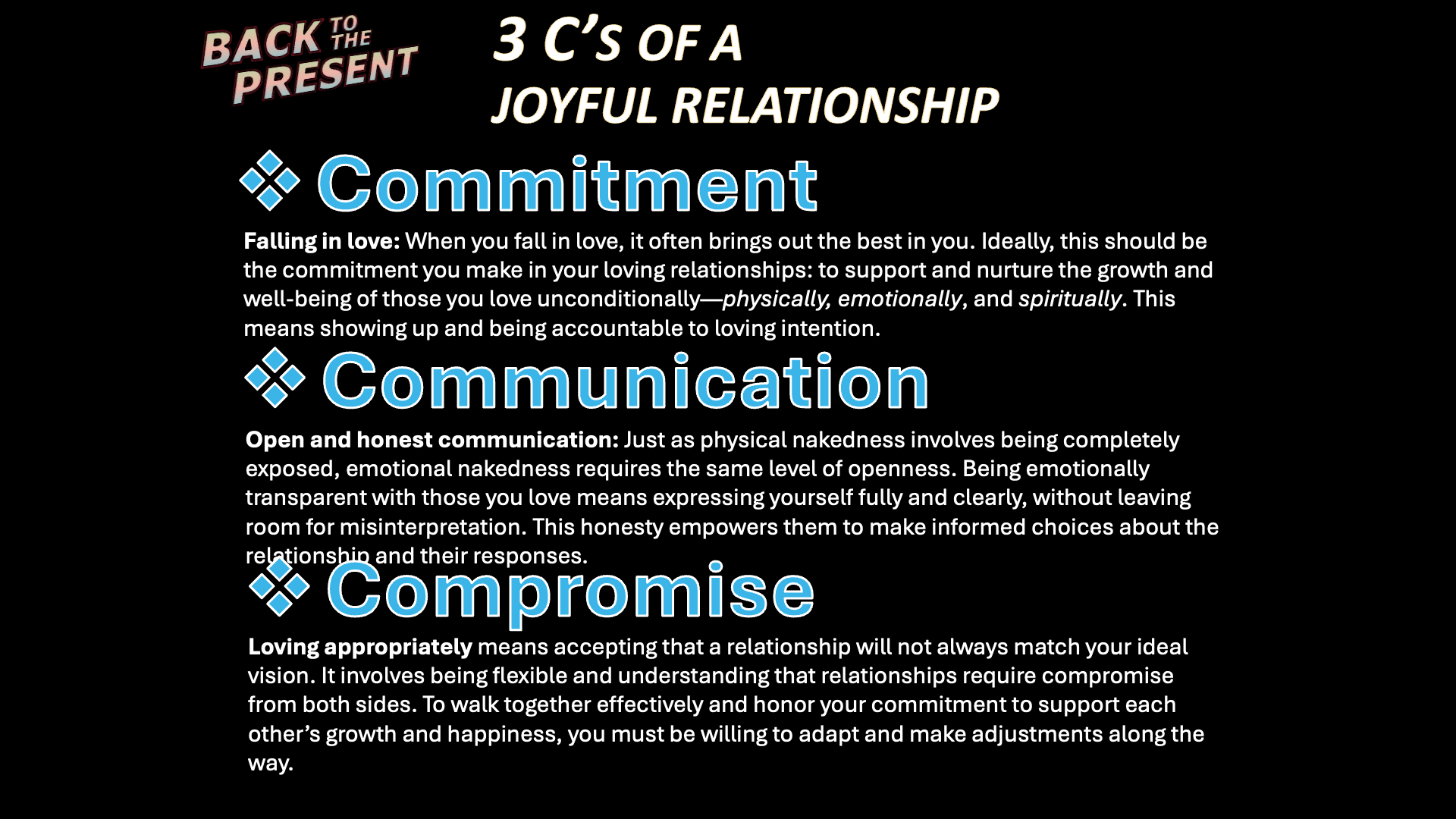
Integrating the Three C’s—Commitment, Communication, and Compromise—into these strategies enhances their effectiveness:
Commitment: Shows you value the relationship enough to work through challenges.
Communication: Ensures issues are addressed constructively.
Compromise: Helps navigate differences to find solutions that work for everyone.
By combining self-awareness, empathy, and perspective with Ruiz’s agreements, you foster trust and connection. These tools don’t just resolve conflicts—they create deeper emotional bonds and help you grow alongside the people you care about.
As illustrated in the Three C's of a Joyful Relationship graphic, these foundational principles—Commitment, Communication, and Compromise—are key to navigating challenges and fostering deeper connections.
Take the First Step Today
Choose one strategy from above and actively integrate the Three C’s into your approach:
Commitment: Show someone you value them by addressing an issue early.
Communication: Practice empathetic listening during your next conversation.
Compromise: Seek a middle ground in your next disagreement, prioritizing the relationship over being “right.”
Reflection Prompt:
Which of the Three C’s do you already practice well, and which could you focus on improving this week?
Key Takeaway:
By embracing commitment, communication, and compromise, you can navigate relationship challenges more effectively. Approaching relationships with empathy, self-awareness, and loving intention—and avoiding assumptions or taking things personally—helps you build stronger bonds and enjoy a more fulfilling, connected life.