
What We Need, Want, and Desire

What We Need Provides Contentment
Imagine you’re hiking through the wilderness. You’re cold, hungry, and tired. What’s the first thing on your mind? Most likely, it’s finding food, water, and shelter. These basic needs—the foundation of survival—are what our ancestors focused on every day. Just 150 years ago, nearly 95% of the world’s population lacked enough food, shelter, or safety and lived in extreme poverty. Meeting basic needs was a daily struggle, leaving little time or energy for anything else.
In the beginning, humans were much like animals, acting instinctively to survive. Over time, our unique physical, emotional, and spiritual Gifts developed, giving us an edge. We developed a unique awareness—our ability to consciously think about what we were doing, feeling, and thinking. This awareness allowed us to direct our time and energy toward efforts that brought greater satisfaction than mere survival.
This newfound freedom opened the door to choice, which would shape how we lived, loved, and connected with others. For example, once humans figured out how to farm, we no longer had to chase food; we could grow it. With this stability, we were able to settle in one place and focus on building deeper connections by using the tools of LOVING INTENTION, like families and friendships, which satisfied emotional needs for belonging and love (Figure 1 – Needs-Gifts, Satisfactions, Elements of Our Psyche, Sources of Knowledge, and Emotional States of Being).

Figure 1-Needs-Gifts, Satisfactions, Elements of Our Psyche, Sources of Knowledge, and Emotional States of Being
Reflective Question:
What basic needs do you think about most often? Is it something like food and safety, or more emotional, like feeling connected to others?
When our needs are met, we experience contentment—a peaceful state of satisfaction where sustenance and safety are comfortably in place. Imagine coming home after a long day, eating a warm meal, and knowing you’re safe. That feeling of ease is contentment. It’s the foundation of physical stability and the stepping stone to happiness and joy.

What We Want Brings Happiness
Now think about your favorite meal. It’s not just about survival—it’s about taste and pleasure. Once our needs are met, we can use our time and energy to focus on things we may want—things that make life more enjoyable. This shift allowed humanity to imagine, innovate, and share knowledge, improving not just the quality but the quantity of life.
For early humans, this might have looked like creating art, developing tools, or mastering skills. Today, it might mean buying the latest phone, achieving a career milestone, or attending a great concert. These wants bring us happiness because they reflect our ability to choose and accomplish goals unique to us (Figure 1-Wants-Gifts, Satisfactions, Elements of Our Psyche, Sources of Knowledge, and Emotional States of Being).
Example:
Think of the last time you bought something you really wanted. How long did that happiness last? Was it fleeting, or did it stick with you?
While fulfilling wants can make us happy, this happiness often fades quickly. For example, you might feel ecstatic about getting a new gaming console, but after a few weeks, it might not feel as exciting anymore. This pattern is known as the “hedonic treadmill”—where we adapt to our achievements and quickly begin chasing new ones. This fleeting satisfaction often stems from the ego’s thirst for more, while deeper joy comes from addressing our true desires.
Reflective Question:
Can you think of a want you’ve worked hard to achieve? How did it compare to the contentment you feel when your basic needs are met?

What We Want Brings Happiness
Now think about your favorite meal. It’s not just about survival—it’s about taste and pleasure. Once our needs are met, we can use our time and energy to focus on things we may want—things that make life more enjoyable. This shift allowed humanity to imagine, innovate, and share knowledge, improving not just the quality but the quantity of life.
For early humans, this might have looked like creating art, developing tools, or mastering skills. Today, it might mean buying the latest phone, achieving a career milestone, or attending a great concert. These wants bring us happiness because they reflect our ability to choose and accomplish goals unique to us (Figure 1 – Wants-Gifts, Satisfactions, Elements of Our Psyche, Sources of Knowledge, and Emotional States of Being).
Example:
Think of the last time you bought something you really wanted. How long did that happiness last? Was it fleeting, or did it stick with you?
Joy comes from living with LOVING INTENTION—choosing actions, feelings, and thoughts guided by love, kindness, and compassion. When we make decisions using loving intention, we align our emotions, behaviors, and responses with who we truly want to be. This often starts with how we treat ourselves. For instance, forgiving yourself for a mistake fosters joy because it reflects self-compassion and self-acceptance (Figure 4 – Toolbox for a Joyful Life).
Reflective Question:
What’s one thing you’ve done recently that brought you a deep sense of joy? How did it feel different from fleeting happiness?
Living with loving intention also strengthens relationships. When you approach others with empathy and care, you build trust and connection. These bonds are often the source of the most profound joy.
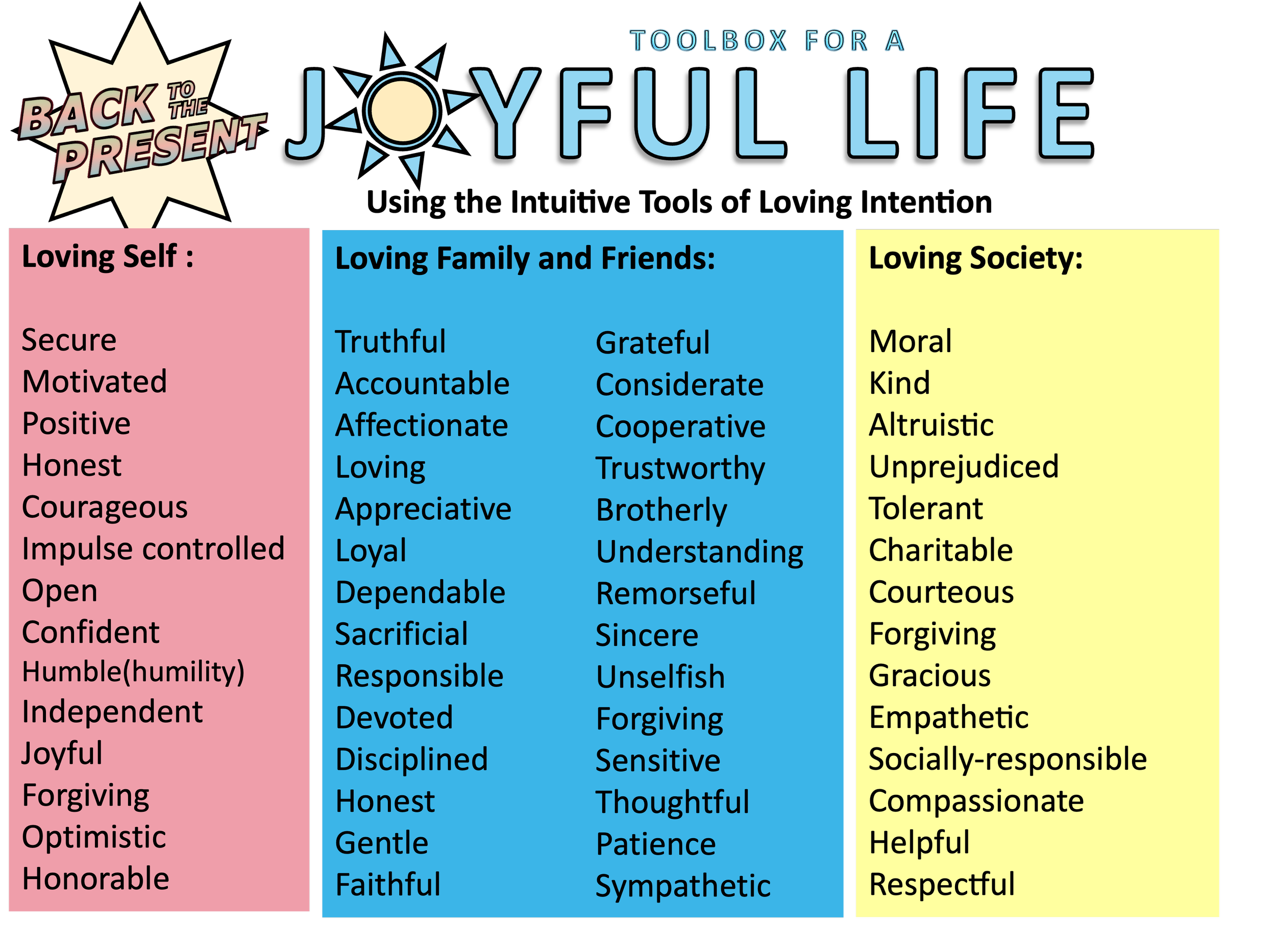
Figure 4-Toolbox for a Joyful Life
Balancing Needs, Wants, and Desires
Meeting our needs provides stability and contentment. Pursuing our wants brings moments of happiness. But aligning with our desires and values brings lasting joy. Finding balance between these elements is key to a fulfilling life.
Reflective Exercise:
Write down one need, one want, and one desire you’ve focused on recently. Reflect on how each made you feel and how they connect to your overall sense of well-being (Figure 5 – Constructing Our Intuitive Identity from our Manifestations).
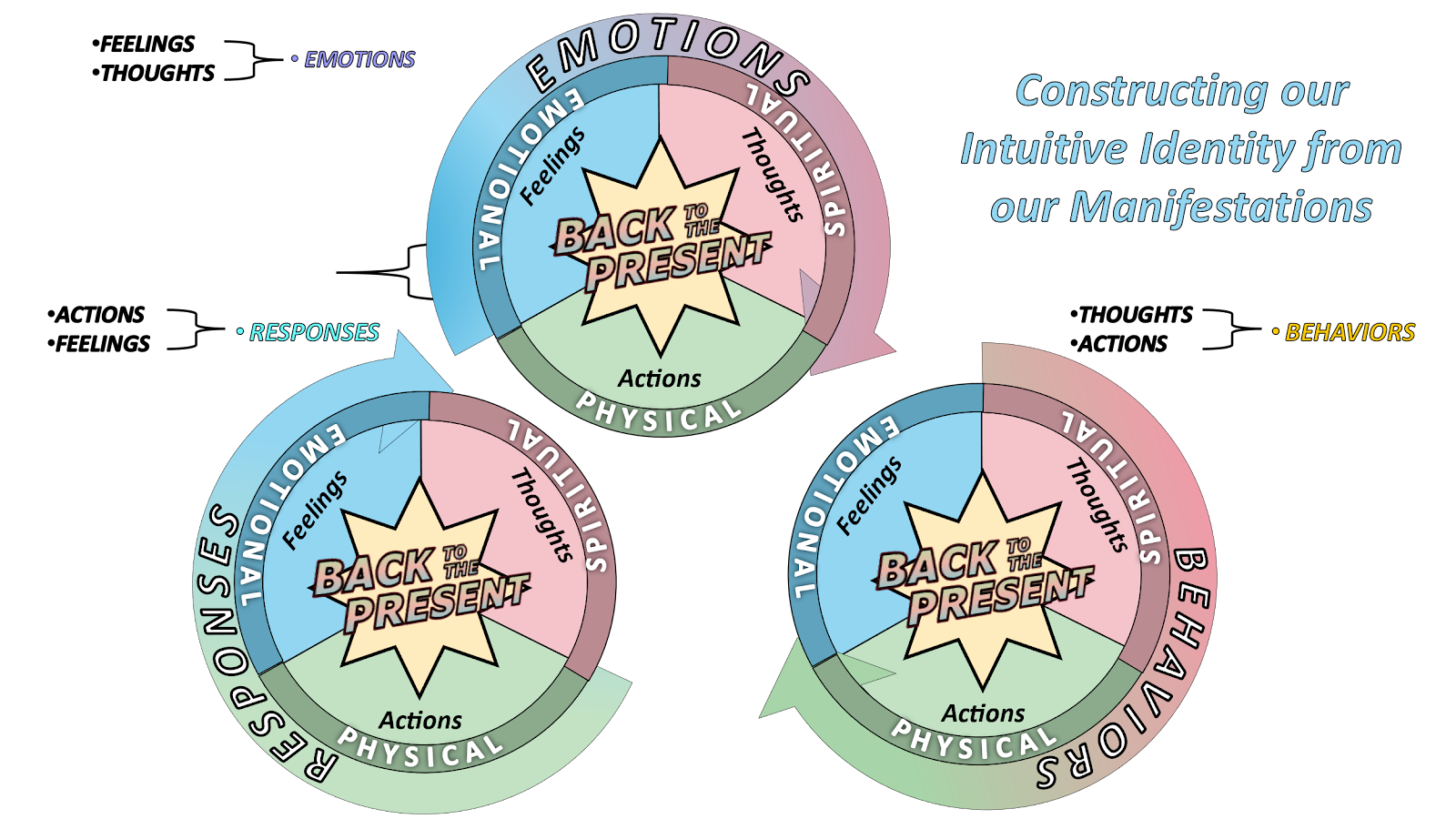
Figure 5-Constructing Our Intuitive Identity from our Manifestations
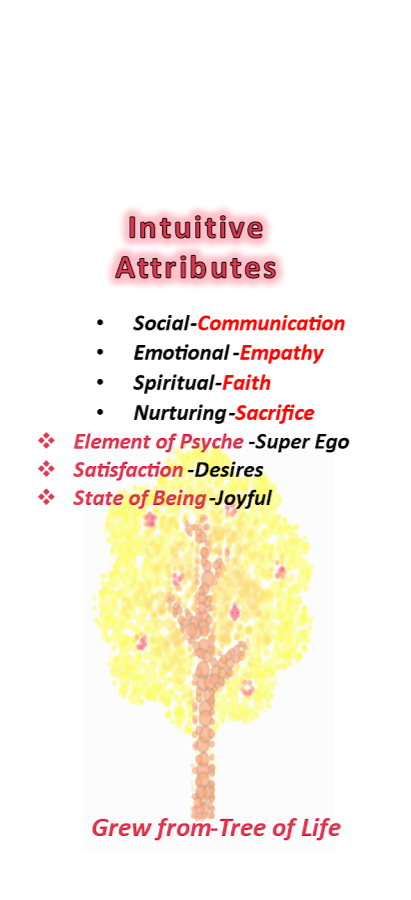
Using the Tools of Loving Intention to Support Desires
When focusing on desires, our intuitive attributes provide us the tools of LOVING INTENTION—empathy, faith, sacrifice, and communication—to guide choices aligned with what is best not only for us but for all living things.
Empathy: Understand and connect with others’ needs, wants, and desires. “When your friend is upset, listening without judgment strengthens your bond.”
Faith: Trust in meaningful goals, even when challenges arise. “Believing in your ability to overcome a tough exam shows faith in yourself.”
Sacrifice: Dedicate time and energy to helping others, even at a personal cost. “Giving up your free time to help a sibling with homework shows you value relationships over convenience.”
Communication: Share knowledge and ensure your values are clear. “Talking openly with a teacher about your struggles can lead to better support.”
By incorporating these tools, you strengthen your ability to live with LOVING INTENTION, making it easier to overcome challenges and stay focused on what truly brings joy.
Overcoming Challenges to Joy
It’s not always easy to focus on desires. Social media, peer pressure, and daily distractions often keep us stuck chasing fleeting wants. To overcome these challenges and ensure alignment with deeper values, consider this mindful decision-making process:
1. Control the Impulse
Pause and reflect. Recognize the id’s impulsiveness and tendency for immediate gratification. Ask yourself:
“Am I acting out of impulse, or is this something I truly value?”
Take a moment to breathe and assess whether this choice aligns with long-term joy or is just a short-term fix.
2. Set the Intention
Shift your focus to intention. Consciously engage the ego and align your decision with core values and the tools of LOVING INTENTION: empathy, faith, sacrifice, and communication.
Ask yourself:
“What do I truly need, want, or desire from this decision?”
“Does this align with who I want to be?”
“Will this action create karmic merit, or could it lead to karmic burden?”
3. Implement One Decision at a Time
Take deliberate, thoughtful action. Focus on one choice at a time, ensuring it reflects your desire to live with LOVING INTENTION. For example, prioritize quality time with loved ones over social media scrolling. One intentional step—like scheduling a coffee date or sending a thoughtful note—can manifest meaningful connection.
By following this mindful approach—Control the Impulse, Set the Intention, Implement One Decision at a Time—you align your actions with your needs, wants, and desires, avoiding distractions of fleeting satisfaction while creating space for lasting joy.
Closing Thought
By meeting our needs, thoughtfully pursuing our wants, and aligning with our desires, we can move from survival to a life filled with contentment, happiness, and lasting joy.
Next time you make a choice, ask yourself:
“Does this align with who I truly want to be?”
Remember, joy isn’t something you chase—it’s something you create by living with intention, authenticity, and love.