
Human Evolution and Survival: The Role of Consciousness and Awareness
Evolutionary Development
Physical Gifts and Survival Skills
Evolutionary Advantages: Evolution has endowed humans with remarkable physical gifts and survival skills critical for adaptation and survival. Our ancestors evolved unique sensory perceptions, physical abilities, dietary diversity, and cognitive skills.
Sensory Perception: Humans developed keen senses that allowed them to navigate and understand their surroundings effectively.
Story: When Zebadiah, an early human, ventured into a dense forest, his sharp vision helped him spot ripe berries hidden among the leaves. His sense of smell alerted him to the presence of a predator nearby. These sensory abilities allowed him to gather food while avoiding danger, ensuring his survival and the safety of his community.
Principle: Zebadiah’s keen sensory perception highlights the evolutionary advantage humans have in navigating and understanding their environment, crucial for finding food and detecting threats.
Physical Abilities: Endurance, strength, dexterity, and coordination were essential for hunting, gathering, building shelters, and crafting tools, enabling survival in diverse environments.
Story: Mary, a member of a nomadic tribe, demonstrated exceptional endurance and strength during long migrations. She could carry heavy loads, climb steep hills, and build sturdy shelters. Her physical abilities not only supported her own survival but also contributed to the well-being of her entire group.
Principle: Mary’s physical abilities underscore the importance of endurance, strength, and dexterity in surviving diverse environments and ensuring the survival of her community.
Dietary Diversity: The evolution of a varied diet allowed humans to thrive in different ecosystems. Our ability to consume a wide range of foods, including fruits, vegetables, meats, and grains, provided the necessary nutrients to maintain health and energy. This dietary flexibility supported human migration and adaptation to various environments, ensuring nutritional needs were met even when specific resources were scarce.
Story: Endar, living in a coastal village, enjoyed a varied diet that included fish, seaweed, fruits, and nuts. When a storm disrupted fishing activities, her community relied on fruits and nuts stored for such emergencies. This dietary flexibility ensured they met their nutritional needs even during challenging times.
Principle: Endar’s story illustrates how dietary diversity allows humans to thrive in different ecosystems, ensuring nutritional needs are met despite resource scarcity.
Adaptation and Survival:
Environmental Adaptation: Humans demonstrated an extraordinary capacity to adapt to a wide range of environments, thanks to both physical evolution and developed survival skills.
Tool Making: Early humans fashioned tools from stones and bones for hunting and building, increasing their chances of survival in harsh conditions.
Social Structures: Complex social structures facilitated cooperation, shared knowledge, and mutual support, enhancing community survival.
Awareness and Survival Strategies
Concept of Awareness in Relation to Survival:
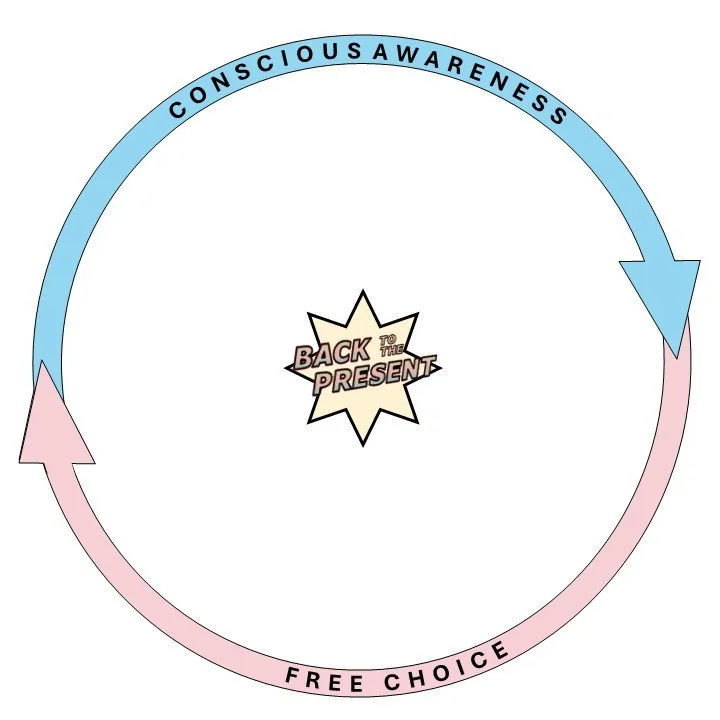
Figure 1-Unique Abilities
Introduction to Awareness: Awareness represents a significant leap beyond basic consciousness. It provided humanity the ability to become aware of the impact that time and energy could have upon our existence. We, as humans, were not just conscious, awake and alert, we had an awareness of time and energy. This Unique Ability enables reflection on experiences, directing thoughts, and intentional planning for the future (Figure 1-Unique Abilities).
Awareness and Survival: Awareness allowed early humans to store information, create intellectual and intuitive knowledge, and make informed decisions, leading to deliberate and purposeful actions that improved survival outcomes.
Storing Information and Creating Knowledge:
Information Storage: Awareness enabled humans to remember and learn from past experiences, accumulating knowledge over time and sharing it across generations.
Story: As a child, Abel watched his grandfather test different plants for medicinal properties. Years later, when his village faced an outbreak of illness, Abel remembered his grandfather’s methods and successfully treated the sick with herbal remedies. His ability to store and recall this information saved many lives.
Principle: Abel’s use of stored knowledge to address a medical crisis highlights the role of awareness in preserving and applying valuable information for survival.
Knowledge Creation: Awareness also enabled the creation of new knowledge through observation, experimentation, and innovation.
Story: The development of agricultural practices provided a stable food supply, allowing populations to grow.
Principle: The systematic approach to farming illustrates how humans leveraged awareness to create sustainable food sources.
Informed Decision-Making:
Making Decisions: Awareness allows humans to evaluate their environment, anticipate challenges, and make informed decisions.
Story: During a prolonged drought, Matthew community faced the threat of starvation. Matthew proposed a solution based on her awareness of ancient irrigation techniques. By building irrigation channels, they redirected water from a distant river, saving their crops and ensuring the community’s survival.
Principle: Matthew’s informed decision-making, rooted in awareness and understanding of past techniques, demonstrates how humans use awareness to adapt and overcome environmental challenges.
Survival Strategies: Awareness-driven decision-making led to sophisticated survival strategies, such as adapting to climate change and optimizing resource use.
Story: In a small tribal village, elders like Jerimiah noticed that food scarcity often led to conflicts. To address this, they established a social norm where hunters and gatherers shared their daily catches equally. This practice ensured fair distribution of resources and fostered a sense of community and cooperation.
Principle: Jerimiah’s story illustrates how awareness and deliberate decision-making can lead to the creation of social norms that optimize resource use and ensure community survival.
Harness the Unique Abilities of conscious awareness and free choice to transform your life. By understanding and applying these principles, you can make more informed decisions, regulate your emotions effectively, and use your time and energy efficiently. Embrace the power of your unique human abilities to live a more conscious, aware, and fulfilling life. Start today and experience the transformative impact of being fully present in each moment. Visit backtothepresent.org for more resources and guidance on your journey to mindful living.